Pensoft publishes the collection of abstracts for LTER Bulgaria 20th anniversary conference

The “sea capital” of Bulgaria, the city of Varna, hosted a very special occasion during the past week – an international conference marking the 20th anniversary of the LTER-BG network. Over the past two decades, its members have been dedicated to establishing roadmaps and infrastructures for generating, consolidating and sharing ecosystem research data across the Balkan country and beyond.

In celebration of this milestone, members of the wider eLTER community, encompassing the whole of Europe, contributed to a three-day agenda packed with progress updates, innovative showcases and meaningful discussions on the past and future of long-term ecosystem, critical zone and socio-ecological research.

 eLTER network at the LTER-BG International Scientific Conference 2026
The participants in the LTER Bulgaria international scientific conference 2026.

Pensoft Publishers has served as the communication and dissemination partner for the eLTER Research Infrastructure for the past six years. Pensoft has also always supported the activities of LTER Bulgaria.

For this 20th anniversary conference, all 55 abstracts for oral and poster presentations were organised and published in a special collection titled “Long-Term Ecosystem Research: Contributions, Challenges and Future Perspectives” on the ARPHA Conference Abstracts, and for less than a week it has already garnered over 6,000 views.

ARPHA Conference Abstracts from LTER-BG International Scientific Conference 2026

Conference abstracts published in ARPHA Conference Abstracts.

Impressed by the statements of engagement made by young scientists within the eLTER community, the Pensoft team supported the organisers’ idea to provide an Early Career Scientist Award, which granted its recipient a free publication in the One Ecosystem journal.

Following a unanimous vote by the  dedicated jury members Svetla Doncheva, Vesela Evtimova, Elena Todorova and Alexandra Tzvetkova, early career researcher Sabica Naz from the Slovak Academy of Sciences was selected as the winner. She distinguished herself with the presentation “Impacts of pre-season climatic and functional drivers on the spring onset of phenocam-derived GCC”. 

As the official communication partner of eLTER and its affiliated projects, Pensoft provided dissemination materials by eLTER RI at the dedicated booth where attendees also had the opportunity to familiarise themselves with the company’s wider publishing and research project portfolio.

At the booth, participants could get acquainted with Pensoft’s wider scientific journal portfolio. With One Ecosystem and Nature Conservation covering ecosystem science and conservation practices, NeoBiota focuses on biological invasions and Advances in Pollinator Research dedicated to all things pollinator science. Individual-based Ecology publishes research on individual-level ecological processes while the Biodiversity Data Journal supports the publication of biodiversity data. Alongside these, Research Ideas and Outcomes offers a platform for sharing research across the whole project cycle, from proposals to final results.

  • ORPHO and Scientiana promo materials
  • Metabarcoding and Metagenomics brochure.
  • Frontiers of Biogeography brochure.
  • Advances in Pollinator Research
  • Individual-based Ecology
  • One Ecosystem journal
  • NeoBiota promo materials.

Beyond these commitments, Pensoft was front and centre within the event’s agenda as well.

Alexandra Tzvetkova during the opening panel of LTER-BG International Scientific Conference 2026
Alexandra Tzvetkova during the opening panel.

During the opening panel, Alexandra Tzvetkova, part of the Pensoft team working for eLTER RI, welcomed the participants, reminded them to start sharing the special collection of abstracts with their networks and highlighted the innovative propositions from Pensoft that were about to be presented in the next days and could be very useful for the eLTER community in the future – Scientiana and ORPHO.

Further, two Pensoft presentations were delivered as part of the thematic session “Emerging Technologies in Ecosystem Research, Data Management and Open Science in LTER”, and brought the audience closer to the publisher’s vision for the future:

Senior Communications Officer Peter Bozakov delved into the forthcoming science communication platform for research projects Scientiana. Launching in early 2027, it is set to be a portal for consolidating knowledge, mapping out collaborations and innovating outreach in the context of past, present and future scientific initiatives at all scales.
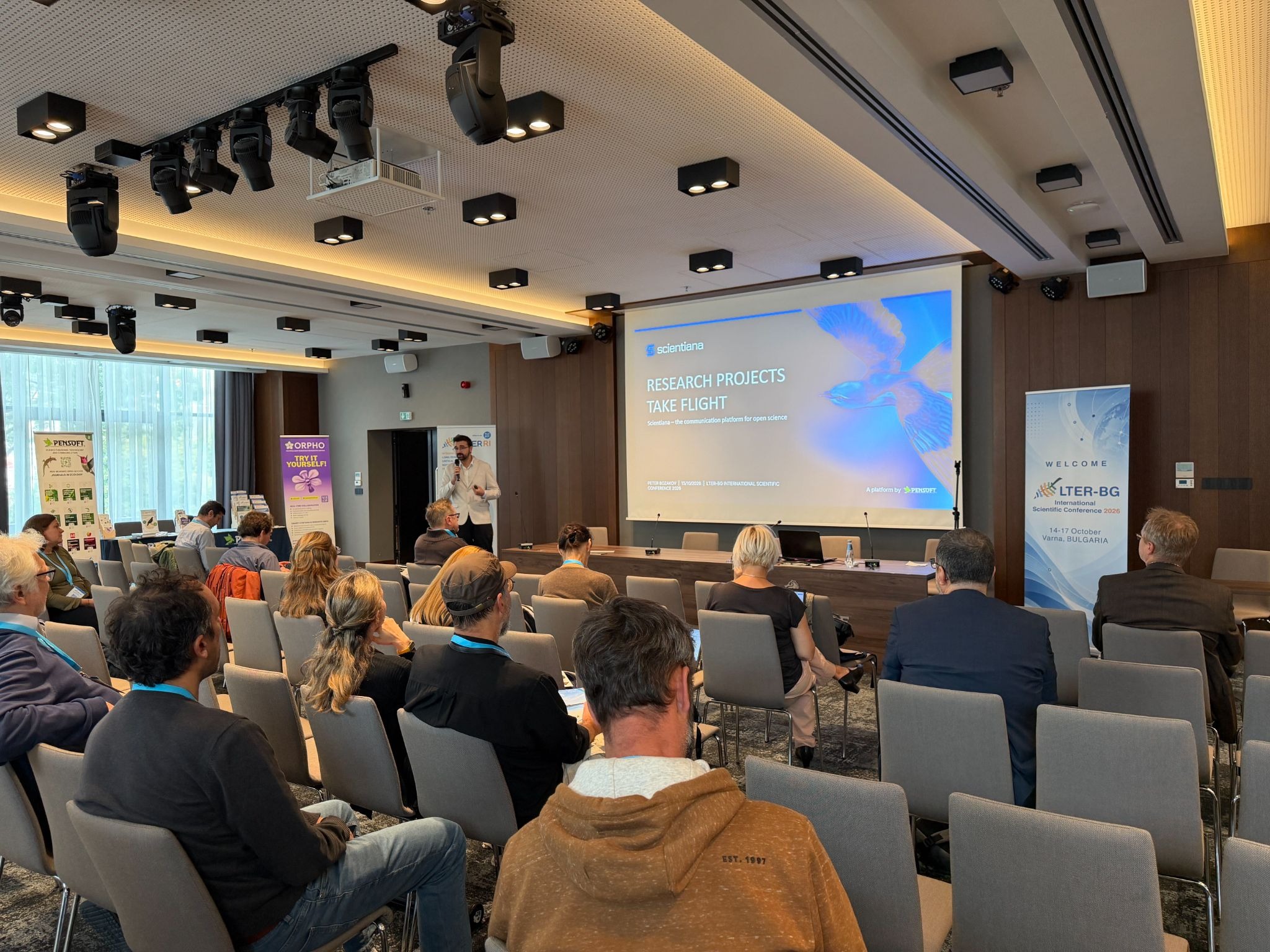
Pensoft’s newest platform Scientiana
Peter Bozakov introduces Pensoft’s newest platform – Scientiana.

While, Events and Marketing Coordinator Victoria Stoyanova explored the new frontiers that an AI-FAIR outlook unveils in the domain of academic publishing. Specifically, she showcased the evolution of the ARPHA platform and the newly launched ORPHO, Pensoft’s next-gen collaborative writing tool, as examples of innovation placed directly in the hands of authors.

Together, ARPHA and ORPHO support the entire manuscript workflow from submission to publication, with structuring, taxon tagging, classification, and data publication  taking place as part of the publication process itself. 
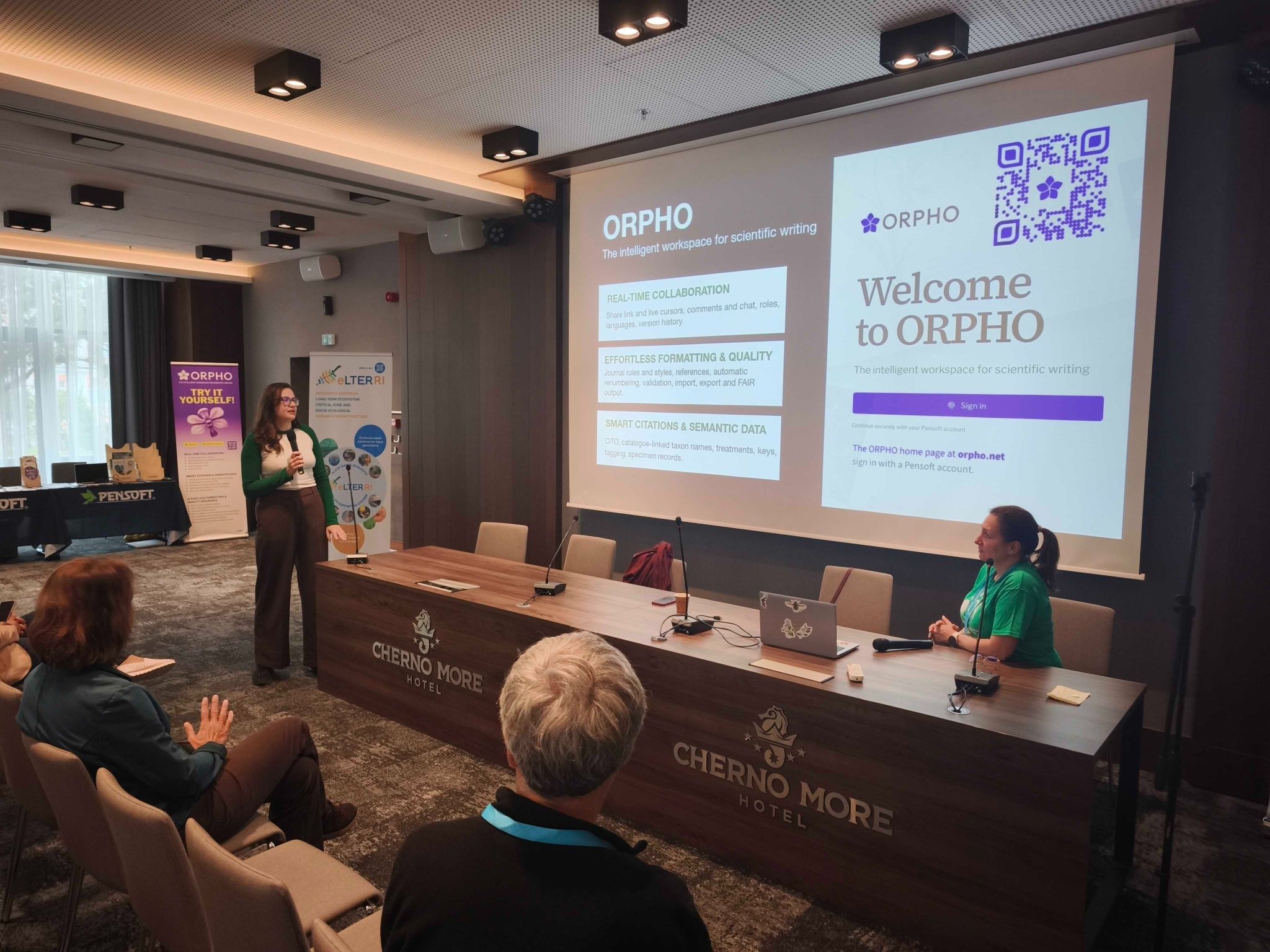
A crash course in using ORHPO
A crash course in using ORHPO by Victoria Stoyanova

The presentations proved themselves a stepping stone to further discussions on potential collaborations with scientists, conversations that were bolstered by on-site demonstrations of the tools in question.

The conference in Varna was enjoyable, fruitful and full of hope and esteem for the better future of long-term ecosystem research. And our Pensoft team left with many ideas and an affirmed ambition to keep working to provide better solutions and services for the development of European science. What we will always remember are the words of our host – the national coordinator of LTER Bulgaria in the past 20 years, Svetla Doncheva-Bratanova: 

I would like to thank the Pensoft team for the wonderful participation in the conference. You are amazing and I am certain we could do wonders together!

Many thanks to the Bulgarian LTER community and the wider eLTER community for bringing together so many passionate researchers and making these past few days special.

Open Access Week 2026: Why Pensoft Chose Open from the Start

This Open Access Week, discover how Pensoft championed open access since ZooKeys through fair APCs, ARPHA tools and FAIR data.

For millennia, people have gathered data and knowledge – about where to hunt, eat, trade, and live – and shared it through experiences, stories and songs. Today, we continue to do so by creating and sharing knowledge in order to “advance human understanding and the common good.”

This year’s International Open Access Week theme, “The Cost of Knowledge,” reminds us that sharing knowledge has a price: subscription fees and article processing charges, the time and expertise of authors, reviewers and editors, and the investment and know-how behind user-friendly digital infrastructures. 

The themes echo the ones we looked at during Peer Review Week 2026, where we gave our Editors-in-Chief the chance to share the challenges they face in sustaining the peer review process, from the influx of papers and data to the shortage of researchers willing to review – you can read what they told us here: https://blog-pensoft.blogs.awt-2.arphahub.com/2026/09/11/peer-review-week-2026-building-capacity-for-the-long-run/ 

Open from the very beginning

ZooKeys journal homepage
ZooKeys journal homepage.

At Pensoft, open access has never been an add-on. Founded in 1992 by scientists for scientists, we launched our first journal, ZooKeys, as fully open access in 2008, and it has been open from its very first issue. After all, it has always been our thinking that research can only serve the common good when everyone can read it, use it and build on it. This is why from the very start, we wanted ZooKeys to speed up research and free the exchange of information in taxonomy.

That principle has shaped every journal we have incepted since from PhytoKeys and MycoKeys to Biodiversity Data Journal to more recently launched Natural History Collections and Museomics and Individual-Based Ecology. 

Research Ideas and Outcomes journal homepage
RIO journal homepage.

In 2025, together with long-term collaborators from the open-science community, we founded the quite revolutionary and unique journal Research Ideas and Outcomes (RIO) with the aim to catalyse the culture change in research communication by publishing ideas, project proposals, data/software management plans and various other outcomes that would typically be lost for the scientific community. The recognition for RIO’s approach to scholarly communication came only half a year later when SPARC went on to name an Open Science Innovator.

ARPHA Publishing Platform
ARPHA Publishing Platform – homepage.

Throughout our existence as a publisher all of our journals have been 100% open access. Hosted on our own ARPHA Publishing Platform and operating under CC BY license, all scholarly titles in our portfolio make sure that every article can be read, shared and reused freely while authors retain the copyright to their work.

Yet, open should also mean fair. Our article processing charges are among the most competitive in the field, and we are transparent about what they cover: we were among the first publishers to share our pricing and services through Plan S’s Journal Comparison Service, and publicly provide our Open Access and APC Policies in full compliance with the Plan S requirements. We also work with international consortia to further reduce financial frictions and administrative burden for researchers and their institutions. As of this year, for instance, we’ve partnered up with Bibsam Consortium to advance open scholarly publishing across Sweden.

A streamlined process

ARPHA Publishing Platform services
ARPHA services

Our proprietary ARPHA Publishing Platform offers a full-featured, end-to-end open access publishing and hosting solution, with a suite of connected services built around it.

The ARPHA suite

Apart from about 100 open-access scholarly journals, ARPHA powers the ARPHA Preprints platform, which seamlessly integrates with journals to let authors make their manuscripts publicly available upon submission; the platform also provides high-quality and technologically advanced open-access publication for conference outputs through ARPHA Proceedings and ARPHA Conference Abstracts. Through Advanced Books, authors and researchers can bring whole open access books to readers in semantically enhanced HTML and PDF formats.  

ORPHO – the next-gen tool for scientific writing

Most recently, we launched ORPHO, our next-generation collaborative workspace for scientific writing. Within ORPHO, researchers and authors can enrich their manuscripts semantically, so that their research, as well as underlying data remains FAIR (Findable, Accessible, Interoperable, and Reusable) and AI-ready. 

Together, these tools streamline the publication of text and semantically rich data, making openness a natural part of the research workflow rather than an extra step.

Also, along with Plazi, we run the Biodiversity Literature Repository on Zenodo, which gives articles, figures and taxonomic treatments their own DOIs and releases them under CC0, so the data inside publications can be found, cited and reused by platforms such as GBIF.

This is what a publisher built by scientists can offer: a model that treats knowledge as something to be shared, prices that stay open and transparent, and infrastructure that makes research easier to find, reuse and trust.

Throughout our existence as a scholarly publisher and technology provider, Pensoft has always considered it our responsibility to ensure that valuable research outputs are shared efficiently with the world. This gives everyone, everywhere, the opportunity to make sense of and use this knowledge, while giving full credit to the scientists behind it. This is how, in our vision, scientific work and knowledge can achieve optimal impact on society and future research.

comments Iva Boyadzhieva, Head of Journal development and PR at Pensoft.

Reclaiming knowledge as a common good

Open Access Week 2026 at Pensoft

As this year’s Open Access Week puts it:

“Momentum is growing for approaches to treat knowledge as a common good and not a commodity to be mined.” – Open Access Week 2026

We believe that momentum is real, and we have seen it grow ever since the first issue of ZooKeys. At Pensoft we are proud to say that we have championed open access in publishing, building the tools, workflows and partnerships that make it work in practice, and we will keep doing so alongside the institutions, funders, editors and researchers who share this commitment.

Explore our journals and services at pensoft.net

ANERIS at EGI2026: Bringing Operational Marine Biology to Europe Digital Research Infrastructure Community

Between 21-25 September 2026, our team joined the EGI2026 conference in Ghent, Belgium.

Between the 21st and the 25th of September 2026, the ANERIS project, joined the EGI2026 Conference in Ghent, Belgium, as an exhibitor and conference partner.

Group photo EGI 2026
Group photo provided by EGI Foundation


Every year, the EGI Conference brings together digital and research infrastructure providers, data scientists and innovators to advance data-intensive science. Organised by the EGI Foundation in collaboration with partners from the EGI Federation, this year’s edition took place at the Bijloke, a former hospital site turned arts and knowledge campus on the banks of the river Lys. The five-day programme covered topics ranging from AI for European science and the European Open Science Cloud (EOSC) to federated compute and data infrastructures for research.

For ANERIS, the conference was a natural fit as the EGI Foundation is one of the project’s 25 partners, and the project’s vision of faster, more reliable and accessible marine life data depends directly on the kind of digital infrastructure discussed in Ghent.

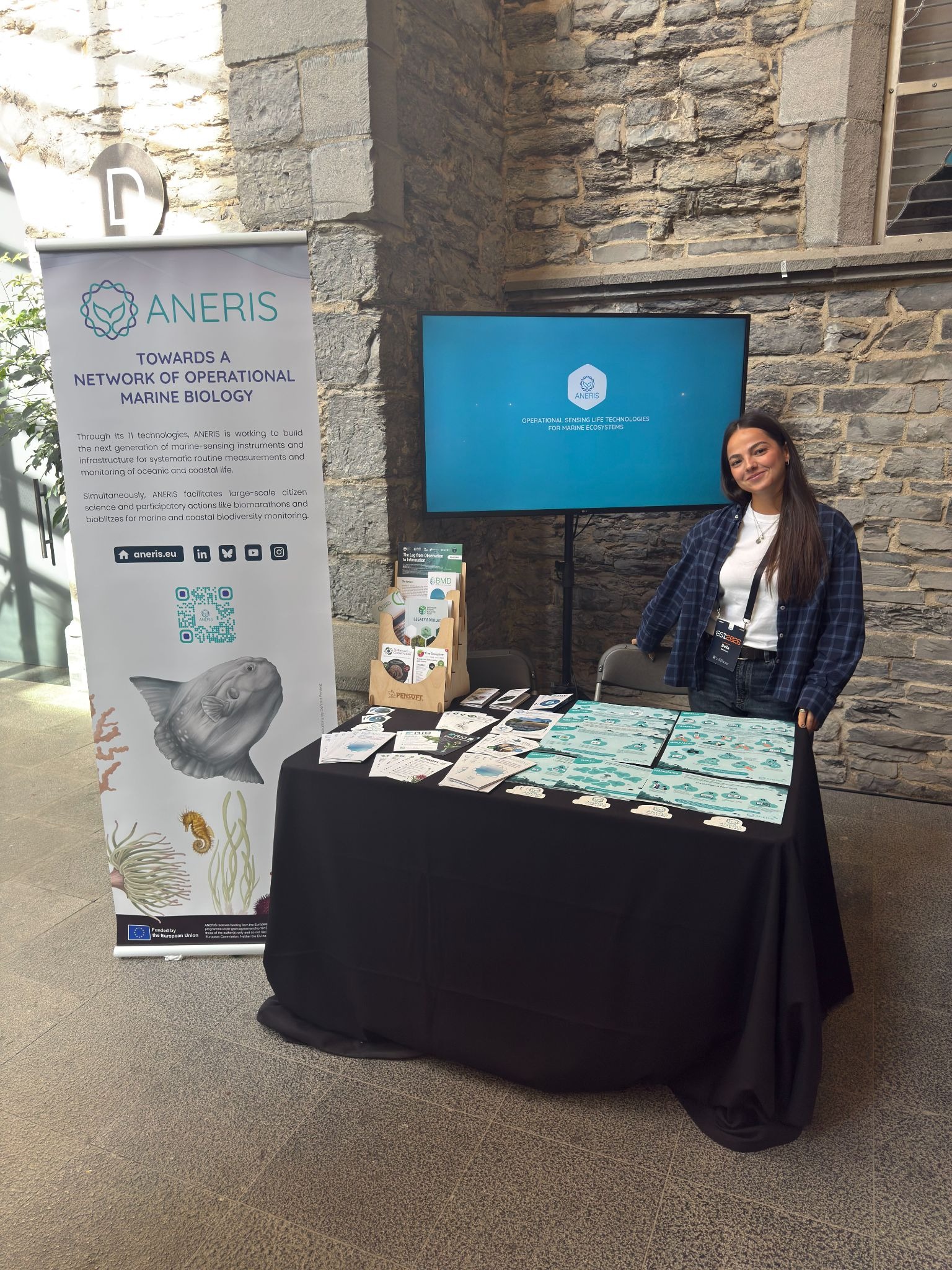
A person behind a stand
ANERIS booth at EGI2026 in Ghent.

During the opening ceremony, all exhibitors were invited to present their projects and initiatives to the audience in short pitches. Pensoft’s Communication Officer Bella Dimitrova used the opportunity to introduce ANERIS and its concept of Operational Marine Biology. Many attendees later came by the booth specifically to learn more about the project.

ANERIS materials
ANERIS materials.

The ANERIS booth welcomed a steady stream of visitors. Although most participants came from engineering and computing backgrounds, the project’s scientific illustrations and sticker sheets quickly became a highlight of the exhibition. The marine species featured on the stickers are among the most frequently observed and photographed during ANERIS citizen science campaigns. This made them a natural starting point for conversations about how volunteers, researchers and new technologies work together to monitor coastal biodiversity. Visitors also showed strong interest in the project’s newly produced case study factsheets and infographics, which made their print debut at the conference.

  • paper materials
  • paper materials
  • paper materials

At the booth, attendees could also learn more about Pensoft’s expertise and experience as a scientific publisher through a selection of journals aligned with the conference themes. They could also find out about Pensoft’s role as an active consortium member in the COAST-SCAPES, B-Cubed and Biodiversity Meets Data projects.   

Funded by the European Union’s Horizon Europe programme and coordinated by the Institute of Marine Sciences (ICM-CSIC), ANERIS brings together 25 partners from 13 countries. Over four years, the consortium has developed 11 technologies for marine life sensing and monitoring. They cover AI-assisted imaging of plankton and macrofauna, genomic and eDNA approaches and citizen science observatories such as MINKA.

As the project nears its end in December 2026, the focus is on making these tools usable beyond the project’s lifetime. This includes integrating them into European research infrastructures, which is why conversations with the EGI community were especially valuable. Combining large-scale imaging data, AI-based identification and citizen observations requires reliable storage, compute and data services. These are exactly the services EGI2026 participants build and operate.

The project’s results will be further showcased at the ANERIS Final Workshop “The future of marine monitoring – imaging, AI, and research infrastructures” on the 16th of November 2026. The hybrid event will be hosted by VLIZ in Oostende, Belgium. Through real-world case studies, partners will present tools including AI-driven underwater image restoration, automated organism identification platforms and integrated citizen science observatories. Shortly after, ANERIS will also take part in the 7th World Conference on Marine Biodiversity in Bruges.

The full plenary recordings and the detailed programme are available on the conference’s official website. 

Pensoft at TDWG2026: Pushing the boundaries of innovation in biodiversity data management forward

Last week marked another annual meeting of the Biodiversity Information Standards network, otherwise known as TDWG, with the Norwegian capital Oslo hosting the event between 20 and 25 September.

Last week marked another annual meeting of the Biodiversity Information Standards network, otherwise known as TDWG, with the Norwegian capital Oslo hosting the event between 21 and 25 September.

TDWG is the international, non-profit organisation formerly known as the Taxonomic Databases Working Group, which develops and maintains the standards, such as Darwin Core, that allow biodiversity data to be shared, integrated and understood across institutions worldwide.

The six-day programme was a meeting point for over 300 stakeholders from research, practitioner and corporate circles, with proceedings centred around one central topic – “Research and Robot-Ready Biodiversity Data Standards”. In that sense, the themes of accessibility, responsibility, innovation and collaboration were foremost on the minds of participants as they contemplated how information on the biosphere should be extracted, consolidated and shared in the years to come.

As a long-standing partner of TDWG, Pensoft Publishers served as both a sponsor and an exhibitor for the event. In the latter capacity, the company contributed with a joint booth for three of the EU-funded projects it is leading the outreach efforts for:

  • BMD – an initiative working towards a Biodiversity Explorer for high-throughput biodiversity monitoring tools, biodiversity data and biodiversity analyses for better conservation across Europe
  • TETTRIX – a new arrival building a next-generation taxonomic system connecting knowledge, expertise and innovation for all across the Old Continent
  • ANERIS – a pan-European effort to mobilise a network of operational marine biology via a new technological infrastructure
The Pensoft team at the joint booth of the BMD, TETTRIX and ANERIS projects.

A number of other projects from Pensoft’s communication portfolio also found a place in the display, including BEAGLE, OneSTOP, B-Cubed, MAMBO, OBSGESSION and BioAgora. Furthermore, 14 of the company’s journals were in the spotlight, including Biodiversity Information Science and Standards (BISS), the official journal of the TDWG community (where all of the conference’s abstracts are set to be published).  

Crucially, the event also saw the official launch of ORPHO, Pensoft’s new collaborative workspace for scientific writing. Founder and CEO Prof. Lyubomir Penev and CTO Teodor Georgiev conducted live demos of the tool, showcasing how manuscripts crafted within it with full version control for authors become discoverable, interoperable and FAIR-compliant.

In the context of TDWG2026’s agenda, they also presented ORPHO’s integrated semantic annotation and communication instruments as part of the workshop “How Literature Services can Support & Benefit from Biodiversity Publication and Data Standards?” on 24 September. The workspace was received with anticipation and enthusiasm by attendees, with many expressing a desire to test it out for themselves.

They were also treated with a tease of Pensoft’s next large-scale endeavour, as Senior Communications Officer Peter Bozakov pulled the curtain behind the forthcoming communication platform for research projects Scientiana.

As for other notable contributions to the wider conference agenda by researchers affiliated with Pensoft’s publishing or project activities:

  • The session “Operationalising Biodiversity Digital Twins within Data Space Ecosystems”, which was co-led by BMD coordinator and long-time author and reviewer across several Pensoft journals, including Biodiversity Data Journal and Research Ideas and Outcomes, Niels Raes, and showcased a number of innovative outputs from the project. As such, it was an important occasion to assess the initiative’s progress towards unifying Europe’s Data Space within a single Biodiversity Explorer.
Niels Raes presenting “Mainstreaming high-throughput biodiversity monitoring using AI” at TDWG 2026.
  • The symposium “Publishing and Communications Promoting Biodiversity, Natural History Collections, People, Data and Data Standards”, for which Deborah Paul (co-Editor-in-Chief of the Natural History Collections and Museomics (NHCM) journal) had the role of co-organiser. Within it, the TETTRIX project’s vision for the automated tracking of taxonomic research activities was laid out by consortium member David Fichtmüller. Moreover, Shelley James (co-Editor-in-Chief for NHCM) delivered an insightful talk on the creative promotion of biodiversity data and standards for success and recognition.
Co-Editors-in-Chief of NHCM, Shelley James and Deborah Paul, presenting “Hit or miss? Creative promotion of biodiversity data and standards for success and recognition” at TDWG 2026.

Notably, the Biodiversity Information Science and Standards (BISS) journal is the home for TDWG conference abstracts. TDWG 2026 presenters can currently submit their abstracts there and publish them in an extended abstract or mini-paper format completely free of charge. The journal also hosts abstracts from conferences held over the past decade. You can browse the TDWG 2026 collection here.

Last but not least, the company’s sponsorship supported two awards at TDWG2026 (with a free publication in a Pensoft journal as an accompanying prize):

  • Best Student Oral Presentation – awarded to Yeshan Qui for “Reporting structure and sampling-bias correction in citizen-science bird data across Asian cities”
  • Best Student Poster – awarded to Claudia Campanini for “Improving marine fieldwork documentation and metadata with Adaptable Standardised Methods Reporting (ASMR)”
Claudia Campanini receiving the Pensoft Best Student Poster Award at TDWG 2026.

Overall, TDWG2026 proved itself a crucial forum for mapping out the future of biodiversity monitoring and the management of the myriad data streams that emerge from it. Pensoft is proud to be an important actor in this process, contributing with innovative tools and solutions at the heart of the interface between research and practice. As summarised by Prof. Penev:

“Given its status as a large-scale conference centred around the future of biodiversity sciences in the age of AI, TDWG2026 was a crucial venue for unveiling Pensoft’s forward-looking vision for academic publishing and science communication. The “pearl” of these pursuits is undoubtedly the ORPHO workspace, a tool that is well-placed to introduce a new standard when it comes to collaborative AI-FAIR research in Europe and beyond.”

***


Follow us on Bluesky, Facebook, X, and LinkedIn for future conference updates.

Pensoft at the Nordic Oikos-GfÖ 2026 conference: Integrating the Diversity of Ecology

Between 13-17 September 2026, Pensoft Publishers joined the Nordic Oikos-GfÖ 2026 conference in Odense, Denmark.

Between 13-17 September 2026, Pensoft Publishers joined the Nordic Oikos-GfÖ 2026 conference, jointly organised by the Nordic Society Oikos and the Ecological Society of Germany, Austria and Switzerland (GfÖ) in Odense, Denmark.

Themed “Integrating the Diversity of Ecology”, the event welcomed over 1,000 researchers in the field from across career stages, who had the opportunity to enjoy conference talks across 36 thematic sessions, as many as six keynote talks, two poster sessions, several open society meetings and quite a few social events, including excursions and a conference dinner. 

Conference delegates enjoying the musical clock installation mounted on an elevated balcony on the glass façade of the ODEON building, where the Nordic Oikos-GfÖ 2026 conference took place between 13 and 17 September 2026.

Throughout the scientific event, conference delegates had the opportunity to also explore the various publishing services offered by Pensoft to authors of research, journal managers, conference organisers; the diverse portfolio of almost 100 open-access peer-reviewed journals published on Pensoft’s ARPHA Publishing Platform.

Beyond publishing solutions, a key focus was given to OBSGESSION: a Horizon Europe-funded project where Pensoft is actively involved. To better understand and predict changes in terrestrial and freshwater ecosystems, the OBSGESSION consortium integrates multi-source Earth Observation data (such as high-resolution satellite imagery and drone monitoring) with ground-based in-situ research, including advanced environmental DNA (eDNA) sampling. By coupling these data streams with cutting-edge detection-attribution modelling and machine learning algorithms, the project generates scalable Essential Biodiversity Variables (EBVs). These ecological approaches and analytical frameworks are actively tested and validated through six biodiversity pilots across diverse European ecosystems. In the open-science Research Ideas and Outcomes journal, you can find a collection of project outputs, including research papers, project reports and deliverables, and guideline papers published across journals and platforms.

At the Pensoft-OBSGESSION-branded booth, conference participants would stop by to chat with Pensoft’s Head of Journal development and PR: Iva Boyadzhieva and Senior Communications Officer: Desislava Raykova.

As a leader of the “Dissemination, Multi-stakeholder outreach and synergies” work package at OBSGESSION, Pensoft is tasked with stakeholder engagement and community building, ultimately contributing to the high impact of the resulting outputs, methodologies and policy recommendations that aim to strengthen public understanding of biodiversity change.

*

One of the six keynote talks was presented by Prof. Dr. Isabell Hensen (Martin Luther University Halle, Germany), who received the GfÖ Honorary Medal 2026 for her leading, forward-looking contributions to ecological research and the scientific community. Her work examines how genetic variation, environmental conditions, disturbance, and plant-animal interactions shape plant populations, with particular emphasis on rare species, biological invasions, and the regeneration of degraded forests.

In her talk, titled “One spark is enough: regeneration ecology of Andean forests under global change”, she reported on post-fire regeneration processes in tropical Andean forests, based on long-term field experiments and observational studies. 

Hensen focused on the well-studied endemic plant genus Polylepis, which forms the world’s highest-elevation forests and illustrates how fire has shaped ecosystem dynamics over millennia. Her talk also mentioned a 2022 monograph of the genus, published in the Pensoft journal PhytoKeys by Tatiana Erika Boza Espinoza (Pontificia Universidad Católica del Perú) and Michael Kessler (University of Zurich), which brought together results from 35 years of field and herbarium experience.

*

On Wednesday, Pensoft’s Iva Boyadzhieva delivered a presentation titled “Scholarly Communication: Lessons from the Publisher’s Kitchen”. She highlighted the vital role publishers play in helping researchers communicate their insights not only to peers, but also to decision-makers and the public. Emphasizing the publisher’s responsibility to support authors with robust infrastructure and dedicated human expertise, she outlined how Pensoft works to FAIRify scholarly publishing and future-proof scientific knowledge in an era of rapid AI development and expanding research output.

*

Pensoft’s team was delighted to meet up with dedicated readers, authors, reviewers, and editors from across Pensoft’s portfolio, as well as introduce Pensoft journals to attendees discovering them for the first time.

Unsurprisingly, well-established society journals published by Pensoft, such as Frontiers of Biogeography, NeoBiota, Vegetation Classification and Survey, Vegetation Ecology and Diversity and Italian Botanist drew plenty of attention, alongside long-standing Pensoft’s own titles like Nature Conservation, PhytoKeys, One Ecosystem and the Biodiversity Data Journal. 

Visitors were also particularly intrigued by several newly launched Pensoft journals. Developed in close collaboration with passionate researchers, these fresh outlets directly address key gaps in academic publishing. 

One of the newly launched journals in the spotlight was Agricultural and Environmental Modelling (AEM), which provides a unique scholarly outlet thanks to its modern approach to publishing by increasing transparency, giving credit to research objects across the entire modelling research lifecycle. This is achieved through publishing specialised article types, such as: Formal Model, Model Testing and Calibration, Model Implementation and Documentation, Data Papers and Software Descriptions. These new publishing formats are designed to keep pace with advances in Modelling research and to make it FAIR (Findable, Accessible, Interoperable, and Reusable) by enabling scholarly credit for diverse research outputs, often created by different groups of authors. For the time being, AEM remains a Diamond Open Access journal, meaning that it will not charge authors for open-access publication. 

Other recently founded journals addressing emerging and fast-developing disciplines within the ecological field that took the spotlight were:

  • Individual-Based Ecology: launched to support understanding and predicting ecological systems’ response to rapidly changing and novel conditions by linking individual responses to responses at higher levels of organisation.
  • Advances in Pollinator Research: a multidisciplinary journal publishing research on pollination ecology, pollinator-plant interactions, pollinator health and drivers of pollinator declines, crop and wild flower pollination, pollinator conservation practices, molecular ecology of pollinators, pollinator and pollination monitoring, decision support for policy and socio-economics.
  • Journal of Regeneration: a multidisciplinary journal for the dissemination of research results on regeneration and tissue repair across phyla. These mechanisms can be framed within an evolutionary framework and integrate a variety of cellular processes involving stem cells, dedifferentiating or even transdifferentiating cells. 

All of these journals operate with no article fees for either authors, nor readers.

To receive updates on new publications and relevant news, sign up for Email Alerts on any journal’s homepage. Creating a Pensoft account also allows users to  easily customise their notification preferences, follow additional journals, or filter updates by research topic. You can also follow journals on social media, including BlueSky, Facebook and Linkedin.

*

Supporting European Policy Through Priority Essential Biodiversity Variables (EBVs)

Delegates at the event showed strong interest in OBSGESSION’s first policy brief: “Prioritising Essential Biodiversity Variables (EBVs) to support European Union (EU) policy needs based on the EU’s Biodiversity Strategy for 2030.” To tackle a critical challenge in environmental monitoring, OBSGESSION focuses on prioritising key EBVs to directly support the EU Biodiversity Strategy 2030 – a roadmap designed to put Europe’s biodiversity on a path to recovery through 102 specific actions and sub-actions.

To align these policy needs with actionable data, the OBSGESSION team conducted an assessment to identify priority EBV candidates. By categorising EBV-applicable actions and indicators across different ecosystem realms and implementation stages, the project pinpointed the most essential variables needed to strengthen monitoring, reporting, and policy execution. The document is based on a deliverable by the project (D1.1 Policy Landscape and Needs Assessment).

This policy brief is part of a broader, ongoing effort within OBSGESSION to bridge the gap between biodiversity data and policy execution. To dive deeper into the science behind this topic, the project has hosted a dedicated seminar series exploring key aspects of the framework:

Bringing Methodologies to Life Across European Ecosystems

Beyond theoretical frameworks, OBSGESSION grounds its research in six biodiversity validation pilots across Europe. The case studies represent European biodiversity and ecosystem conservation challenges at scales varying from local to regional. Full details on each ecosystem pilot are now available in a collection of newly published pilot factsheets, which made their debut at the conference, where people could take a look at their digital versions. 

Reading those materials gives an insight into the practical testing environment to demonstrate how Earth observation, field research, and ecological modelling come together to deliver actionable biodiversity insights. You can also check out OBSGESSION’s biodiversity pilots on the project’s website.

The OBSGESSION in a Nutshell video presents a concise overview of the project’s overarching mission and components.

*

To relive the conference by exploring the detailed programme alongside the full abstracts, visit the conference website.

Keep up with future updates and news from Pensoft by following us on Bluesky, Facebook, X, and LinkedIn. 

Pensoft at the European Small Mammal Conservation Conference 2026

The inaugural conference took place in Sofia, Bulgaria, bringing together researchers, conservationists and practitioners to address gaps in small mammal research and monitoring. 

The inaugural European Small Mammal Conservation Conference (SMCC 2026) took place in Sofia, Bulgaria, from 21 to 25 September 2026, bringing together researchers, conservationists and practitioners from across Europe and beyond to address gaps in small mammal research and monitoring. 

Organised jointly by the Habitat Foundation, the Institute of Biodiversity and Ecosystem Research at the Bulgarian Academy of Sciences, the Dutch Mammal Society and Mammal Conservation Europe, with support from the Faculty of Biology at Sofia University, the conference formed part of the Life for Falcons project, funded by the EU LIFE Programme.

This year’s conference was held jointly with the 33rd Hamster Working Group and the VIII European Ground Squirrel Meeting, making hamsters and sousliks the primary focus, alongside broader topics including renewable energy development, agricultural impacts, reintroductions, predator–prey interactions and innovative methodologies in small mammal research.

Pensoft’s Participation

We were delighted to participate in SMCC 2026 with an exhibition booth, showcasing the breadth of publishing services we offer to the biodiversity and conservation community. It was a pleasure to present our portfolio of journals dedicated to advancing research across ecology, biodiversity and conservation.

We were particularly proud to present the following journals:

Meeting delegates from across the small mammal research community was tremendously rewarding, and we thoroughly enjoyed discussing how our journals can support and amplify their work.

Beyond our academic offerings, we were particularly excited to showcase beautiful art prints illustrated by our in-house scientific illustrator, Denitsa Peneva. The collection featured stunning depictions of otters, olinguitos and hamsters.

Pensoft’s art prints at SMCC 2026.

Conference Highlights

The scientific programme was exceptional, and we were privileged to attend many outstanding presentations that demonstrated the importance of innovative monitoring approaches and conservation action.

Lessons from Citizen Science for Small Mammal Conservation Monitoring in Great Britain

We were delighted to attend a talk by Matt Larsen-Daw, Chief Executive of the Mammal Society (UK), which presented a portfolio of citizen science programmes designed to address distribution knowledge and population monitoring across Great Britain. The programmes, united by the Mammal Mapper smartphone app, included the National Harvest Mouse Survey, the Searching for Shrews initiative, and the University Mammal Challenge. 

The presentation highlighted the value of standardised effort data, the differing trade-offs between structured and opportunistic recording, and the potential for these approaches to be applied across European contexts.

Matt Larsen-Daw presenting “Lessons from citizen science for small mammal conservation monitoring in Great Britain” at SMCC 2026.

Strong Decline of Hamster Populations in Bulgaria

We were equally impressed by Nedko Nedyalkov’s presentation documenting the significant decline in distribution and abundance of both the common hamster (Cricetus cricetus) and the Romanian hamster (Mesocricetus newtoni) across Bulgaria. The research revealed that population reductions, detected through owl pellet analysis and trapping methods, likely began in the 1950s with agricultural intensification and continue today. 

Given that both species are strictly protected under the EU Habitats Directive yet lack active conservation projects, the presentation substantiated the urgent need for targeted conservation measures. We are also pleased to note that Nedko serves as a subject editor for two of our open-access journals, ZooKeys and the Biodiversity Data Journal.

Nedko Nedyalkov presenting “Strong decline of the distribution and abundance of Cricetus cricetus and Mesocricetus newtoni (Mammalia: Cricetinae) in Bulgaria” at SMCC 2026.

Reintroduced Saker Falcons and Their Dependence on European Ground Squirrels

Yana Andonova’s presentation on the diet of Bulgaria’s reintroduced saker falcon population provided compelling evidence of the breeding birds’ overwhelming dependence on the European ground squirrel (Spermophilus citellus) as a primary food source.

Through food-remain analysis, visual observations and camera-trap monitoring, the research documented that ground squirrels comprised over 80 per cent of identified prey items, with small rodents accounting for 89 per cent overall! It is also worth mentioning that Andonova is an author in our open-access Biodiversity Data Journal.

Yana Andonova presenting “Reintroduced Saker Falcons (Falco cherrug Gray, 1834) are dependent on European ground squirrels during the breeding period in Bulgaria” at SMCC 2026.

Looking Forward

Attending SMCC 2026 was a genuine pleasure and particularly meaningful given that the conference took place in Sofia, the city in which our company is based. Connecting with researchers and conservationists working at the forefront of small mammal conservation, and sharing our commitment to advancing biodiversity research through open-access publishing, reinforced our dedication to supporting this important field. 

We look very much forward to engaging with this community again at future events!


Follow us on Bluesky, Facebook, X, and LinkedIn for future conference updates.

GBIF Marks 25 Years of FAIR Biodiversity Data, Now Spanning 70 Countries and 3.8 Billion Records

As GBIF marks 25 years and 3.8 billion records across 70 countries, a new overview looks ahead – tackling data gaps to shape the next quarter-century.

Digital biodiversity data has come a long way. Twenty-five years ago, the Global Biodiversity Information Facility (GBIF) launched with 21 founding countries and a simple but ambitious goal: make the world’s biodiversity data freely and openly available to anyone, anywhere.

Today, GBIF’s network includes 70 participating countries, along with data providers across more than 120 countries, offering open access to over 3.8 billion biodiversity data records. This milestone is explored in a new overview article published in the Biodiversity Data Journal, which traces GBIF’s trajectory over the past quarter-century and the challenges that remain as it looks ahead.

GBIF Executive Secretary Dr. Joe Miller remarked:

As GBIF celebrates its 25th anniversary, I’m very proud to serve as Executive Secretary of the organisation and to have contributed to this milestone publication. Detailing the history of GBIF both as an infrastructure and a global network, the article pays tribute to all the people involved in the network throughout a quarter century—be they staff, participants, nodes, volunteers, data publishers or data users. It represents the past, present and future of GBIF. I believe the paper will help strengthen our network and its capacity to respond to biodiversity data needs both now and in the future.

GBIF was established in 2001, following a proposal from the Organisation for Economic Cooperation and Development’s Megascience Forum which concluded that “an international mechanism is needed to make biodiversity data and information accessible worldwide”.

The call came in response to a problem facing the international community after the 1992 Rio Earth Summit: the world’s biodiversity knowledge was scattered across a small number of institutions, concentrated in wealthy countries, with no shared way to bring it together in support of the newly signed Convention on Biological Diversity.

Now, a quarter-century later, GBIF has become the foundational infrastructure for biodiversity science and policy worldwide.

A Growing Global Network

Biodiversity data in GBIF
Annual biodiversity data made available through the Global Biodiversity Information Facility as of July 2026. Credit to GBIF.

GBIF’s work is carried out through a distributed network of 47 voting country participants and 42 organisational participants, each represented by a national or thematic “node” that mobilises data, builds local capacity, and connects biodiversity communities to GBIF’s infrastructure. More than 2,700 institutions, including museums, universities, government agencies, citizen science platforms, and a growing number of private-sector organisations, have published data through the network, with new publishers joining at a rate of more than two every three days, totalling nearly 3500 organisations involved.

key numerical metrics of the Global Biodiversity Information Facility
Infographic summary of key numerical metrics of the Global Biodiversity Information Facility as of August 2026. See dynamic metrics at GBIF.org and at https://www.gbif.org/analytics/global.

The Biodiversity Data Journal itself is one example of this network in action, as it operates its own GBIF-hosted data portal – one of more than 20 such portals across Pensoft-published journals – providing direct access to hundreds of datasets and hundreds of thousands of occurrence records drawn from the journal’s publications.

Data Supporting Science and Policy

GBIF data mediation
The universe of GBIF data mediation.

GBIF-mediated data now underpin an average of eight new peer-reviewed research papers per day, and have contributed to more than 15,000 publications to date, spanning fields from climate change and food security to public health and invasive species management. An independent 2023 assessment estimated that GBIF generates roughly €12 in societal benefit for every €1 invested, with researcher time savings alone valued at €35 million annually.

The organisation’s impact also extends deeply into international policy. GBIF-mediated data support multiple indicators under the Kunming-Montreal Global Biodiversity Framework, inform assessments by the International Union for Conservation of Nature (IUCN) and the Intergovernmental Science-Policy Platform on Biodiversity and Ecosystem Services (IPBES), and are increasingly used by the private sector to meet emerging nature-related disclosure requirements.

Adapting to New Kinds of Data

Over 25 years, GBIF has continually expanded to accommodate new sources of biodiversity data – from digitised natural history specimens and citizen science observations to DNA-based records and, most recently, structured survey and monitoring data designed to support large-scale biodiversity tracking. In 2026, GBIF adopted the Catalogue of Life as its taxonomic backbone, the result of a multi-year collaboration to build shared infrastructure for reconciling species names across datasets.

Persistent Gaps Remain

key events of GBIF

A timeline of key events in the history of the Global Biodiversity Information Facility. Credit to Miller et al., 2026.

Despite this growth, GBIF recognises that several significant challenges remain. The global loss of biodiversity continues to be described as a crisis in major international assessments, even as the data infrastructure has improved. And the data itself continues to reflect long-standing imbalances – regions with high biodiversity, particularly in the Global South, remain underrepresented, while well-studied, charismatic groups such as birds are overrepresented compared to less visible taxa; furthermore, many marine species and hard-to-identify cryptic habitats and organisms remain inadequately documented.

Closing these gaps was part of the original motivation for creating GBIF a quarter-century ago, and it remains valid today. GBIF’s own assessment is that the network cannot resolve these asymmetries alone, doing so will depend on broader shifts in global scientific funding, data culture, and capacity, alongside GBIF’s continued efforts to expand its Participant network and to diversify the types of data it can mobilise.

An additional, ongoing challenge is data heterogeneity and data quality, because GBIF indexes data, rather than directly vetting every record, it relies on its network of data publishers to maintain quality at source, and on users to report issues – a distributed model that keeps the network scalable but is not without friction.

Looking Ahead

capacity development at GBIF.
Capacity development across the Global Biodiversity Information Facility community.  Credit to Miller et al., 2026.

Guided by its 2023–2027 Strategic Framework, GBIF is prioritising continued growth of its Participant network, expanded support for survey and monitoring data, and deeper integration of DNA-derived biodiversity records – all aimed at closing longstanding geographic and taxonomic gaps in digital biodiversity data worldwide.

Original source:

Miller J, Mandeville C, Schigel D, Gamboa Martinez J, Nielsen AM, Sheldon S, Hahn A, Raymond M, Bundgaard-Jensen S, Bagard Laursen M, Copas K, Blissett M, Høfft M, Méndez Hernández F, Noesgaard D, Rodrigues A, Russell L, Stjernegaard Jeppesen T, Elkjær Ørum-Kristensen A, Grosjean M, Waller J, Podolskiy M, Goodson H, Novakovikj S, Frøslev T, Ingenloff K, Sørensen Nilsson A, Svenningsen C, van der Meijden D, Suen A, Hakan Uzun A, Vaskova M, Nielsen C, Marentes Herrera E, Schaldemose Reibke N, Robertson T (2026) The Global Biodiversity Information Facility at 25. Biodiversity Data Journal 14: e208528. https://doi.org/10.3897/BDJ.14.e208528

Pensoft launches ORPHO: A new intelligent workspace for scientific writing

The beta release of an innovative collaborative stand-alone authoring tool transforms manuscript preparation with semantic enrichment and real-time collaboration capabilities.

Scholarly publisher and technology provider Pensoft Publishers announces the beta launch of ORPHO, a revolutionary online platform designed to streamline collaborative scientific writing and produce AI-ready, future-proof scholarly literature. 

ORPHO presents a significant advancement in scholarly publishing technology, combining intuitive writing features with sophisticated semantic enrichment capabilities. The new platform builds upon Pensoft’s fifteen years of experience as a developer of semantic publishing infrastructure.

Key Features

Within a shared online workspace, researchers can start with built-in customisable templates, create their own or import an existing file. They can then team up with collaborators in real time using track changes, role-based user rights, inline comments, and document-level chat. More significantly, ORPHO automatically structures scientific content according to international publishing standards, making research outputs findable, discoverable, interoperable and reusable (FAIR) once published. 

Unlike its predecessor, the ARPHA Writing Tool, ORPHO is available as a standalone real-time collaborative workspace decoupled from journals hosted on Pensoft’s ARPHA Publishing Platform. Once a manuscript is ready, authors receive AI-FAIR machine-readable content that can be formatted to meet multiple journal requirements at the click of a button.

The platform’s adaptability to domain-specific workflows is currently being piloted in biodiversity science. ORPHO integrates seamlessly with leading biodiversity data aggregators, including the Global Biodiversity Information Facility (GBIF), Barcode of Life Data Systems (BOLD) and PlutoF, via import and export facilities for structured data, making ORPHO particularly valuable for researchers handling taxonomic, ecological and biodiversity data. 

Taxon names, for example, can be automatically imported and linked through persistent identifiers from sources like the Catalogue of Life (CoL), International Plant Names Index (IPNI), World Register of Marine Species (WoRMS) and World Flora Online (WFO).

Why ORPHO?

The name draws inspiration from multiple sources which reflect the tool’s philosophy and heritage. Named after Orphium: a unique plant genus endemic to South Africa whose sole species (Orphium frutescens) is known as the sea rose, ORPHO reflects the platform’s distinctive nature, heritage, and core philosophy.

It also evokes Orpheus, the legendary musician of ancient Thrace whose home region, the Rhodopi Mountains, lies in present-day Bulgaria, where ORPHO’s developer, Pensoft, is headquartered. The name thus honours the tool’s origins whilst embodying the exceptional creative performance it enables. 

***

Prof. Dr. Lyubomir Penev, founder and CEO of Pensoft, comments:

“We are well aware that researchers today face an overwhelming list of formatting requirements and technical demands in an AI-driven landscape. It is true that rapid technological advancement presents both immense opportunities and mounting complexities for researchers.

We built ORPHO to remove that friction by offering an intuitive, collaborative workspace that lets scientists focus on their research. As a scientific publisher, our mission is to make scholarly publishing a seamless, rewarding experience fit for the modern age.”

The beta release invites researchers, institutions and publishing platforms to trial ORPHO and provide feedback. Access is available at orpho.net.

Pensoft at the 4th BioSyst.EU Meeting 2026

The 4th BioSyst.EU meeting took place in Uppsala, Sweden, from 17 to 19 August 2026, organised by the Swedish Systematics Association, in collaboration with Uppsala University.

The 4th BioSyst.EU meeting took place in Uppsala, Sweden, from 17 to 19 August 2026, organised by the Swedish Systematics Association, in collaboration with Uppsala University. For three days, the conference brought together European systematists to celebrate the discipline in the very city where it was born, home to Carl Linnaeus and the foundations of modern taxonomy.

BioSyst.EU exists to give individual scientists across Europe a shared platform, working through their national and regional societies rather than institutions. It sits alongside the Consortium of European Taxonomic Facilities (CETAF), which represents natural history institutions, and together the two bodies aim to strengthen systematic biology, phylogenetics and biodiversity research across the continent.

This year’s programme combined talks, workshops and symposia with visits to historical sites connected to Linnaeus. The main event was preceded by an early career meeting on Sunday 16 August, which gave students and early career researchers a chance to connect before the conference proper began.

Meeting the community at our booth

Pensoft were delighted to attend with our own booth, where colleagues came to chat about our publishing services, from manuscript to final publication, as well as our tools for managing and publishing taxonomic and biodiversity data. 

Pensoft’s booth at BioSyst.EU, 2026.

It was a great opportunity to introduce our journal portfolio – more than half of which comprises taxonomy and systematics titles – to old friends and new faces alike, including titles such as: 

  • ZooKeys – one of the world’s leading journals for zoological taxonomy and biodiversity research, publishing new species descriptions and revisions across the animal kingdom
  • MycoKeys – dedicated to fungal systematics, taxonomy and biodiversity, supporting mycologists with rapid, richly illustrated publishing
  • PhytoKeys – focused on plant systematics and biodiversity, covering everything from single species descriptions to large-scale floristic studies
  • Metabarcoding and Metagenomics (MBMG) – a journal built around the fast-growing field of DNA-based biodiversity assessment, from environmental DNA to large-scale metagenomic surveys
  • Zoosystematics and Evolution – published with the Museum für Naturkunde Berlin, covering zoological systematics, morphology and evolutionary biology
  • Evolutionary Systematics – dedicated to whole-organism biology of extant and fossil animals 

…and many more!

Pensoft’s journal portfolio comprising taxonomy and systematics titles.

It was also a pleasure to meet some of our authors, reviewers and subject editors at the booth!

Conference presentation highlights

One of the undoubted highlights of the conference was the keynote talk by Sandra Knapp, editor-in-chief of PhytoKeys, titled Taming the beasts: strategies for studying megadiversity. Knapp tackled the question: what do we do with genera that contain more than a thousand species?

She subsequently made the case that studying genera properly, from geography to identification, pays dividends for both collaborative science and our understanding of evolution.

Another highlight was the keynote lecture by Paul Hebert, Chair of the MBMG Advisory Board: The End Game – All Species & Their Interactions. Hebert reflected on the tens of millions of multicellular species we share the planet with, most still undescribed and many at risk of disappearing before they are even documented.

Paul Hebert’s presentation at BioSyst.EU 2026.

Among the other talks we attended was by one of our long-time partners, Olaf Banki, on the Catalogue of Life: taxonomic data services and infrastructure for all. Olaf reflected on the initiative’s evolution, from its origins thirty years ago to today, where the Catalogue of Life now serves as the taxonomic reference underpinning close to 4 billion species occurrences mediated through GBIF.

He gave a valuable overview of where the initiative stands: what it offers different user groups, including taxonomists and data infrastructures, where taxonomic data gaps remain, and how the community can contribute going forward. 

Olaf Banki’s presentation at BioSyst.EU 2026.

Notably, Pensoft’s journals are integrated with Catalogue of Life to help list the species of the world. You can find out more about this initiative by accessing the following blog post.

A final highlight was Alexander Edwards’ presentation, titled Where Were You Yesterday? Interrogating Floral Constancy in Bumble Bee Workers Using Pollen Metabarcoding. Edwards presented work using ITS2 pollen metabarcoding to study the foraging behaviour of individually marked Bombus terrestris workers in a semi-natural university garden, sampling pollen non-lethally from returning foragers over several days.

It was particularly nice to catch up with Alexander, having worked with him previously on a guest blog post, The bee’s knees: a new, non-lethal way to study pollinator networks, which explored the same non-lethal sampling approach.

Award winners

And a massive congratulations to all our award winners! In the Best Student Poster category, first prize went to Giada Spagliardi of the University of Toronto for her poster Finding depth at the surface: museomics and species boundaries of bubble-rafting gastropods, while the runner-up prize was awarded to Hannah Cremer of the Senckenberg Research Institute and Natural History Museum, Frankfurt, for Long Hidden in Tubes: First Steps Towards Resolving the Filograna/Salmacina Complex (Serpulidae).

In the Best Student Talk category, first prize was awarded to Alexander Edwards of the University of Kassel for his talk Where Were You Yesterday? Interrogating Floral Constancy in Bumble Bee Workers Using Pollen Metabarcoding, with the runner-up prize going to Tina Kiedaisch of the University of Munich (LMU) for Intercontinental dispersal, ecological shifts and repeated origins of C4 photosynthesis shaped the evolution of Amaranthaceae s.s..

The awardees at BioSys.EU 2026.

An excursion to Linnaeus’ Hammarby

On 20 August, participants also had the option to join an excursion to Hammarby, Linnaeus’ summer house just outside Uppsala. It is a rare chance to step inside an authentic 18th century Swedish manor that reveals both the private life of Linnaeus and the scientific work he carried out there! 

Pensoft notably visited the University of Uppsala Botanical Garden, also known as the Linnaean Garden, where Olof Rudbeck the Elder and Carl von Linnaeus worked:

Until next time

The 4th BioSyst.EU meeting was a fitting tribute to the roots of systematics, held in the city where the discipline effectively began. From megadiverse genera to pollen metabarcoding and the future of biodiversity monitoring, the talks reflected how dynamic the field remains. We were delighted to be part of it, and to spend three days connecting with the scientific community. We look forward to the next BioSyst.EU meeting!

Catching up with Michael Schmitt at Pensoft’s booth – our subject editor for Zookeys and Arthropods systematics and phylogeny.

Follow us on Bluesky, Facebook, X, and LinkedIn for future conference updates.

Pensoft at SERE2026: Connecting Projects, Publications and People in Brest

Pensoft attended the 15th European Conference on Ecological Restoration (SERE2026) in Brest, France, where it presented a selection of EU-funded projects and scientific journals.

From 24 to 28 August 2026, Pensoft joined around 600 researchers and professionals at the 15th European Conference on Ecological Restoration (SERE2026) in Brest, France, bringing together the ecological restoration community to share knowledge, strengthen collaborations and explore new approaches to restoring ecosystems across Europe.

Hosted by the University of Brest in collaboration with the French Ecological Restoration Network (REVER) and the European Chapter of the Society for Ecological Restoration (SER-Europe), SERE2026 provided a vibrant meeting point for researchers, practitioners and policymakers working across ecological restoration. The conference covered a broad range of topics, including wetlands, coastal and marine ecosystems, ecological networks and the implementation of European restoration policies.

Pensoft was there with a selection of EU-funded projects and open-access journals, offering conference participants the chance to discover new research, explore project results and learn more about opportunities to publish and share their work.

Pensoft at SERE 2026.

A showcase of Pensoft projects

The Pensoft team presented materials from a diverse group of EU-funded projects, reflecting the wide range of environmental research and collaboration supported through the Pensoft network.

Among the projects showcased were FERRO, SpongeBoost, BioAgora, ForestPaths, EUFAWREADY, eLTER, SELINA, COAST SCAPES and COOP4CBD.

The projects cover a broad spectrum of topics, from biodiversity and ecosystem restoration to forest resilience, environmental governance, ecosystem monitoring and nature conservation. Their presence at SERE2026 offered researchers an opportunity to discover ongoing initiatives and see how scientific knowledge is being translated into practical approaches for addressing environmental challenges.

The project materials attracted interest throughout the conference, with participants stopping by to learn more about individual initiatives and explore their latest activities and results.

From ecological restoration to open-access publishing

Alongside the projects, Pensoft presented a selection of its journals and publishing platforms.

Visitors could discover titles including Nature Conservation, One Ecosystem, Research Ideas and Outcomes (RIO), Agricultural and Environmental Modelling, Biodiversity Data Journal, Check List, Journal of Regeneration and NeoBiota, alongside several other journals from Pensoft’s open-access, peer-reviewed scholarly portfolio.

The broad selection reflected the interdisciplinary nature of ecological restoration itself. Researchers working on biodiversity, ecosystems, conservation, environmental modelling, species diversity and regeneration could all find publication venues relevant to their work.

There was considerable interest in the journals throughout the conference, with discussions ranging from publishing research articles and project outputs to discovering new ways of sharing scientific data, ideas and results with the wider research community.

Celebrating excellent science

Scientific exchange was at the heart of SERE2026, and participants also had the opportunity to recognise some of the strongest contributions presented during the conference.

Several awards were presented based on votes from conference participants, highlighting outstanding talks and presentations.

Pensoft was pleased to contribute to these celebrations with the Best Talk Award. The award recognises an exceptional conference presentation and comes with a special prize: a free publication in a Pensoft journal.

This time around, the award went to Chloé Dagnelie of Gembloux AgrobioTech for her presentation: “Spontaneous succession under soil and landscape constraints: dispersal filtering and urban species pools shape brownfield true bugs communities”

By supporting awards such as this, Pensoft aims to encourage clear, engaging and impactful scientific communication while helping researchers share their work through open-access publishing.

Connecting research, restoration and communication

SERE2026 offered an inspiring setting for conversations about the future of ecological restoration and the role of research in supporting healthier and more resilient ecosystems.

Pensoft Publishers at 15th European Conference on Ecological Restoration

For Pensoft, the conference was also an opportunity to bring together several strands of its work: supporting EU-funded research projects, publishing scientific knowledge through open-access journals and creating opportunities for researchers to connect, communicate and collaborate.

The strong interest in both the projects and journals showcased in Brest was a reminder of the value of bringing science and scientific communication together in one place.

As Europe moves towards ambitious restoration goals, strengthening the connections between research, practice, policy and communication will be essential. Events such as SERE2026 provide an important space for these connections to grow.

Pensoft was delighted to be part of the ecological restoration community in Brest and looks forward to continuing these conversations at future events.