Researchers in French Guiana demonstrate that the golden eyes of a Neotropical treefrog can replace invasive marking techniques.
Identifying individual animals in the wild has long meant tagging, branding or clipping. For amphibians, the standard approach has often been toe-clipping, a procedure that can affect survival, physiology and behaviour.
A new study suggests that, for at least one species of treefrog, nature has already provided a more humane solution: the eyes.
Osteocephalus oophagus in situ. Photographed in French Guiana (4°02’N, 52°41’W; ) between March and May 2021. Credit: Mélissa Peignier et al., 2026.
The team examined Osteocephalus oophagus, an Amazonian treefrog whose golden irises are crossed by fine black radial lines, forming a pattern reminiscent of a human fingerprint.
Fieldwork took place over three rainy seasons, from 2021 to 2023, on a river island of roughly five hectares in the Nouragues Nature Reserve in French Guiana. Across 392 captures, the researchers identified 103 individual frogs.
Osteocephalus oophagus in situ. Photographed in French Guiana (4°02’N, 52°41’W; ) between March and May 2021. Credit: Mélissa Peignier et al., 2026.
On later encounters, they photographed each animal’s eyes without touching it and compared the images with a reference library held on a rugged tablet. Frogs recognised in this way were simply left undisturbed. The identifications were independently verified using Wild-ID, a software package for photographic mark-recapture analysis.
The iris patterns proved highly distinctive. Within a single season, between 56% and 80% of frogs were recaptured and reliably re-identified, showing that the patterns are stable enough for short-term monitoring. Photographs could even be taken of frogs in amplexus, the mating embrace, without disrupting them.
Examples of individual identification upon capture and recapture based on iris patterns in three male Osteocephalus oophagus photographed in French Guiana (4°02’N, 52°41’W; Bongers et al. 2001) between March and May 2021 and 2022. Credit: Mélissa Peignier et al., 2026.
The project began with simple admiration.
“At the time, I was doing my PhD, studying Allobates femoralis in the field in French Guiana. My first reaction was simply something along the lines of, ‘Wow, what beautiful eyes!’ That initial curiosity gradually turned into a genuine interest in the species, and I realised how little we actually know about them.”
Dr Peignier
Example of the diversity of iris patterns from eight Osteocephalus oophagus individuals photographed in French Guiana (4°02’N, 52°41’W; Bongers et al. 2001) between March and May 2021, 2022, and 2023. Credit: Mélissa Peignier et al., 2026.
The team’s motivation was also ethical.
“Other studies have used toe-clipping, which involves removing some of the digits. Personally, I was uncomfortable with this approach, especially given that these are arboreal frogs that rely on their limbs to climb trees.”
Dr Peignier
Dr Peignier hopes the method will spread.
“In a world where biodiversity is declining at an alarming rate, it is essential that we minimise our impact on the animals we study.
If we can reliably identify individuals using naturally occurring features, we may be able to reduce the need for more invasive marking techniques while still collecting the data needed to answer important scientific questions.”
Osteocephalus oophagus in situ. Photographed in French Guiana (4°02’N, 52°41’W; ) between March and May 2021. Credit: Mélissa Peignier et al., 2026.
The authors stress that suitability will vary between species, and that the approach should be tested case by case before wider adoption. Even so, they see considerable promise for amphibians with complex irises.
Fieldwork, Dr Peignier adds, had its own rewards.
“Honestly, the frogs themselves are incredibly beautiful and surprisingly chill, which makes working with them a real pleasure.”
Original source:
Bégué L, Petel F, Premel V, Raboisson G, Ringler E, Ringler M, Toszeghi M, Vacher V, Peignier M (2026) Iris pattern recognition as a non-invasive method for individual identification in Osteocephalus oophagus (Hylidae). Herpetozoa 39: 381-387. https://doi.org/10.3897/herpetozoa.39.e208000
A recently published special issue in the journal Nature Conservation is dedicated the unique and highly specialised fish and their importance for the conservation of wetlands in Europe.
At first glance, muddy, low-oxygen waters seem unattractive. For some highly specialized fish species, however, they are vital refuges. It is precisely these habitats that are increasingly threatened in Europe.
A new special issue in the journalNature Conservation, recently published and edited by an expert group led by Josef Wanzenböck, is dedicated to these unique fish and their importance for wetland conservation.
The special issue “Biology and conservation of wetland fishes in Europe” brings together selected papers from the international conference “The Fish of Muddy Waters,” which took place in Vienna in October 2025. The focus was on fish species adapted to the specific conditions of wetlands and their surrounding areas.
Fish fauna monitoring in Illés Pond VI in the Szada Pilot Area. Photo by Sándor Tatár. From Bajomi et al., 2026
These include, among others, the European mud minnow (Umbra krameri), the weatherfish (Misgurnus fossilis), and the crucian carp (Carassius carassius). At the same time, non-native fish species that have since become established in the peripheral areas of floodplains and other wetland habitats were also examined, and their impact on ecosystems was discussed.
What makes these fish special is their ability to cope with conditions under which many other species could not survive. In small, muddy bodies of water, oxygen levels can be very low at times. The fish species found there are adapted to these extreme conditions and can therefore provide important insights into the state of their habitat. This means that fish inhabiting wetlands are much more than just rare species. They can serve as indicators of the ecological health of their habitats. If these specialized fish are struggling, this often points to changes or a deterioration in the entire ecosystem.
Distribution patterns of Umbrakrameri in Hungary in the past 50 years. Black dots show the occurrences within the certain 10 × 10 km ETRS rectangle. Red lines show the borders of the 12 geographic regions of the country. Sallai et al., 2026
For instance, a study by Sallai et al., covers 50 years of records from Hungary, the core of the European mud minnow’s range, found that the species has disappeared from 44% of its historically known localities. Its lineage is roughly 60 million years old, yet surviving populations are increasingly confined to artificial canals. In the research article, drying wetlands emerged as the clearest threat.
38-day-old Umbrakrameri fry reared at the Hungarian University of Agriculture and Life Sciences for stocking. Photo credit: Csaba Posztós.
The issue also offers cause for hope. Bajomi and col. showed that in two small, isolated artificial ponds, mud minnows released by conservation teams were still breeding 7 to 10 years later, which shows that carefully designed translocations can create safe refuges for the European mudminnow (Umbra krameri).
This was precisely the focus of the conference “The Fish of Muddy Waters.” The goal was to strengthen the link between research and conservation and to draw attention to fish species that often receive less public attention than larger or economically more significant species. The exchange between international scientists and representatives of nature conservation organizations should help to consolidate existing knowledge and develop new approaches to the protection of endangered wetland fish.
Fish have always held a firm place in our culture and are closely linked to the use of water bodies. However, the little-known inhabitants of wetlands reveal another side of this relationship: they highlight just how closely the conservation of individual species is tied to the protection of their habitats. Research on these species can thus also help raise awareness of the importance of wetlands and lay the groundwork for more effective biodiversity conservation.
This newly published special issue offers insight into current research on these specialized fish species and makes selected results of the Vienna conference accessible to an international audience of experts.
Last week marked another annual meeting of the Biodiversity Information Standards network, otherwise known as TDWG, with the Norwegian capital Oslo hosting the event between 20 and 25 September.
Last week marked another annual meeting of the Biodiversity Information Standards network, otherwise known as TDWG, with the Norwegian capital Oslo hosting the event between 21 and 25 September.
TDWG is the international, non-profit organisation formerly known as the Taxonomic Databases Working Group, which develops and maintains the standards, such as Darwin Core, that allow biodiversity data to be shared, integrated and understood across institutions worldwide.
The six-day programme was a meeting point for over 300 stakeholders from research, practitioner and corporate circles, with proceedings centred around one central topic – “Research and Robot-Ready Biodiversity Data Standards”. In that sense, the themes of accessibility, responsibility, innovation and collaboration were foremost on the minds of participants as they contemplated how information on the biosphere should be extracted, consolidated and shared in the years to come.
As a long-standing partner of TDWG, Pensoft Publishers served as both a sponsor and an exhibitor for the event. In the latter capacity, the company contributed with a joint booth for three of the EU-funded projects it is leading the outreach efforts for:
BMD – an initiative working towards a Biodiversity Explorer for high-throughput biodiversity monitoring tools, biodiversity data and biodiversity analyses for better conservation across Europe
TETTRIX – a new arrival building a next-generation taxonomic system connecting knowledge, expertise and innovation for all across the Old Continent
ANERIS – a pan-European effort to mobilise a network of operational marine biology via a new technological infrastructure
The Pensoft team at the joint booth of the BMD, TETTRIX and ANERIS projects.
A number of other projects from Pensoft’s communication portfolio also found a place in the display, including BEAGLE, OneSTOP, B-Cubed, MAMBO, OBSGESSION and BioAgora. Furthermore, 14 of the company’s journals were in the spotlight, including Biodiversity Information Science and Standards (BISS), the official journal of the TDWG community (where all of the conference’s abstracts are set to be published).
Crucially, the event also saw the official launch of ORPHO, Pensoft’s new collaborative workspace for scientific writing. Founder and CEO Prof. Lyubomir Penev and CTO Teodor Georgiev conducted live demos of the tool, showcasing how manuscripts crafted within it with full version control for authors become discoverable, interoperable and FAIR-compliant.
In the context of TDWG2026’s agenda, they also presented ORPHO’s integrated semantic annotation and communication instruments as part of the workshop “How Literature Services can Support & Benefit from Biodiversity Publication and Data Standards?” on 24 September. The workspace was received with anticipation and enthusiasm by attendees, with many expressing a desire to test it out for themselves.
They were also treated with a tease of Pensoft’s next large-scale endeavour, as Senior Communications Officer Peter Bozakov pulled the curtain behind the forthcoming communication platform for research projects Scientiana.
Pensoft’s CTO Teodor Georgiev introduces the collaborative scientific workspace ORPHO.
As for other notable contributions to the wider conference agenda by researchers affiliated with Pensoft’s publishing or project activities:
The session “Operationalising Biodiversity Digital Twins within Data Space Ecosystems”, which was co-led by BMD coordinator and long-time author and reviewer across several Pensoft journals, including Biodiversity Data Journal and Research Ideas and Outcomes, Niels Raes, and showcased a number of innovative outputs from the project. As such, it was an important occasion to assess the initiative’s progress towards unifying Europe’s Data Space within a single Biodiversity Explorer.
Niels Raes presenting “Mainstreaming high-throughput biodiversity monitoring using AI” at TDWG 2026.
The symposium “Publishing and Communications Promoting Biodiversity, Natural History Collections, People, Data and Data Standards”, for which Deborah Paul (co-Editor-in-Chief of the Natural History Collections and Museomics (NHCM) journal) had the role of co-organiser. Within it, the TETTRIX project’s vision for the automated tracking of taxonomic research activities was laid out by consortium member David Fichtmüller. Moreover, Shelley James (co-Editor-in-Chief for NHCM) delivered an insightful talk on the creative promotion of biodiversity data and standards for success and recognition.
Co-Editors-in-Chief of NHCM, Shelley James and Deborah Paul, presenting “Hit or miss? Creative promotion of biodiversity data and standards for success and recognition” at TDWG 2026.
Notably, the Biodiversity Information Science and Standards (BISS) journal is the home for TDWG conference abstracts. TDWG 2026 presenters can currently submit their abstracts there and publish them in an extended abstract or mini-paper format completely free of charge. The journal also hosts abstracts from conferences held over the past decade. You can browse the TDWG 2026 collection here.
Last but not least, the company’s sponsorship supported two awards at TDWG2026 (with a free publication in a Pensoft journal as an accompanying prize):
Best Student Oral Presentation – awarded to Yeshan Qui for “Reporting structure and sampling-bias correction in citizen-science bird data across Asian cities”
Best Student Poster – awarded to Claudia Campanini for “Improving marine fieldwork documentation and metadata with Adaptable Standardised Methods Reporting (ASMR)”
Claudia Campanini receiving the Pensoft Best Student Poster Award at TDWG 2026.
Overall, TDWG2026 proved itself a crucial forum for mapping out the future of biodiversity monitoring and the management of the myriad data streams that emerge from it. Pensoft is proud to be an important actor in this process, contributing with innovative tools and solutions at the heart of the interface between research and practice. As summarised by Prof. Penev:
“Given its status as a large-scale conference centred around the future of biodiversity sciences in the age of AI, TDWG2026 was a crucial venue for unveiling Pensoft’s forward-looking vision for academic publishing and science communication. The “pearl” of these pursuits is undoubtedly the ORPHO workspace, a tool that is well-placed to introduce a new standard when it comes to collaborative AI-FAIR research in Europe and beyond.”
The inaugural conference took place in Sofia, Bulgaria, bringing together researchers, conservationists and practitioners to address gaps in small mammal research and monitoring.
The inaugural European Small Mammal Conservation Conference (SMCC 2026) took place in Sofia, Bulgaria, from 21 to 25 September 2026, bringing together researchers, conservationists and practitioners from across Europe and beyond to address gaps in small mammal research and monitoring.
This year’s conference was held jointly with the 33rd Hamster Working Group and the VIII European Ground Squirrel Meeting, making hamsters and sousliks the primary focus, alongside broader topics including renewable energy development, agricultural impacts, reintroductions, predator–prey interactions and innovative methodologies in small mammal research.
We were delighted to participate in SMCC 2026 with an exhibition booth, showcasing the breadth of publishing services we offer to the biodiversity and conservation community. It was a pleasure to present our portfolio of journals dedicated to advancing research across ecology, biodiversity and conservation.
Pensoft’s booth at SMCC 2026.
We were particularly proud to present the following journals:
Individual-based Ecology – exploring the physiological and behavioural mechanisms that shape ecological processes
Biodiversity Data Journal – an open-access venue for publishing primary biodiversity data and datasets
Pensoft’s journal portfolio exhibited at SMCC 2026.
Meeting delegates from across the small mammal research community was tremendously rewarding, and we thoroughly enjoyed discussing how our journals can support and amplify their work.
Beyond our academic offerings, we were particularly excited to showcase beautiful art prints illustrated by our in-house scientific illustrator, Denitsa Peneva. The collection featured stunning depictions of otters, olinguitos and hamsters.
Pensoft’s art prints at SMCC 2026.
Conference Highlights
The scientific programme was exceptional, and we were privileged to attend many outstanding presentations that demonstrated the importance of innovative monitoring approaches and conservation action.
Lessons from Citizen Science for Small Mammal Conservation Monitoring in Great Britain
We were delighted to attend a talk by Matt Larsen-Daw, Chief Executive of the Mammal Society (UK), which presented a portfolio of citizen science programmes designed to address distribution knowledge and population monitoring across Great Britain. The programmes, united by the Mammal Mapper smartphone app, included the National Harvest Mouse Survey, the Searching for Shrews initiative, and the University Mammal Challenge.
The presentation highlighted the value of standardised effort data, the differing trade-offs between structured and opportunistic recording, and the potential for these approaches to be applied across European contexts.
Matt Larsen-Daw presenting “Lessons from citizen science for small mammal conservation monitoring in Great Britain” at SMCC 2026.
Strong Decline of Hamster Populations in Bulgaria
We were equally impressed by Nedko Nedyalkov’s presentation documenting the significant decline in distribution and abundance of both the common hamster (Cricetus cricetus) and the Romanian hamster (Mesocricetus newtoni) across Bulgaria. The research revealed that population reductions, detected through owl pellet analysis and trapping methods, likely began in the 1950s with agricultural intensification and continue today.
Given that both species are strictly protected under the EU Habitats Directive yet lack active conservation projects, the presentation substantiated the urgent need for targeted conservation measures. We are also pleased to note that Nedko serves as a subject editor for two of our open-access journals, ZooKeys and the Biodiversity Data Journal.
Nedko Nedyalkov presenting “Strong decline of the distribution and abundance of Cricetus cricetus and Mesocricetus newtoni (Mammalia: Cricetinae) in Bulgaria” at SMCC 2026.
Reintroduced Saker Falcons and Their Dependence on European Ground Squirrels
Yana Andonova’s presentation on the diet of Bulgaria’s reintroduced saker falcon population provided compelling evidence of the breeding birds’ overwhelming dependence on the European ground squirrel (Spermophilus citellus) as a primary food source.
Through food-remain analysis, visual observations and camera-trap monitoring, the research documented that ground squirrels comprised over 80 per cent of identified prey items, with small rodents accounting for 89 per cent overall! It is also worth mentioning that Andonova is an author in our open-access Biodiversity Data Journal.
Yana Andonova presenting “Reintroduced Saker Falcons (Falco cherrug Gray, 1834) are dependent on European ground squirrels during the breeding period in Bulgaria” at SMCC 2026.
Looking Forward
Attending SMCC 2026 was a genuine pleasure and particularly meaningful given that the conference took place in Sofia, the city in which our company is based. Connecting with researchers and conservationists working at the forefront of small mammal conservation, and sharing our commitment to advancing biodiversity research through open-access publishing, reinforced our dedication to supporting this important field.
We look very much forward to engaging with this community again at future events!
The 4th BioSyst.EU meeting took place in Uppsala, Sweden, from 17 to 19 August 2026, organised by the Swedish Systematics Association, in collaboration with Uppsala University.
The 4th BioSyst.EU meeting took place in Uppsala, Sweden, from 17 to 19 August 2026, organised by the Swedish Systematics Association, in collaboration with Uppsala University. For three days, the conference brought together European systematists to celebrate the discipline in the very city where it was born, home to Carl Linnaeus and the foundations of modern taxonomy.
BioSyst.EU exists to give individual scientists across Europe a shared platform, working through their national and regional societies rather than institutions. It sits alongside the Consortium of European Taxonomic Facilities (CETAF), which represents natural history institutions, and together the two bodies aim to strengthen systematic biology, phylogenetics and biodiversity research across the continent.
This year’s programme combined talks, workshops and symposia with visits to historical sites connected to Linnaeus. The main event was preceded by an early career meeting on Sunday 16 August, which gave students and early career researchers a chance to connect before the conference proper began.
Pensoft were delighted to attend with our own booth, where colleagues came to chat about our publishing services, from manuscript to final publication, as well as our tools for managing and publishing taxonomic and biodiversity data.
Pensoft’s booth at BioSyst.EU, 2026.
It was a great opportunity to introduce our journal portfolio – more than half of which comprises taxonomy and systematics titles – to old friends and new faces alike, including titles such as:
ZooKeys– one of the world’s leading journals for zoological taxonomy and biodiversity research, publishing new species descriptions and revisions across the animal kingdom
MycoKeys– dedicated to fungal systematics, taxonomy and biodiversity, supporting mycologists with rapid, richly illustrated publishing
PhytoKeys– focused on plant systematics and biodiversity, covering everything from single species descriptions to large-scale floristic studies
Metabarcoding and Metagenomics (MBMG) – a journal built around the fast-growing field of DNA-based biodiversity assessment, from environmental DNA to large-scale metagenomic surveys
Zoosystematics and Evolution – published with the Museum für Naturkunde Berlin, covering zoological systematics, morphology and evolutionary biology
Pensoft’s journal portfolio comprising taxonomy and systematics titles.
It was also a pleasure to meet some of our authors, reviewers and subject editors at the booth!
Alice Petzold – subject editor in Natural History Collections and Museomics.
Oleksandr Holovachov – author in Biodiversity Data Journal, and Metabarcoding and Metagenomics.
Oleksandr Ordynets – author and reviewer for Biodiversity Data Journal, MycoKeys, and Plant Ecology and Evolution.
Viktor Hartung – subject editor for Deutsche Entomologische Zeitschrift.
Conference presentation highlights
One of the undoubted highlights of the conference was the keynote talk by Sandra Knapp, editor-in-chief of PhytoKeys, titled Taming the beasts: strategies for studying megadiversity. Knapp tackled the question: what do we do with genera that contain more than a thousand species?
She subsequently made the case that studying genera properly, from geography to identification, pays dividends for both collaborative science and our understanding of evolution.
Sandra Knapp at Pensoft’s booth.
Sandra Knapp’s presentation at BioSyst.EU 2026.
Another highlight was the keynote lecture by Paul Hebert, Chair of the MBMG Advisory Board: The End Game – All Species & Their Interactions. Hebert reflected on the tens of millions of multicellular species we share the planet with, most still undescribed and many at risk of disappearing before they are even documented.
Paul Hebert’s presentation at BioSyst.EU 2026.
Among the other talks we attended was by one of our long-time partners, Olaf Banki, on the Catalogue of Life: taxonomic data services and infrastructure for all. Olaf reflected on the initiative’s evolution, from its origins thirty years ago to today, where the Catalogue of Life now serves as the taxonomic reference underpinning close to 4 billion species occurrences mediated through GBIF.
He gave a valuable overview of where the initiative stands: what it offers different user groups, including taxonomists and data infrastructures, where taxonomic data gaps remain, and how the community can contribute going forward.
Olaf Banki’s presentation at BioSyst.EU 2026.
Notably, Pensoft’s journals are integrated with Catalogue of Life to help list the species of the world. You can find out more about this initiative by accessing the following blog post.
A final highlight was Alexander Edwards’ presentation, titled Where Were You Yesterday? Interrogating Floral Constancy in Bumble Bee Workers Using Pollen Metabarcoding. Edwards presented work using ITS2 pollen metabarcoding to study the foraging behaviour of individually marked Bombus terrestris workers in a semi-natural university garden, sampling pollen non-lethally from returning foragers over several days.
Alexander Edwards’ presentation at BioSyst.EU 2026.
Award winners
And a massive congratulations to all our award winners! In the Best Student Poster category, first prize went to Giada Spagliardi of the University of Toronto for her poster Finding depth at the surface: museomics and species boundaries of bubble-rafting gastropods, while the runner-up prize was awarded to Hannah Cremer of the Senckenberg Research Institute and Natural History Museum, Frankfurt, for Long Hidden in Tubes: First Steps Towards Resolving the Filograna/Salmacina Complex (Serpulidae).
In the Best Student Talk category, first prize was awarded to Alexander Edwards of the University of Kassel for his talk Where Were You Yesterday? Interrogating Floral Constancy in Bumble Bee Workers Using Pollen Metabarcoding, with the runner-up prize going to Tina Kiedaisch of the University of Munich (LMU) for Intercontinental dispersal, ecological shifts and repeated origins of C4 photosynthesis shaped the evolution of Amaranthaceae s.s..
The awardees at BioSys.EU 2026.
An excursion to Linnaeus’ Hammarby
On 20 August, participants also had the option to join an excursion to Hammarby, Linnaeus’ summer house just outside Uppsala. It is a rare chance to step inside an authentic 18th century Swedish manor that reveals both the private life of Linnaeus and the scientific work he carried out there!
Pensoft notably visited the University of Uppsala Botanical Garden, also known as the Linnaean Garden, where Olof Rudbeck the Elder and Carl von Linnaeus worked:
The Linnaean Garden, 2026.
Until next time
The 4th BioSyst.EU meeting was a fitting tribute to the roots of systematics, held in the city where the discipline effectively began. From megadiverse genera to pollen metabarcoding and the future of biodiversity monitoring, the talks reflected how dynamic the field remains. We were delighted to be part of it, and to spend three days connecting with the scientific community. We look forward to the next BioSyst.EU meeting!
Catching up with Michael Schmitt at Pensoft’s booth – our subject editor for Zookeys and Arthropods systematics and phylogeny.
A researcher from the University of North Carolina Asheville has drawn on 20 years of collaborative fieldwork to create a single illustrated reference for scientists, conservationists and nature enthusiasts.
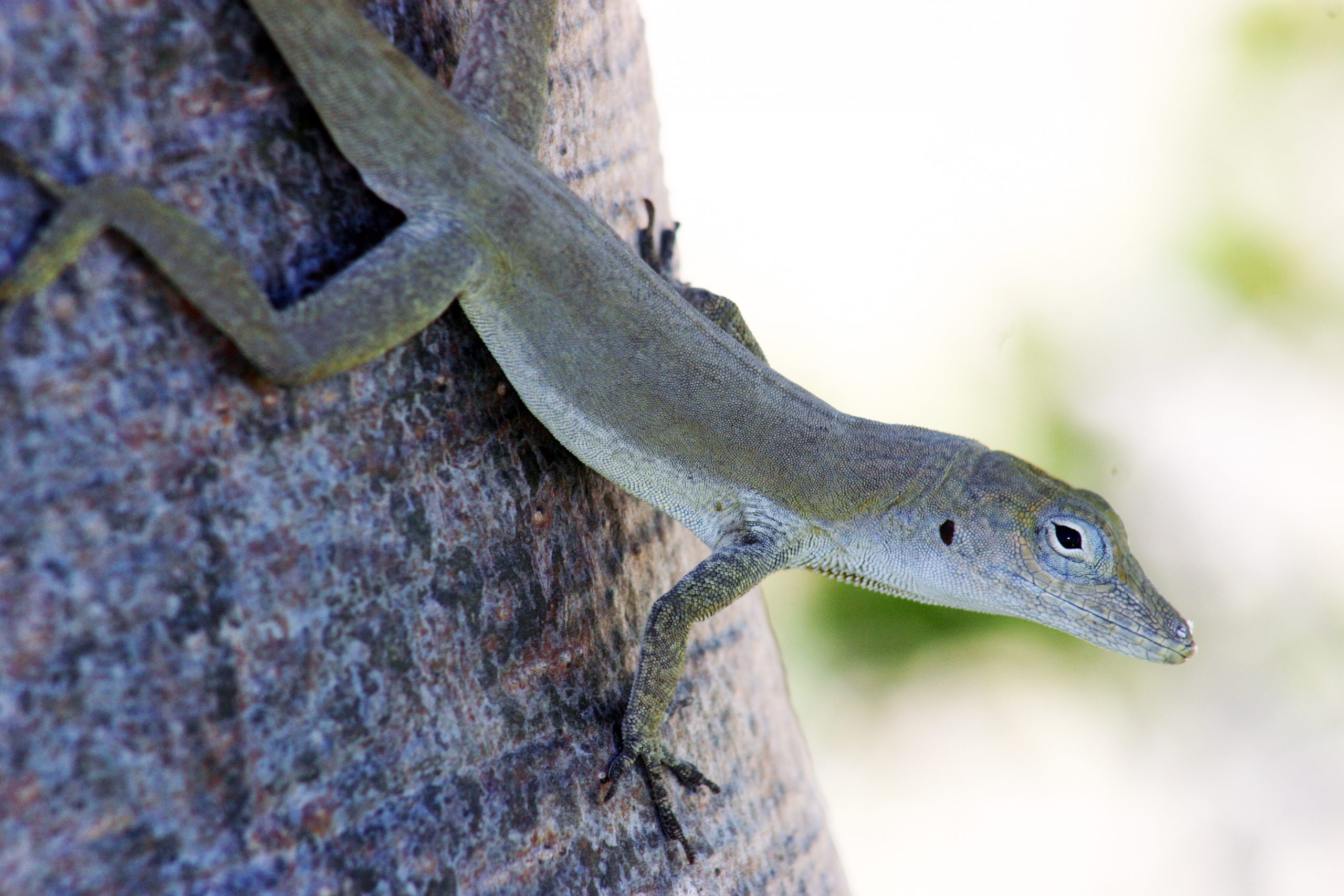
A researcher from the University of North Carolina Asheville has published the first comprehensive checklist of the native terrestrial reptiles of the Turks and Caicos Islands (TCI), drawing on 20 years of collaborative fieldwork to create a single illustrated reference for scientists, conservationists and nature enthusiasts.
The study, led by Professor R. Graham Reynolds of UNC Asheville’s Department of Biology, is published in the open-access journal ZooKeys. It documents the 11 native reptile species across the archipelago’s Turks and Caicos Banks, eight of which are found nowhere else on Earth.
Two further species are represented in the islands by their own endemic subspecies. The checklist combines published research through 2026 with original field data collected by Dr Reynolds between 2006 and 2025, and includes original photographs, distribution information and conservation assessments for every species.
An adult male Turks and Caicos Anole (Anolis scriptus scriptus) watching his territory from the trunk of a tree. Big Ambergris Cay, Turks and Caicos Islands. Photograph by R. Graham Reynolds, UNC Asheville.
Dr Reynolds began studying the islands’ reptiles in 2006, in his first year of graduate school, working alongside Dr Glenn Gerber of the San Diego Zoo Wildlife Alliance:
“This quickly turned into a passion, and I have made studying these animals the focus of my career.
I conduct fieldwork several times a year on the islands, and this year is the 20th year of this work. In that time, I have published dozens of papers on the reptiles of the region and collected a huge amount of data, and I felt that, after two decades, it was time to produce something to showcase everything we’ve learned about these animals.”
Although information on the islands’ reptiles has existed scattered across books, online databases and journal articles, no single resource has previously combined photographs, distribution maps, natural history and conservation status for every species.
“Somewhat surprisingly, there has never been a comprehensive checklist for the terrestrial reptiles of the region.
“Portions of this are available elsewhere, such as distribution maps and some photographs on the online database CaribHerp, or island checklists and natural history information in a book chapter. But this is the first time that all of this information has been brought together to fully describe and illustrate the amazing terrestrial reptiles of the Turks and Caicos.”
Dr Reynolds
Seven of the 11 native species are of conservation concern. The Turks Island Skink is Critically Endangered and may now survive as a single protected population, while the Turks and Caicos Iguana, classified as Endangered, has been lost from around 90% of its historical range. Introduced predators, particularly feral cats and rats, are identified as the main cause of these declines, alongside habitat loss and road mortality.
An adult male Turks and Caicos Curlytail (Leiocephalus psammodromus apocrinus) perches on top of a Turks cap Cactus (Melocactus intortus). Big Ambergris Cay, Turks and Caicos Islands. Photograph by R. Graham Reynolds, UNC Asheville.
The study also revises the taxonomy of the Curly-tailed Lizard, recommending that six previously recognised subspecies be reduced to two, reflecting recent genetic evidence.
Original source
Reynolds RG (2026) An annotated checklist and species accounts of the native terrestrial reptiles of the Turks and Caicos Islands. ZooKeys 1290: 1-33. https://doi.org/10.3897/zookeys.1290.198843
For more articles on zoology, visit the ZooKeys website and follow the journal on BlueSky and Facebook.
Or how decades of curiosity, teamwork and persistence helped give one of the Galápagos’ rarest plants a second chance.
Guest blog post by Patricia Jaramillo Díaz
When I arrived in the Galápagos in 1996, I never imagined that one of the most meaningful conservation projects of my career would begin inside an herbarium cabinet. At the Charles Darwin Research Station, I spent many hours working with herbarium collections assembled over more than a century by botanists who had explored the archipelago. Each specimen preserved a moment in time – a record of where a species had lived and the landscapes it once inhabited. Together, they formed a living archive of the Galápagos flora.
Two years later, in 1998, one specimen began to capture my attention. Collected near Caleta Tagus on northern Isabela Island in 1962, it belonged to Galvezia leucantha subsp. leucantha, a small shrub found nowhere else on Earth.
Every time I opened that cabinet, I found myself asking the same question: Does this plant still survive?
Herbarium specimen of Galvezia leucantha subsp. leucantha, collected near Caleta Tagus in 1962. More than six decades later, this historical record helped inspire and guide the restoration of one of the Galápagos’ rarest endemic plants. Courtesy of Patricia Jaramillo Díaz, CDS Herbarium.
At first, it was simply curiosity. Over the years, however, that question grew into something much larger. It inspired field expeditions, nursery experiments, ecological restoration and scientific research spanning almost three decades.
Historical herbarium records and botanical surveys led us to Playa Tortuga Negra, on the remote northern coast of Isabela Island, where the species had last been documented. In 2017, the Galápagos Verde 2050 (GV2050) restoration program began working to prevent the disappearance of this critically endangered population.
Reaching the site was never easy. After travelling by boat along the rugged coastline, we crossed extensive young lava flows under the equatorial sun, carrying equipment and supplies. When we finally located the plants, our excitement quickly gave way to concern. Only a handful of wild individuals remained, some growing from narrow cracks in the lava. Their resilience was extraordinary, but so was their vulnerability.
Standing beside those plants, it became clear that we were looking at much more than a rare shrub. These were the last representatives of a unique evolutionary lineage found nowhere else on Earth. Losing them would mean losing an irreplaceable part of the Galápagos’ botanical heritage.
Our question changed: instead of asking whether Galvezia leucantha still survived, we began asking how we could help ensure that it would continue to survive.
That question became the foundation of a long-term restoration program developed through collaboration among the Charles Darwin Foundation, the Galápagos National Park Directorate, researchers, park rangers, field assistants, students and volunteers.
Researchers and a Galápagos National Park ranger collecting and preparing Galvezia leucantha subsp. leucantha specimens for the CDS Herbarium at Playa Tortuga Negra, Isabela Island, during a collaborative field expedition across several islands of the Galápagos Archipelago in 2012. Photo: Rubén Heleno.
Before restoring the species, however, we first had to learn how to propagate it. Very little information existed. There were no established protocols or published studies describing how to cultivate the species. Germination was inconsistent, seedlings were delicate and survival varied depending on growing conditions.
Through observation, experimentation and patience, we gradually refined propagation techniques, tested different substrates and identified conditions that improved germination and seedling development. The nursery became a living laboratory where research and practical conservation came together. Every healthy seedling represented months of work, from collecting seeds in the field to monitoring germination and growth.
Equally important was documenting what we learned. Developing a propagation protocol strengthened our restoration program while providing practical guidance for future conservation projects involving threatened island plants.
Producing healthy seedlings was only the beginning. Returning them to one of the youngest volcanic landscapes in the Galápagos presented an entirely different challenge. Every restoration campaign required months of preparation. Seedlings were gradually acclimated before transport, while strict biosecurity protocols ensured that no invasive organisms accompanied them into one of the world’s most protected ecosystems.
Moving hundreds of young plants across rough seas and unstable lava fields required close coordination between the Charles Darwin Foundation and the Galápagos National Park Directorate. Once on site, every planting location was carefully selected to maximize the seedlings’ chances of survival.
Collection, sorting, disinfection, and laboratory germination trials of Galvezia leucantha subsp. leucantha seeds. Photos: Paúl Mayorga and Patricia Jaramillo Díaz.
Because northern Isabela experiences prolonged dry seasons and shallow volcanic soils retain very little moisture, we also evaluated techniques to improve plant establishment.
During the first restoration campaigns, hydrogel and the Groasis Waterboxx® were tested to reduce water stress during the most vulnerable stage of seedling development. Planting a seedling takes only a few minutes. Helping it become part of a self-sustaining population takes years. That is why restoration never ends when the last plant is placed in the ground.
Researchers Anna Calle-Loor and Nicolás Velasco surveying the restoration site at Tagus Cove, Isabela Island, before planting Galvezia leucantha subsp. leucantha. Photo: Carlos Espinoza/FCD.
Every year, our team returned to Playa Tortuga Negra to monitor the restored plants. We recorded their survival, growth, flowering and fruit production, always asking the same question: Could the population eventually recover on its own?
For several years, the answer remained uncertain. Although the restored plants survived, flowered and set seed, the clearest sign of recovery had yet to appear. Then, three years after the first reintroductions, during a monitoring expedition in 2021, everything changed.
While surveying the restoration site, Galápagos National Park rangers and researchers from the Galápagos Verde 2050 program noticed a tiny seedling emerging from a narrow crack in the lava. Only a few centimeters tall, it was easy to overlook. A closer look revealed something extraordinary: it was not one of the seedlings we had planted.
Galvezia leucantha in the lava crack. Photo credit to Jefreys Galápagos Verde 2050 team (GV2050).
Detailed images of Galvezia leucantha subsp. leucantha. Credit to Jaramillo Díaz, 2026.
It had germinated naturally from seeds produced by the restored population. After years of restoration efforts, we were witnessing the first evidence that Galvezia leucantha was once again reproducing in the wild. The discovery filled us with excitement, but also with scientific caution. One naturally established seedling was encouraging, yet we needed to know whether it represented the beginning of broader recovery.
Galvezia leucantha subsp. leucantha seedlings. Left: Monitoring and data collection. Right: Seedlings growing under protective mesh. Photos: Carlos Espinoza.
Subsequent monitoring confirmed that it was not an isolated event. By the end of the monitoring period, our team had recorded four naturally established seedlings, all resulting from natural recruitment rather than nursery-grown plants. They demonstrated that restored individuals were flowering, producing viable seeds and giving rise to a new generation without direct human intervention. They also provided the first clear evidence that restoration was rebuilding not only the population, but the ecological processes need for the species to persist over time.
Seedling of Galvezia leucantha. Credit to Díaz et al., 2026
Flowering Galvezia leucantha. Credit to Galápagos Verde 2050 team (GV2050).
Flowering Galvezia leucantha. Credit to Galápagos Verde 2050 team (GV2050).
True restoration begins when nature no longer depends on us.
As the project continued, another chapter brought me back to where everything had begun.
The herbarium specimen that inspired my original question once again became central to our work. Historical collections showed that Galvezia leucantha had once occurred near Caleta Tagus, where it had last been collected more than sixty years earlier. Those specimens, together with field observations and ecological assessments, helped identify suitable sites for restoring part of the species’ historical range.
In 2024, the restoration program expanded to Caleta Tagus, helping re-establish the species in part of its historical range for the first time in more than sixty years. Returning plants there felt like completing a circle.
Decades earlier, botanists had carefully preserved specimens documenting a disappearing population. Without knowing it, they had also preserved information that would later help guide its recovery. For me, this reinforced the extraordinary value of herbaria. They are far more than collections of dried plants; they are archives of biodiversity that connect the past with the future, helping us understand species distributions, identify restoration opportunities and guide conservation decisions.
The restoration of Galvezia leucantha also taught us that conservation does not end in the field. Sharing what we learn is just as important. In 2025, nearly three decades of experience came together in a scientific paper, a restoration plan and a propagation guide, ensuring that these lessons could support future restoration efforts.
Looking back today, I do not think first about the number of seedlings we planted or the kilometers we walked across lava fields. I think about the people: the park rangers who protected restoration sites, field assistants who carried plants across difficult terrain, nursery staff who cared for thousands of seedlings, researchers who designed experiments, and students and volunteers whose enthusiasm sustained this project over the years.
Although this story is written from my perspective, the recovery of Galvezia leucantha has always been the result of teamwork. When I first opened that herbarium cabinet nearly three decades ago, I could never have imagined where one preserved specimen would lead.
Today, nearly thirty years later, that question finally has an answer. Yes. Galvezia leucantha still survives.
Our work continues in the field and laboratory to support the recovery of this species and, we hope, keep sharing good news through 2050. Photos: Patricia Jaramillo Díaz, Paúl Mayorga, and Carlos Espinoza.
More importantly, it is no longer represented only by a few isolated shrubs growing from cracks in lava. Restored plants are flowering, producing seeds and giving rise to a new generation in the wild. The species still faces challenges, but its future is far brighter than it once seemed.
For us, that is the greatest lesson of this journey. Conservation begins with curiosity, advances through science and succeeds through collaboration. Sometimes, a single herbarium specimen is enough to inspire a question.
Sometimes, answering that question takes nearly thirty years, but the journey is worth every step.
Original source:
Jaramillo Díaz P, Charette C, Calle-Loor A, Espinosa-Ortega N, Mayorga P, Zambrano D, Chango R, Velasco N (2026) Advances in the recovery of Galvezia leucantha subsp. leucantha (Plantaginaceae): restoring a critically endangered species on northern Isabela Island, Galápagos. Nature Conservation 64: 111-133. https://doi.org/10.3897/natureconservation.64.177895
A photo on iNaturalist sparked a three-year research project that led to the discovery of a new subpopulation of the endangered Rocky Mountain Ridged Mussel in Canada.
In 2023, someone photographed a discarded shell near a boat-towing business in Port Coquitlam and uploaded it to iNaturalist, the online citizen-science forum. That single post set off a three-year scientific search and ended up rewriting the known range of one of Canada’s most endangered freshwater species.
The shell belonged to the Rocky Mountain Ridged Mussel (Gonidea angulata), a large, distinct bivalve known for its thick-walled, trapezoidal shell and a sharp ridge running from its dorsal margin to its posterior edge.
In Canada, it’s assessed as endangered by the Committee on the Status of Endangered Wildlife in Canada (COSEWIC). It’s also recommended for federal listing under the Species at Risk Act. Until now, its known Canadian range was thought to be confined to the south-central Okanagan watershed, with only vague historical records elsewhere in the Kootenays, Vancouver Island, and Cache Creek.
That’s what made the Port Coquitlam shell so strange. The Fraser River watershed, where it turned up, has no present-day aquatic connection to the Okanagan system. So how did it get there?
A photo that sparked two years of research
Because the shell surfaced near a boat-towing business, researchers from the BC Ministry of Water, Land and Resource Stewardship and the BC Conservation Foundation couldn’t rule out a simpler explanation: that it had hitched a ride from the Okanagan on a recreational boat trailer.
Researchers at Surrey Bend Regional Park,
Sept 10, 2024. Photo by Kihan Yoon-Henderson.
Sampling in Harrison River, September 2025. Photo by Jennifer Heron.
Siena Achal and Kihan Yoon-Henderson on field work.
Photo by Jennifer Heron, Pitt River, Dominion Ave., Sept 9, 2024
But, to prove that the mussel actually belonged in the Fraser watershed the researchers had to find live, animals in their natural habitat.
Pitt River, Reichenbach Rd., Sept 16, 2024. Photo by Jennifer Heron.
Kihan Yoon-Henderson, Jennifer Heron, Siena Achal, Mike Badry, Lea Gelling and Purnima Govindarajulu at Grant Narrows – Pitt-Addington WMA, Oct 9, 2024. Photo by Kihan Yoon-Henderson.
So began a major field effort. Between 2023 and 2025, the team surveyed 62 sites and logged more than 158 cumulative hours searching the watershed, contending with busy marine traffic, fast-moving and deep water, rising tides, and the seasonal freshet.
They worked the shifting, tidal shoreline using beach walking, wading, and snorkeling surveys. And because the water was frequently clouded by disturbed silt and mud, the researchers had to get creative, constructing a DIY dipping tool by duct-taping a metal mesh deep-fryer basket to a broom handle. This device allowed them to scoop up submerged objects and let the silt wash away, making it easy to confirm the identity of any mussels they retrieved.
The find
The persistence paid off. About 5.4 kilometers upstream from where the original shell was found, the team confirmed a live, subpopulation – 81 specimens in total across the three-year search.
Most were tucked into deep pools that become isolated from the main river channel at low tide, along a stretch of flat mud beach on the west side of the lower Pitt River, near a public trail between Prairie Avenue and Dominion Avenue.
Rocky Mountain Ridged Mussel, Pitt River, Prairie Ave., Sept 18, 2024, Photo by Jennifer Heron.
The discovery, now published in the open-access, peer-reviewed Biodiversity Data Journal, marks a significant range extension for the species into the Fraser River watershed – the first confirmed live population outside the Okanagan.
Bert Brink Wildlife Management Area, July 2025. Photo Jennifer Heron.
Domion Road, August 8, 2026. Photo Kihan Yoon-Henderson.
Under Mission Bridge, July 2025. Photo Jennifer Heron
However, the find doesn’t ease the species’ conservation status. Because this subpopulation is hydrologically isolated from both the Okanagan watershed and the nearest known populations in Washington State’s Chehalis River, the overall conservation concern for the species remains extremely high.
Whether the newly found subpopulation is genetically distinct from other populations – a question with real implications for how it’s managed and protected – is still unanswered; that’s the next piece of research the team is pursuing.
Nonetheless, this breakthrough stands as a testament to the value of citizen science. The upload of a single photograph to iNaturalist sparked a big field survey, proving that community-based monitoring and public stewardship can directly help protect B.C.’s most vulnerable freshwater species.
Original source:
Heron J, Jessome R, Yoon-Henderson K, Achal S (2026) Range extension and natural history notes on Rocky Mountain Ridged Mussel Gonidea angulata (Lea, 1838) (Mollusca, Unionidae) in Canada. Biodiversity Data Journal 14: e191607. https://doi.org/10.3897/BDJ.14.e191607
The study also forecasts that as many as 28 further species could eventually be confirmed in the country.
An eight-year international research effort has produced the most comprehensive review of Honduras’ mammals since 1998, verifying 227 native species across 146 genera and 42 families, along with three introduced rodent species. The study, published in the open-access journal ZooKeys, also forecasts that as many as 28 further species could eventually be confirmed in the country, bringing the potential total to 258.
Manatee, photographed by Daniel Gonzalez-Socoloske.
The research was led by Manfredo A. Turcios-Casco of the Asociación para la Sostenibilidad e Investigación Científica en Honduras (ASICH) and the Universidade Estadual de Santa Cruz in Brazil, together with 14 co-authors from institutions across Honduras, the United States, Brazil, Guatemala and Costa Rica, including Panthera Honduras, the Smithsonian Institution and the Wildlife Conservation Society. The resulting work spans nearly 200 pages of species accounts, distribution data and conservation summaries.
The project began when Turcios-Casco was a master’s student researching the conservation status of Honduran xenarthrans:
“At that time, I realised something surprising: despite Honduras being one of the most biodiverse countries in Central America, its mammal fauna had not been comprehensively reviewed since 1998.
What began with a team of four researchers grew into a collaboration spanning museum curators, taxonomists, field biologists and conservation practitioners across multiple countries.”
Compiling the review meant verifying more than 300,000 records drawn from museum collections, scientific publications, technical reports and previously unpublished field observations dating back to the 1960s.
Mormoops megalophylla. Image credit: Manfredo A. Turcios-Casco.
“The greatest challenge was undoubtedly the verification process. Every record (and there were more than 300,000) had to be evaluated critically,” Turcios-Casco said, noting that shifting taxonomy meant the team was still updating species accounts just days before the manuscript’s final submission.
Among the review’s more unexpected findings was how little is known about some of Honduras’ most familiar mammals. “For some mammals, including squirrels, raccoons, and several small rodents, there were no modern distribution maps available,” Turcios-Casco noted. Even regionally widespread species, such as opossums and skunks, remain poorly documented within the country.
Nyctomys sumichrasti. Image credit: Manfredo A. Turcios-Casco.
Spilogale angustifrons. Image credit: Manfredo A. Turcios-Casco.
Caluromys derbianus. Image credit: Manfredo A. Turcios-Casco.
Alongside the species accounts, the review provides conservation summaries intended to guide research priorities and policy decisions:
“Because conservation begins with knowledge. One of the biggest challenges in biodiversity conservation is that we often want to protect species before we fully understand them.”
Turcios-Casco
Camera traps photos by Panthera-Honduras – White lipped peccaries.
Giant anteater.
Tapirs.
Puma.
The work also draws on cultural knowledge, incorporating common names used by Indigenous peoples and local communities alongside the scientific record.
“Rather than simply compiling species records, we tried to tell the story of Honduras’ mammals.”
Turcios-Casco
Looking ahead, the authors hope the review will serve as a foundation for the next generation of Honduran biologists.
“In that sense, the review is both a summary of what we know and a reminder of how much there is left to learn about the natural heritage of Honduras.
Turcios-Casco
Cover image:
Howler monkey, photographed by Daniel Gonzalez-Socoloske.
Original source:
Turcios-Casco MA, Castañeda F, Wilson DE, Miller B, Gonzalez-Socoloske D, Ramos EA, King TW, LaVal RK, Ordóñez-Garza N, Ordoñez D, Graciolli G, Thornton D, Martínez M, Estrada-Andino NM, Ávila-Palma HD (2026) Taxonomy, natural history, and conservation of the mammals of Honduras. ZooKeys 1288: 1–193. https://doi.org/10.3897/zookeys.1288.129555
The 10th Symposium of the International Association for Lichenology took place in Trieste, where Pensoft showcased its plant science and mycology journal portfolio.
Held once every four years, the symposium is an important event for the global lichenology community, and this edition proved more popular than ever, drawing over 350 participants from around the world – more than double the number originally expected.
Lichenology is a wonderfully niche field, but IAL10 showed just how far-reaching and collaborative the community is. Delegates travelled from every corner of the globe to discuss taxonomy, lichen-associated microorganisms, biodiversity and conservation, ecophysiology, environmental biomonitoring, and cultural heritage preservation.
Pensoft’s stand at IAL10
Maria Kolesnikova, our Head of Marketing, Sales and Events, at the Pensoft stand at IAL10.
We were pleased to have our own stand at the symposium, where we showcased our journals in plant science and mycology, including:
MycoKeys: publishes papers on the monophyletic kingdom Fungi containing taxonomic or ecological data on any taxon of any geological age from any part of the world with no limit to manuscript size;
IMA Fungus: considers contributions from all areas of mycology expected to be of interest to the wider mycological community, from basic research to applications
PhytoKeys: publishes papers in systematic Botany containing taxonomic/floristic data on any taxon of any geological age from any part of the world
Italian Botanist: publishes original research covering all fields of Botany in its wider sense, including Mycology, ranging from molecular to ecosystem studies
Biodiversity Data Journal: publishes papers in biodiversity science containing taxonomic, floristic/faunistic, morphological, genomic, phylogenetic, ecological or environmental data on any taxon of any geological age from any part of the world
Vegetation Classification and Survey: publishes original papers that develop new vegetation typologies as well as applied studies that use such typologies, for example, in vegetation mapping, ecosystem modelling, nature conservation, land use management or monitoring
Pensoft’s journals in plant science and mycology.
It was a great opportunity to speak directly with researchers and students about publishing their work, and to reconnect with authors and editors already part of our community.
Garima Singh – Subject Editor and Author in MycoKeys.
Muhammad Usman, Author in MycoKeys.
Edyta Mazur – Author in Mycokeys.
Pier Luigi Nimis – Subject Editor and Reviewer in MycoKeys.
Talks that caught our attention
Among the many excellent presentations at IAL10, two in particular stood out to us:
Juri Nascimbene presenting his talk at IAL10 – Historical lichen collections as a time capsule.
Juri Nascimbene at Pensoft’s stand.
Juri Nascimbene, a subject editor and author at MycoKeys and an author for Italian Botanist, Vegetation Classification and Survey, and Biodiversity Data Journal, presented on the historical lichen collections held at the University of Bologna’s herbarium (BOLO). His talk explored how these collections, some dating back to the work of Ulisse Aldrovandi in the sixteenth century, allow researchers to track species distributions across centuries.
Using material such as Antonio Bertoloni’s Hortus Siccus Florae Italicae, which contains 850 georeferenced lichen specimens, Nascimbene’s team has been able to trace the long-term presence of species such as Lobaria pulmonaria in the chestnut groves of the Northern Apennines, and the disappearance of cold-adapted species such as Alectoria ochroleuca from high-altitude sites.
It was a fascinating look at how historical herbaria can inform our understanding of global change today!
Martin Grube presenting his talk at IAL10 – Lichens in motion.
We also attended a talk by Martin Grube, a reviewer and author at MycoKeys, who challenged the common perception of lichens as slow-growing organisms. His presentation examined the hygroscopic movements lichens undergo as they take up and lose water, and the mechanical stresses this creates within their thalli.
Grube introduced tools for measuring these mechanical properties and discussed what they might reveal about the evolution and function of lichen structures, thus offering a compelling primer on comparative thallus mechanics.
A new special issue in MycoKeys
While at IAL10, we were pleased to announce a new special issue in MycoKeys: Proceedings of the 10th International Conference of the International Association for Lichenology (IAL10), edited by Mauro Tretiach, Fabio Candotto Carniel, and Lucia Muggia. The special issue will bring together original research articles and short communications covering the full breadth of lichen symbiosis research. We look forward to seeing the community’s latest work published there.
Announcement of a special issue in MycoKeys at IAL10.
Celebrating the award winners
Congratulations to all of this year’s IAL10 award winners:
Group photograph of the award winners at IAL10.
Best Posters
Honorata Wacławek, “Phylogenetic insights into freshwater Gyalidea (Gomphillaceae, Graphidales) from the high Andes of Bolivia”
Ariel Sebastián Udaeta Sanchez, “First axenic cultures of saxicolous lichens from Tucumán (NW Argentina): growth timelines and representation of under-studied neotropical lineages”
Best Flash Talks
Ciaran Kelly, “Comparative genomic analyses of antimicrobial proteins encoded by lichen-forming fungi”
Anna Pasinato, “The metabolic divide: fungal genomes reveal an unequal distribution of biosynthetic gene clusters”
Best Oral Presentations
Victoria K., “Hidden cohabitants: metagenomic insights into global occurrence patterns of black fungi associated with lichens”
Diego Garfias Gallegos, “Central metabolism and development are rewired in lichenized cyanobacteria”
Until next time
IAL10 was a wonderful opportunity to reconnect with the lichenology community, and we were delighted to meet so many authors from our journals in person. Thank you to everyone who stopped by our stand, attended a talk with us, or simply shared a conversation about lichens.
We look forward to continuing our collaboration with the Italian Lichenological Society and seeing you all again at the next symposium.