From Scroll to Science: How an iNaturalist Photo Revealed an Endangered Mussel in a BC Watershed

A photo on iNaturalist sparked a three-year research project that led to the discovery of a new subpopulation of the endangered Rocky Mountain Ridged Mussel in Canada.

In 2023, someone photographed a discarded shell near a boat-towing business in Port Coquitlam and uploaded it to iNaturalist, the online citizen-science forum. That single post set off a three-year scientific search and ended up rewriting the known range of one of Canada’s most endangered freshwater species. 

The shell belonged to the Rocky Mountain Ridged Mussel (Gonidea angulata), a large, distinct bivalve known for its thick-walled, trapezoidal shell and a sharp ridge running from its dorsal margin to its posterior edge.

Rocky Mountain Ridged Mussel, Dominion Road, August 8, 2025. Photo Angie Coulter.

In Canada, it’s assessed as endangered by the Committee on the Status of Endangered Wildlife in Canada (COSEWIC). It’s also recommended for federal listing under the Species at Risk Act. Until now, its known Canadian range was thought to be confined to the south-central Okanagan watershed, with only vague historical records elsewhere in the Kootenays, Vancouver Island, and Cache Creek. 

That’s what made the Port Coquitlam shell so strange. The Fraser River watershed, where it turned up, has no present-day aquatic connection to the Okanagan system. So how did it get there? 

A photo that sparked two years of research

Because the shell surfaced near a boat-towing business, researchers from the BC Ministry of Water, Land and Resource Stewardship and the BC Conservation Foundation couldn’t rule out a simpler explanation: that it had hitched a ride from the Okanagan on a recreational boat trailer. 

  • Researchers at Surrey Bend Regional Park,  Sept 10, 2024. Photo by Kihan Yoon-Henderson.
  • Sampling in Harrison River, September 2025. Photo by Jennifer Heron.
  • Siena Achal and Kihan Yoon-Henderson on field work.
Photo by Jennifer Heron, Pitt River, Dominion Ave., Sept 9, 2024 

But, to prove that the mussel actually belonged in the Fraser watershed the researchers had to find live, animals in their natural habitat.

  • Pitt River, Reichenbach Rd., Sept 16, 2024. Photo by Jennifer Heron.
  • Kihan Yoon-Henderson, Jennifer Heron, Siena Achal, Mike Badry, Lea Gelling and Purnima Govindarajulu at Grant Narrows – Pitt-Addington WMA, Oct 9, 2024. Photo by Kihan Yoon-Henderson.

So began a major field effort. Between 2023 and 2025, the team surveyed 62 sites and logged more than 158 cumulative hours searching the watershed, contending with busy marine traffic, fast-moving and deep water, rising tides, and the seasonal freshet.

They worked the shifting, tidal shoreline using beach walking, wading, and snorkeling surveys. And because the water was frequently clouded by disturbed silt and mud, the researchers had to get creative, constructing a DIY dipping tool by duct-taping a metal mesh deep-fryer basket to a broom handle. This device allowed them to scoop up submerged objects and let the silt wash away, making it easy to confirm the identity of any mussels they retrieved.

The find

The persistence paid off. About 5.4 kilometers upstream from where the original shell was found, the team confirmed a live, subpopulation – 81 specimens in total across the three-year search.

Most were tucked into deep pools that become isolated from the main river channel at low tide, along a stretch of flat mud beach on the west side of the lower Pitt River, near a public trail between Prairie Avenue and Dominion Avenue.

Rocky Mountain Ridged Mussel, Pitt River, Prairie Ave., Sept 18, 2024, Photo by Jennifer Heron.

The discovery, now published in the open-access, peer-reviewed Biodiversity Data Journal, marks a significant range extension for the species into the Fraser River watershed – the first confirmed live population outside the Okanagan.

  • Bert Brink Wildlife Management Area, July 2025. Photo Jennifer Heron.
  • Domion Road, August 8, 2026. Photo Kihan Yoon-Henderson.
  • Under Mission Bridge, July 2025. Photo Jennifer Heron

However, the find doesn’t ease the species’ conservation status. Because this subpopulation is hydrologically isolated from both the Okanagan watershed and the nearest known populations in Washington State’s Chehalis River, the overall conservation concern for the species remains extremely high.

Whether the newly found subpopulation is genetically distinct from other populations – a question with real implications for how it’s managed and protected – is still unanswered; that’s the next piece of research the team is pursuing. 

Nonetheless, this breakthrough stands as a testament to the value of citizen science. The upload of a single photograph to iNaturalist sparked a big field survey, proving that community-based monitoring and public stewardship can directly help protect B.C.’s most vulnerable freshwater species.

Original source:

Heron J, Jessome R, Yoon-Henderson K, Achal S (2026) Range extension and natural history notes on Rocky Mountain Ridged Mussel Gonidea angulata (Lea, 1838) (Mollusca, Unionidae) in Canada. Biodiversity Data Journal 14: e191607. https://doi.org/10.3897/BDJ.14.e191607 

Pensoft Joins the Global Lichenology Community at IAL10 in Trieste

The 10th Symposium of the International Association for Lichenology took place in Trieste, where Pensoft showcased its plant science and mycology journal portfolio.

Last week, the 10th Symposium of the International Association for Lichenology (IAL10) took place in Trieste, Italy, from 26 to 31 July 2026, organised by the International Association for Lichenology, the University of Trieste’s Department of Life Sciences and the Italian Lichenological Society.

Held once every four years, the symposium is an important event for the global lichenology community, and this edition proved more popular than ever, drawing over 350 participants from around the world – more than double the number originally expected.

Lichenology is a wonderfully niche field, but IAL10 showed just how far-reaching and collaborative the community is. Delegates travelled from every corner of the globe to discuss taxonomy, lichen-associated microorganisms, biodiversity and conservation, ecophysiology, environmental biomonitoring, and cultural heritage preservation. 

Pensoft’s stand at IAL10

We were pleased to have our own stand at the symposium, where we showcased our journals in plant science and mycology, including:

  • MycoKeys: publishes papers on the monophyletic kingdom Fungi containing taxonomic or ecological data on any taxon of any geological age from any part of the world with no limit to manuscript size;
  • IMA Fungus: considers contributions from all areas of mycology expected to be of interest to the wider mycological community, from basic research to applications
  • PhytoKeys: publishes papers in systematic Botany containing taxonomic/floristic data on any taxon of any geological age from any part of the world 
  • Italian Botanist: publishes original research covering all fields of Botany in its wider sense, including Mycology, ranging from molecular to ecosystem studies
  • Biodiversity Data Journal: publishes papers in biodiversity science containing taxonomic, floristic/faunistic, morphological, genomic, phylogenetic, ecological or environmental data on any taxon of any geological age from any part of the world 
  • Vegetation Classification and Survey: publishes original papers that develop new vegetation typologies as well as applied studies that use such typologies, for example, in vegetation mapping, ecosystem modelling, nature conservation, land use management or monitoring 

It was a great opportunity to speak directly with researchers and students about publishing their work, and to reconnect with authors and editors already part of our community.

Talks that caught our attention

Among the many excellent presentations at IAL10, two in particular stood out to us:

Juri Nascimbene, a subject editor and author at MycoKeys and an author for Italian Botanist, Vegetation Classification and Survey, and Biodiversity Data Journal, presented on the historical lichen collections held at the University of Bologna’s herbarium (BOLO). His talk explored how these collections, some dating back to the work of Ulisse Aldrovandi in the sixteenth century, allow researchers to track species distributions across centuries. 

Using material such as Antonio Bertoloni’s Hortus Siccus Florae Italicae, which contains 850 georeferenced lichen specimens, Nascimbene’s team has been able to trace the long-term presence of species such as Lobaria pulmonaria in the chestnut groves of the Northern Apennines, and the disappearance of cold-adapted species such as Alectoria ochroleuca from high-altitude sites.

It was a fascinating look at how historical herbaria can inform our understanding of global change today!

We also attended a talk by Martin Grube, a reviewer and author at MycoKeys, who challenged the common perception of lichens as slow-growing organisms. His presentation examined the hygroscopic movements lichens undergo as they take up and lose water, and the mechanical stresses this creates within their thalli.

Grube introduced tools for measuring these mechanical properties and discussed what they might reveal about the evolution and function of lichen structures, thus offering a compelling primer on comparative thallus mechanics.

A new special issue in MycoKeys

While at IAL10, we were pleased to announce a new special issue in MycoKeys: Proceedings of the 10th International Conference of the International Association for Lichenology (IAL10), edited by Mauro Tretiach, Fabio Candotto Carniel, and Lucia Muggia. The special issue will bring together original research articles and short communications covering the full breadth of lichen symbiosis research. We look forward to seeing the community’s latest work published there.

Celebrating the award winners

Congratulations to all of this year’s IAL10 award winners:

Group photograph of the award winners at IAL10.

Best Posters

  • Honorata Wacławek, “Phylogenetic insights into freshwater Gyalidea (Gomphillaceae, Graphidales) from the high Andes of Bolivia”
  • Ariel Sebastián Udaeta Sanchez, “First axenic cultures of saxicolous lichens from Tucumán (NW Argentina): growth timelines and representation of under-studied neotropical lineages”

Best Flash Talks

  • Ciaran Kelly, “Comparative genomic analyses of antimicrobial proteins encoded by lichen-forming fungi”
  • Anna Pasinato, “The metabolic divide: fungal genomes reveal an unequal distribution of biosynthetic gene clusters”

Best Oral Presentations

  • Victoria K., “Hidden cohabitants: metagenomic insights into global occurrence patterns of black fungi associated with lichens”
  • Diego Garfias Gallegos, “Central metabolism and development are rewired in lichenized cyanobacteria”

Until next time

IAL10 was a wonderful opportunity to reconnect with the lichenology community, and we were delighted to meet so many authors from our journals in person. Thank you to everyone who stopped by our stand, attended a talk with us, or simply shared a conversation about lichens.

We look forward to continuing our collaboration with the Italian Lichenological Society and seeing you all again at the next symposium. 


Follow us on Bluesky, Facebook, X, and LinkedIn for future conference updates.

Pensoft at ESA 2026: Connecting with the Ecology Community in Salt Lake City, USA

Between 26-31 July, Pensoft Publishers joined more than 2,600 ecologists, researchers, and conservation professionals in Salt Lake City for the 111th Annual Meeting of the Ecological Society of America (ESA2026).

Pensoft Publishers joined more than 2,600 ecologists, researchers, and conservation professionals in Salt Lake City for the 111th Annual Meeting of the Ecological Society of America (ESA2026) between 26-31 July.

Ecology in an Era of Uncertainty

  • Opening ceremony of ESA 2026.
  • Opening ceremony of ESA 2026.

This year’s conference theme, “Ecology in an Era of Uncertainty,” could not have felt more timely. Uncertainty is nothing new to ecological research – it’s built into measurements, mechanisms, and predictions.

But new sources of uncertainty are now reshaping the field: the rise of artificial intelligence, post-pandemic shifts in career development, and growing instability in research funding. Throughout the week, the ESA community came together not only to share cutting-edge ecological research, but also to think collectively about how to navigate these emerging challenges – trading multidisciplinary, creative solutions to keep the field resilient in the face of what’s next.

The Opening Session

The Grand Ballroom was packed for the opening session, where Conference Chairs Daniel Stover and Andrea Swei welcomed attendees. Despite a challenging year for funding and travel, the 111th annual meeting of ESA 2026 hosted 2,600 registered attendees 330 sessions and 884 posters,

The opening address was delivered by Diane Pitaki, Chief Scientist and Vice President for Science at the National Wildlife Federation, who spoke about ecology standing at a crossroads amid the biodiversity crisis and shifting political headwinds, urging the community to actively “defend conservation science.”

Among the meeting’s standout moments was the plenary from Tanya Berger-Wolf, Professor of Computer Science and Ecology at Ohio State University and a leading figure in AI for ecology and biodiversity.

Notably, Berger-Wolf will be a keynote speaker at TDWG 2026 in Oslo (20-25 September) – where Pensoft Publishers will once again be exhibiting, so stay tuned for future updates.

Pensoft’s booth

Situated right at the entrance of the exhibition hall, Pensoft’s booth revelled in attention from attendees throughout the week.

  • Pensoft's team at ESA 2026 in Salt Palace Convention Center.
  • Pensoft's busy stand at the 111th Annual Meeting of the Ecological Society of America.
  • Pensoft's busy stand at the 111th Annual Meeting of the Ecological Society of America.
  • The beautiful Denitsa Peneva's illustrations at ESA 2026.

A particular highlight was our trio of diamond open-access journals – free to publish in and free to read – that drew considerable interest from attendees:

  • Individual-Based Ecology promotes a distinctive individual-based perspective on ecology, aiming to bridge individual behaviour and broader ecological patterns.
  • Advances in Pollinator Research is designed as an innovative platform for the full spectrum of pollinator science, from pollination ecology and pollinator-plant interactions to molecular ecology, conservation, and more.
  • Agricultural and Environmental Modelling (AEM), meanwhile, offers an innovative approach to publishing, dedicated to advancing both the science and practice of modelling across agriculture, food systems, natural resources, and environmental sciences.
  • Brochure of the diamond open-access Individual-Based Ecology Journal.
  • Close up photo of the Advances in Pollinator Research brochure at ESA 2026.
  • Nicole Nogoy, managing editor of Agricultural and Environmental Modelling at ESA 2026.

Attendees curious about AEM had the chance to speak directly with its Managing Editor, Nicole Nogoy, who was on site throughout the conference to discuss publishing opportunities and promote the journal’s search for Subject Editors. 

The booth also gave visitors a window into the rest of Pensoft’s open-access portfolio. On the conservation side, that meant Nature Conservation and Neotropical Biology and Conservation; on the ecosystem side, One Ecosystem, Frontiers of Biogeography, and NeoBiota. 

  • NeoBiota brochure presented at ESA 2026.
  • Neotropical Biology and Conservation brochure at ESA 2026.

Attendees also had the chance to learn more about our diamond open-access journal Estuarine Management and Technologies, which was accepted into the Directory of Open Access Journals (DOAJ) earlier this year. 

Estuarine Management and Technologies brochure.

Rounding out the display were several more specialised titles: Biodiversity Data Journal and Metabarcoding and Metagenomics; Quite popular amongst the visitors were also our our fungi-focused IMA Fungus and MycoKeys journals; and our vegetation titles, Vegetation Classification and Survey and Vegetation Ecology and Diversity.

We also introduced attendees to our newest addition, the diamond open-access Journal of Regeneration. For those interested in sharing early-stage research or project outcomes, Research Ideas and Outcomes (RIO) offered another avenue worth exploring, publishing everything from project proposals and data to policy briefs and null results.

Those looking for a new publisher or white-label solutions had the opportunity to explore ARPHA, Pensoft’s own publishing platform, which supports the full journey from manuscript writing and peer review to publication, dissemination, and archiving – all in one seamless workflow. 

Combined brochure of EU-Funded project in which Pensoft participates.

Beyond the journals and publishing solutions, the team took the opportunity to spotlight some of Pensoft’s ongoing EU-funded projects, including our pollination initiatives and our continued work with eLTER. 

Two Interactive Activities at Our Booth

Building on the success of interactive formats at previous events, namely the Fortune Wheel at the 8th European Congress of Conservation Biology in Leiden, our team brought two activities to ESA2026.

The Pensoft Species Quiz

Attendees taking our fun quiz at ESA 2026.

This time around, our team created “Pensoft Species Quiz,” challenging booth visitors to identify the correct Latin name for a series of species beautifully illustrated by Denitsa Peneva. Being more than just a fun activity, it became a natural conversation starter – leading into deeper discussions about Pensoft’s journals, services, and potential collaborations with attendees.

  • Some of the winners from our quiz at ESA 2026.
  • Some of the winners from our quiz at ESA 2026.
  • Some of the winners from our quiz at ESA 2026.
  • Attendees interacting with our fun quiz.

The Agricultural and Environmental Modelling Poster Award

AEM’s Managing Editor – Nicole Nogoy ran a poster competition at the meeting, and it turned out to be one of the highlights of our week. Three researchers stood out:

  • Julian Resasco (University of Colorado, Boulder) took home the prize for overall best presentation with a hand-drawn comic-book poster on climate change effects on Basque country thistles;
  • Gwendolyn Lloyd (Indiana University) impressed us with her research on arthropods and mites in agricultural soils;
  • Emily Redding (Fort Hays State University, KS) joined in with a poster on fire suppression’s effects on Juniper-dependent bird species, having been inspired to bring modelling into her own research. 

We also took part in a raffle organised by ESA, to which each exhibitor contributed a prize.

  • Kanchana Balasubramanian one of the winners of Pensoft Publishers' raffle prizes at ESA2026.
  • Elizabeth Afkhami Searcy received our book "Mapping Ecosystem Services" as part of the Ecological Society of America's conference raffle.

Looking Ahead

ESA2026 was a strong reminder of just how much energy – and uncertainty – is currently shaping the ecology community. Between thought-provoking plenaries on AI and conservation science, engaging conversations sparked by our species quiz, and the enthusiasm we saw around the AEM poster competition, it was a week full of meaningful connections for Pensoft.

We’re already looking forward to the next time, and we hope you’re looking forward to it, too!

Keep up with future updates and news by following us on Bluesky, Facebook, X, and LinkedIn.

Connecting Science and Conservation: Pensoft at the 21st Eurasian Grassland Conference

As a longstanding supporter of vegetation science publishing, and publisher of Vegetation Classification and Survey, Pensoft was proud to sponsor EGC 2026 and attend throughout the week.

From 19 to 23 July 2026, Sofia hosted the 21st Eurasian Grassland Conference (EGC 2026), organised by the Eurasian Dry Grassland Group (EDGG), a working group of the International Association for Vegetation Science (IAVS). EDGG is dedicated to research on, and the conservation of, natural and semi-natural grasslands across the Palaearctic biogeographic realm, spanning any taxonomic group, whether plants and vegetation, animals or fungi.

This year’s conference was held under the theme “Connecting science and conservation for grassland sustainability”, with the aim of highlighting how research into grassland ecosystems connects with management practices and conservation goals on the ground.

Grasslands, particularly species-rich semi-natural grasslands and Eurasian steppes, are among the most threatened habitat types in one of the most heavily urbanised and intensively managed regions in the world, despite providing a wide range of ecosystem services. Bringing scientific knowledge together with conservation practice was therefore a central thread running through the week.

The conference was hosted by the Institute of Biodiversity and Ecosystem Research (IBER) at the Bulgarian Academy of Sciences. IBER conducts research across fundamental and applied ecology, biodiversity, nature conservation and the sustainable use of biological resources. The institute also provides scientific and methodological support to state institutions and NGOs, making it a fitting host for a conference concerned with the practical application of grassland science.

As a longstanding supporter of vegetation science publishing, and publisher of Vegetation Classification and Survey (VCS), one of IAVS’s official journals, Pensoft was proud to sponsor EGC 2026 and attend with an information stand throughout the week.

A gathering of the grassland community

EGC 2026 brought together around 60 participants, from early-career researchers to established names in vegetation science. Among the attendees were several members of the editorial board of VCS, including Editors-in-Chief Idoia Biurrun and Jürgen Dengler, as well as members of the IAVS council:

We were also delighted to catch up with authors who have published with us across several of our journals, including Biodiversity Data Journal (Naim Berisha), PhytoKeys (Marcin Nobel) and VCS (Arkadiusz Nowak).

Our stand attracted a steady flow of visitors over the course of the week:

Throughout the event, we shared our vegetation science portfolio, including VCS and Vegetation, Ecology and Diversity (VED), with strong additional interest in our following open-access journals:

  • Biodiversity Data Journal (BDJ) – a community peer-reviewed journal, designed to accelerate publishing, dissemination and sharing of biodiversity-related data of any kind.
  • MycoKeys – dedicated to the taxonomy, phylogeny, biogeography, evolution and ecology of the fungal kingdom, including lichens, and publishing everything from new species descriptions to checklists, monographs and methodology papers.
  • Nature Conservation – a rapid, peer-reviewed journal spanning all aspects of nature conservation, from populations to whole ecosystems, and from microorganisms and fungi to higher plants and animals.

A new special feature on the way

We were pleased to learn, just ahead of the conference, of a forthcoming VCS special feature tied to the event: “Vegetation of the Balkan Peninsula”, edited by Jürgen Dengler, Erwin Bergmeier and Urban Šilc.

The special feature welcomes contributions on any vegetation type from the Balkan Peninsula, including syntaxon revisions at national or supranational level, regional vegetation monographs, synthetic overviews of a country’s or region’s syntaxa, nomenclatural proposals, habitat typologies and applications, and long and short database reports.

VCS offers Gold Open Access publishing, holds a Journal Impact Factor of 2.7, and provides reduced article processing charges for IAVS members, with the option of complete waivers. Further details on the special feature will be announced soon on the VegSciBlog and across Vegetation Classification and Survey’s channels.

Scientific highlights

The five-day scientific programme was organised around five sessions: patterns, classification and biogeography of Palaearctic grasslands; grasslands of the Balkan Peninsula; animals in Palaearctic grasslands; innovative methods, experimental approaches and open science in grassland research; and global change, conservation, restoration and management of Palaearctic grasslands.

One of the highlights of the week was our own Head of Journal Development and PR, Iva Boyadzhieva, presenting on how Pensoft supports FAIR publishing for biodiversity and conservation research. Her talk set out how, as biodiversity and sustainability research gains momentum through greater international and interdisciplinary collaboration and the pressures of an unfolding environmental crisis, bridging scientific knowledge and conservation practice has become ever more critical.

We also enjoyed Editor-in-Chief of VCS Jürgen Dengler’s talk on global change in European grasslands, which drew on regional resurveys of historic vegetation plots, combined analyses of multiple resurvey datasets, and decades of plot data from the European Vegetation Archive (EVA).

Anna Kuzemko’s talk on the impact of military actions on the steppe ecosystems of Ukraine was another highlight of the week. Her research offered a valuable basis for prioritising and planning the restoration of Ukraine’s damaged steppe habitats going forward.

Awards

Pensoft also sponsored a best presentation and poster competition at the conference. Best Presentation was awarded to Sara Nigro for her talk “Climate and management changes drive semi-natural grassland community assembly over twenty years”, based on the resurvey of 49 vegetation plots in central Italy over two decades, revealing how climatic warming and shifting management practices are reshaping mountain semi-natural grasslands.

Best Poster went to Nadiia Skobel for “Drivers of vascular plant diversity in cultural heritage sites: a case study of old cemeteries (southern Ukraine)”, which showcased how old cemeteries in the grass steppe zone of southern Ukraine act as important refuges for native and steppe specific flora amid widespread habitat loss elsewhere in the region.

Looking ahead

EGC 2026 offered a valuable opportunity to connect with the authors, editors and researchers who make up the vegetation science community, and to see first hand how grassland research is being put to work for conservation across the Palaearctic. The next Eurasian Grassland Conference will take place in 2027 in Dilijan, Armenia – stay tuned for further updates!

Follow us on Bluesky, Facebook, X, and LinkedIn for more future updates.

A New Checklist For The Birds Of Calabria: 363 Species At Mediterranean Crossroads

Calabria’s updated bird checklist now lists 363 species, 43 more than in 1993, including Italy’s first documented breeding White-rumped Swift and continued Egyptian Vulture nesting.

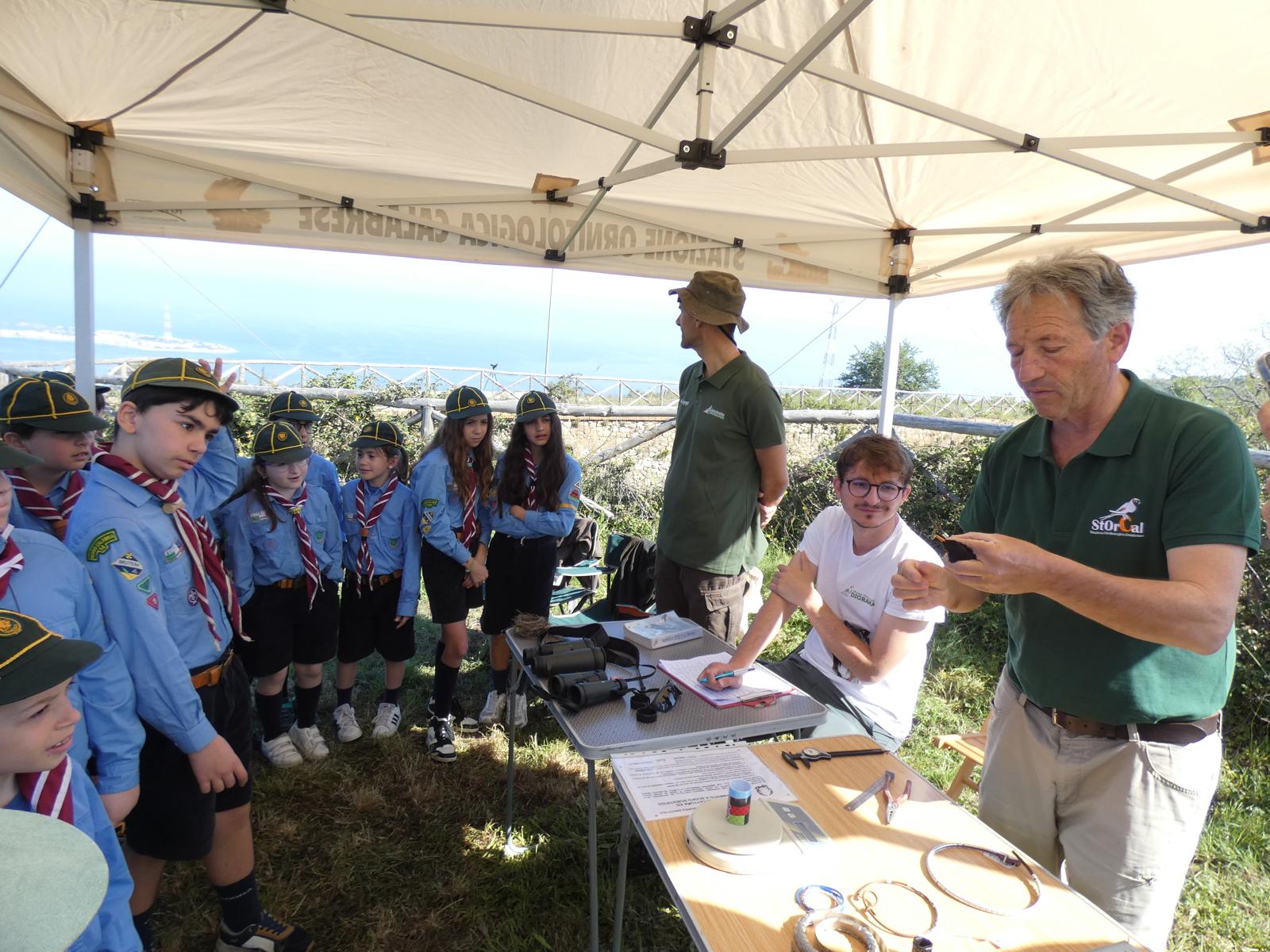
Guest blog post by Stazione Ornitologica Calabrese (StOrCal)

Calabria, the toe of the Italian peninsula, lies between the Tyrrhenian and Ionian seas, a short crossing from Sicily and the North African coast. That position has long made it a place where birds from very different regions turn up. Yet its avifauna had not been reviewed in full for more than thirty years.

Our study in Biodiversity Data Journal brings that picture up to date. Drawing on published papers, technical reports, ringing bulletins, museum specimens and validated citizen-science records up to 31 December 2025, we compiled an updated checklist of 363 species and nine subspecies.

That is 43 species more than the previous regional list of 320 (Scebba et al. 1993). None of the older records was dropped, so the additions represent a real gain in regional knowledge.

White-rumped Swift Apus caffer
White-rumped Swift, whose first Italian and central-Mediterranean breeding was documented in Calabria (Pucci et al. 2022). Photo credit: Mario Pucci.

One addition stands out. At an inland site in the province of Crotone, White-rumped Swift (Apus caffer) was found nesting, the first documented breeding of the species in Italy and in the central Mediterranean Basin (Pucci et al. 2022). An African swift breeding this far north suggests Calabria may be a bridgehead for Afro-Iberian species reaching Europe.

Bird ringing
Bird ringing at Punta Alice, where several of the region’s rare vagrants were first detected. Photo credit: Mario Pucci

Most of the other new entries tell a quieter story. Thirty-five of the 43 additions are accidental or vagrant birds, and they point to decades of more systematic fieldwork rather than to genuine range change. Targeted ringing at coastal stations such as Punta Alice (Crotone) and San Michele di Cetraro (Cosenza) has turned up Siberian warblers and flycatchers, among them Pallas’s Leaf Warbler, Dusky Warbler and Red-flanked Bluetail, that would otherwise pass unnoticed. In all, the vagrants recorded in Calabria come from Asia, Africa, northern Europe and even North America, a spread that makes the region a meeting point of separate migration systems.

The checklist also shows what is at stake for conservation. Of the 363 species, 125 are listed in Annex I of the EU Birds Directive, and national Red List categories are available for 230, including nine Critically Endangered.

Egyptian Vulture Neophron percnopterus
Egyptian Vulture, one of the Critically Endangered raptors still breeding in Calabria. Photo credit: Pierpaolo Storino

Most of the Critically Endangered birds depend on wetlands, tied to a small and fragmented network of coastal marshes. Among the region’s emblematic raptors is the Egyptian Vulture (Neophron percnopterus), still breeding in Calabria but represented in Italy by a small population with worrying fluctuations in the number of breeding birds, a reminder of how precarious the country’s cliff-nesting and scavenging raptors remain.

The full dataset is openly available on Zenodo, and the work is coordinated by the Stazione Ornitologica Calabrese (StOrCal), which brings the region’s observers together under shared standards. Much is still missing: the inland massifs of Pollino, Sila and Aspromonte remain under-surveyed, and breeding densities are poorly known for most species. The checklist gives that work a verifiable point to build on.

Original source:

Urso S, Martino G, Muscianese E, Policastrese M, Pucci M, Vena M, Storino P (2026) Updated checklist of the birds of Calabria (southern Italy). Biodiversity Data Journal 14: e195967. https://doi.org/10.3897/BDJ.14.e195967

New Snail Species Bolster Case For Protecting Montenegro’s Biodiversity

Scientists and citizen volunteers discovered two new snail species in northwestern Montenegro, highlighting the region’s hidden biodiversity and bolstering calls to protect Komarnica Canyon within Durmitor’s World Heritage Site instead of building a hydropower plant.

The descriptions of the two new additions to the European snail fauna, named Cochlostoma komarnica and Cochlostoma dobrido, have been published today in the open-access Biodiversity Data Journal.

A Cochlostoma snail crawling in Montenegro – video by Roman Willi | Wildreach Productions.

The elegant snails, which do not yet have English names, have conical shells of around 7 mm long and live on limestone rocks, where they graze algae and lichens. Unlike most land snails, they do not carry their eyes on the end of eye-stalks, but on the sides of their head. And their shells come with a circular disk stuck to the animal’s tail that can close off the shell like a door.

Shells of Cochlostoma komarnica and Cochlostoma dobrido
Cochlostoma komarnica (a, b) and Cochlostoma dobrido (c, d) – Photos by Enrico Zallot.

The snails were discovered by the teams of Taxon Expeditions, which run real scientific expeditions that anyone can join. Between 2018 – 2025, expeditions in Montenegro were organised as a collaboration of Taxon Expeditions, the non-profit Taxon Foundation, and local partners from the Montenegrin Ecologists Society. 

  • Citizen scientists and researchers from Taxon Expeditions searching for land snails on the Dobri Do Plateau, Durmitor, Montenegro, where Cochlostoma dobrido was discovered. -
  • Participants of the taxon expedition studying snails in the makeshift field lab near the Komarnica Canyon.

Mixed teams of international researchers, citizen scientists, local students, and conservationists studied the biodiversity of Durmitor National Park and Komarnica Canyon. The new snails were found at several sites during fieldwork in the rugged mountainous terrain, but their novelty only became clear once they were dissected and genetically analysed in the field laboratory.

  • Cochlostoma snail crawling in Montenegro.

During a voting session at camp, the team decided to name the species after the localities in which they were discovered: “Cochlostoma dobrido,” after the Dobri Do Plateau, which lies between the peaks of Durmitor National Park, and “Cochlostoma komarnica,” after the stunning but unprotected Komarnica Canyon, south of Durmitor. 

I was amazed that it is still possible to discover new animal species in Europe.

says musician Janine Buisman from The Netherlands, who joined one of the expeditions and co-authored the paper. 

Another author, biologist Jovana Đokić of the Montenegrin Ecologists Society (MES), explains that the rich biodiversity in the canyons, mountains, and gorges of this part of the Balkans is still largely unexplored and undiscovered.

Komarnica Canyon, Montenegro
The endangered Komarnica Canyon, Montenegro – Photo by Sotiris Kountouras | Taxon Expeditions.

It is all the more worrying that the Komarnica Canyon is targeted to be flooded by a hydropower dam and reservoir. This will destroy this wild river canyon and all the biodiversity in it, including many species still unknown to science.

Jovana Đokić

Because of these threats, Komarnica Canyon has become a focus for structured biodiversity surveys, part of an effort to build a science-based case for its conservation.

That is why MES is calling for the canyon to be included in the UNESCO World Heritage site of Durmitor and for the hydropower project’s plans to be scrapped.

Hydropower is neither green nor sustainable energy when it destroys a unique ecosystem like this.

says Đokić

Original source:

Schilthuizen M, Boomsma R, Faes S, Jousma M, Buisman J, Lankenau D-H, Kountouras S, van den Broek M, Hemelaar EM, Noomen J, de Vries R, Lopatriello G, Limongi AR, Maestri S, Kamchev P, van Manen S, Khalik MZ, Delledonne M, Đokić J, Mićanović A, Popović J, Njunjić I, Zallot E (2026) Two new Cochlostoma species from the Durmitor and Komarnica regions of northern Montenegro (Caenogastropoda, Cochlostomatidae). Biodiversity Data Journal 14: e196955. https://doi.org/10.3897/BDJ.14.e196955 

The Pensoft Biodiversity Cup 2026 comes to a close

Now that the 2026 FIFA World Cup is over, it’s time for us to blow the final whistle on Pensoft’s Biodiversity Cup.

The floodlights have dimmed, the confetti has settled, and the 2026 FIFA World Cup has officially come to an end. A huge congratulations to Spain, who saw off Argentina 1-0 after extra time to lift their second World Cup trophy.

And with the football finished, it’s time for us to blow the final whistle on our own tournament too. Throughout the World Cup, we ran the Pensoft Biodiversity Cup alongside the real competition – a weekly knockout contest on our Instagram page, pitting some of the most remarkable species described in our journals against one another.

Every Thursday we opened the polls, and every Monday we brought you the result. Now that the dust has settled, we thought it was the perfect moment to look back at how the tournament unfolded.

Here’s how each fixture played out, with the winning species (as voted for by you!) shown in blue bold:

DateSpecies #1Species #2
11/06Nadzikambia goodallaeFerreiraella populi
18/06Hellwigia opalinaNeohelicomyces coffeae
25/06Thecacera sesamaDolichopoda balrogi
02/07Pikelinia floydmurariaTrachischium lalremsangai
09/07Theridion himalayanaPyralis papaleonei
19/07Iberoscia zaragozaiEchinodorus nenufar
General recap of Pensoft’s Biodiversity Cup.

Our first week’s competition kicked off with a cloud-forest chameleon named after Jane Goodall, which faced off against a public-named deep-sea chiton from the abyssal Pacific:

Nadzikambia goodallae vs Ferreiraella populi.

The chameleon, Nadzikambia goodallae, came out on top in this opening clash, advancing past the deep-sea chiton Ferreiraella populi.

Round two, meanwhile, pitted a turquoise-flowered jade ginger from Sulawesi against a newly identified fungus found on dead coffee branches in Yunnan:

Hellwigia opalina vs Neohelicomyces coffeae.

…and round two went to the fungi! Neohelicomyces coffeae ended up decisively defeating the jade ginger Hellwigia opalina in this Plant vs Fungi edition.

Round three brought Cave vs. Coast: a Balrog-named cave cricket unearthed on Kastellorizo faced a sesame-speckled nudibranch discovered off northeastern Taiwan:

Thecacera sesama vs Dolichopoda balrogi.

Our third round went to the underdog (or in this case, undercricket): Dolichopoda balrogi, which hopped past Thecacera sesama in a unanimous win.

Round four was our Animal Kingdom edition, with the newly described Pink Floyd spider Pikelinia floydmuraria facing off against the burrowing snake Trachischium lalremsangai for the top spot:

Pikelinia floydmuraria vs Trachischium lalremsangai.

The snake slithered through – Trachischium lalremsangai defeated Pikelinia floydmuraria, its burrowing lifestyle proving harder to top than a rock-star spider name in this round.

Our second-to-last round paired the smiley-faced Himalayan Happy-Face Spider, Theridion himalayana, against Pyralis papaleonei, a papal-named moth endemic to Crete’s White Mountains:

Theridion himalayana vs Pyralis papaleonei.

The moth flew past the competition! Pyralis papaleonei took the win over Theridion himalayana, its rare papal namesake and striking wing bands proving enough to edge out even a face full of smiles.

Our own final on 19 July ended up mirroring the World Cup final to a tee, with a species from Spain going head-to-head with one from Argentina:

Iberoscia zaragozai vs Echinodorus nenufar.

Representing Spain in the final was Iberoscia zaragozai, a newly described genus and species of cave-dwelling isopod, published only this April in our open-access journal Subterranean Biology.

Discovered in caves across Catalonia, Murcia and the Valencian Community, this blind crustacean measures barely 3-4 mm long, yet required a new genus to accommodate it, thanks to its unique features – right down to its antennal sensory structures.

Fittingly, it’s named in posthumous tribute to the Spanish arachnologist Juan Antonio Zaragoza-Miralles, in recognition of his decades of work on the cave-dwelling fauna of the Iberian Peninsula.

Standing in Argentina’s corner was Echinodorus nenufar, a new aquatic plant described in PhytoKeys back in January. Found in the temporary ponds and seasonal wetlands of the dry Chaco region of northern Argentina and western Paraguay, it earns its name – “nenúfar” being Spanish for water lily – thanks to its rounded floating leaves and creamy-white flowers, which give it an uncanny resemblance to a true Nymphaeaceae water lily.

Like the seasonal killifish it shares its ephemeral ponds with, it has evolved to complete its whole life cycle in habitats that can appear and vanish with the rains.

Two species, two countries, both barely a few months old to science. This is a proper final if ever there was one. And… just like their footballing counterparts, it was the Spanish contender that came out on top!

We had an absolute blast running the Biodiversity Cup alongside this year’s World Cup, and we hope it gave you a fun new way to discover some of the incredible species being described in our journals. Thank you to everyone who voted, shared and cheered along from the side lines.

Keep up with our latest news and campaigns by following us on Facebook, Bluesky, X, Instagram, LinkedIn and TikTok.

Pensoft awarded the FAO AGRIS Seal of Recognition for 2027

The seal recognises institutions that consistently share open-access agricultural research with the global community.

Pensoft has been awarded the Seal of Recognition for the FAO AGRIS Active Data Provider of the Year for 2027. The seal is granted by the Food and Agriculture Organisation of the United Nations through its AGRIS initiative, and it recognises institutions that consistently share open-access agricultural research with the global community.

Notably, Pensoft joined the FAO AGRIS network back in 2024, and the organisation has renewed our seal every year since, a recognition we’re proud to have kept.

What has changed is the scale of our contribution. In 2024, Pensoft’s records on AGRIS numbered just under 15,000. Today, that figure has doubled to nearly 30,000, drawn from all 51 of our journals that fall within the scope of FAO AGRIS. The subjects covered are wide-ranging, spanning taxonomy, biodiversity, conservation and biogeography – these are all areas that feed directly into sustainable agriculture and natural resource management.

Through AGRIS, this research travels well beyond our own journals to researchers, policymakers and practitioners worldwide, adding to the shared pool of open knowledge that supports global food security and environmental sustainability. We’re glad to keep contributing to that effort, and look forward to continuing our work with FAO AGRIS in the years to come.


About FAO

The Food and Agriculture Organisation (FAO) is a specialised agency of the United Nations that leads international efforts to defeat hunger. Its goal is to achieve food security for all, ensuring that people have regular access to enough high-quality food to lead active, healthy lives. With 194 members, 193 countries and the European Union, FAO works in over 130 countries worldwide.

About Pensoft

Founded in 1992 “by scientists, for scientists,” Pensoft is an academic open-access publishing company well known worldwide for its cutting-edge publishing tools, workflows and methods for text and data publishing of journals, books and conference materials. In 2010, Pensoft became the first scientific publisher to introduce semantic enrichments in scholarly publications. Through its Research and Technical Development department, the company is involved in a range of research and technology projects.

Pensoft at the European Congress of Conservation Biology 2026 in Leiden

Highlights from Pensoft’s booth from the 8th European Congress of Conservation Biology (ECCB 2026) in Leiden.

Between 6-10 July, more than 850 participants from 25 countries gathered in Leiden, the Netherlands, for the 8th European Congress of Conservation Biology (ECCB) 2026.

The congress was organised by the Society for Conservation Biology (SCB) and hosted at Leiden University (FWN/CML), in partnership with Hortus botanicus, Wageningen University & Research (WUR), and NIOO-KNAW, with support from the Leiden Biodiversity Network.

  • Opening ceremony of ECCB 2026
  • Pensoft's booth at ECCB 2026
  • Exhibitor and poster hall at ECCB 2026.

Effective Biodiversity Conservation

Under the theme “Effective Biodiversity Conservation,” the congress brought together researchers, policymakers, and practitioners to explore how biodiversity can be safeguarded over the long term. Its core message was that effective conservation cannot rest on the efforts of conservationists alone. It requires coordinated, multidisciplinary, science-based action across society.

  • Opening ceremony of ECCB 2026
  • Prof. Dr. Geert de Snoo and his "1% of GDP for safeguarding nature!" presentation

Dr. Laura Bosco, President of SCB Europe, opened the congress and set the scene for the week ahead. Prof. Dr. Geert de Snoo, one of the congress’s co-organisers, followed with the presentation: “1% of GDP for safeguarding nature!” – a call to set aside 1% of global GDP to help close the biodiversity funding gap, given that half of the world’s GDP depends on natural ecosystem services, and to protect 30% of the Earth’s land and oceans by 2030.

From there, the programme ran packed with symposia, roundtables, and workshops covering policymaking and effectiveness, conservation planning, new methods for measuring and quantifying biodiversity, eDNA for conservation, citizen science, and remote sensing, alongside a poster session held each day.

Pensoft’s booth

Pensoft at he 8th European Congress of Conservation Biology (ECCB) 2026.

Our stand stood out with professionally designed booth walls and enjoyed a strong flow of visitors throughout the congress. Delegates met Pensoft’s Head of Journal Development and PR, Iva Boyadzhieva, who answered questions about publishing opportunities and scholarly resources, including Advanced Books, Pensoft’s platform for publishing open-access monographs, edited volumes, and other book-length scholarly works.

She also shared updates from the Horizon Europe-funded projects Biodiversity Meets Data and SpongeBoost. 

  • Pensoft's Fortune Wheel at ECCB 2026.
  • Pensoft's Fortune Wheel at ECCB 2026.
  • People signing up to Pensoft's newsletter and spinning the wheel.

For the first time, our booth also ran an interactive game, where visitors could spin a wheel to win some prizes. The game rules were simple: visitors filled out a subscription form for one or more journals, spun a wheel featuring the names of journals relevant to the congress, and won a sticker matching the journal they landed on. 

Visitor at Pensoft’s booth at the 8th European Congress of Conservation Biology, interacting with the wheel.

Curiously, the illustrations on the vivid stickers are not coincidental: each features a scientific illustration by Denitsa Peneva of a species discussed in a publication from across Pensoft’s scholarly portfolio – a nod to the authors who chose one of our journals to share their research.

Our journal portfolio on display

Visitors had the chance to explore Pensoft’s diverse open-access portfolio, from conservation-focused titles like Nature Conservation and Neotropical Biology and Conservation, to ecosystem-focused journals such as One Ecosystem, Frontiers of Biogeography, and NeoBiota.

  • Several journal materials at Pensoft's booth at ECCB 2026.
  • Several journal materials at Pensoft's booth at ECCB 2026.

The stand also showcased more specialised outlets, including Biodiversity Data Journal and Metabarcoding and Metagenomics, alongside our fungi-focused IMA Fungus and MycoKeys, and our vegetation titles Vegetation Classification and Survey and Vegetation Ecology and Diversity. Attendees also had the chance to learn more about our newly launched diamond open-access Journal of Regeneration.

Close up of Individual-Based Ecology and Agricultural and Environmental Modelling journals.
Individual-Based Ecology and Agricultural and Environmental Modelling on focus at ECCB 2026.

A particular highlight was our trio of diamond open-access journals, free to publish in and free to read, that drew considerable interest from attendees: 

  • Individual-Based Ecology promotes a distinctive individual-based perspective on ecology, aiming to bridge individual behaviour and broader ecological patterns. 
  • Advances in Pollinator Research covers the full spectrum of pollinator science, from pollination ecology to conservation, designed as an innovative platform for the full spectrum of pollinator science, from pollination ecology and pollinator-plant interactions to molecular ecology, conservation and more. 
  • Agricultural and Environmental Modelling, meanwhile, offers an innovative approach to publishing, dedicated to advancing both the science and practice of modelling across Agriculture, Food Systems, Natural Resources, and Environmental Sciences. 

Familiar faces at the stand

  • Deputy Editor-in-Chief, Dr. Annegret Grimm-Seyfarth, at Pensoft's booth at ECCB 2026.
  • Prof. Davy McCracken, Subject Editor at Nature Conservation.
  • Dr. Niels Raes, project coordinator of Biodiversity Meets Data.
  • Martina Viti and Annika Zuleger, authors that have published across Pensoft's journal at ECCB 2026.

Our booth was visited by Nature Conservation’s Deputy Editor-in-Chief Annegret Grimm-Seyfarth. Earlier that week, she also co-organised a symposium, “How can Wildlife Detection Dogs contribute to effective biodiversity conservation in Europe?” As well as one of Nature Conservation’s Subject Editor, Prof. Davy McCracken and Dr. Niels Raes, the project coordinator of Biodiversity Meets Data.

We also met one of our authors, Andra Neagu, in person. We recently ran a PR campaign on her and her team’s research analysing more than 1,100 media reports from 2007 to 2024 to uncover patterns in wildlife poaching across Romania, which you can read here.

  • Andra Neagu, an author at Nature Conservation at Pensoft's booth at ECCB 2026.
  • Andra Neagu next to her scientific poster at ECCB 2026.

Looking ahead

  • Closing ceremony of ECCB 2026.
  • Closing ceremony of ECCB 2026.

It was a pleasure to be part of ECCB 2026 and to connect with so many researchers, policymakers, and practitioners working toward effective biodiversity conservation.

Save the date: SCB’s 33rd International Congress for Conservation Biology (ICCB 2027) will be held in Puebla, Mexico, at the end of June or beginning of July 2027.

Follow us on Bluesky, Facebook, X, and LinkedIn for more future updates.

Understanding Ecosystems Through Vegetation: Highlights from the 68th IAVS Annual Symposium

Pensoft attended the 68th IAVS Annual Symposium in Gijon, Spain.

This summer, Gijón, Spain played host to the 68th Annual Symposium of the International Association for Vegetation Science (IAVS), welcoming 465 participants from 49 countries for five extraordinary days under the theme “Understanding Ecosystems Through Vegetation.“

Held from 22-26 June 2026, the symposium brought together researchers working across the full spectrum of the field, from Earth Observation and vegetation databases to plant community interactions, seed regeneration, and long-term vegetation dynamics. From opening keynotes to the closing ceremony, the energy, curiosity, and collegiality of our community made this one for the books.

A Packed Scientific Programme

  • The opening ceremony of the 68th IAVS Annual Symposium.
  • Pensoft's stand at the 68th IAVS Annual Symposium.

Alongside the core symposium topics, this year’s programme featured seven special sessions on some of the field’s most pressing questions, including bringing different vegetation classification approaches together, plant biogeography and macroecology, scaling laws in vegetation ecology, belowground functional ecology and more.

Moreover, the session themed “Bringing the different vegetation classification approaches together”, sponsored by the IAVS Vegetation Classification Working Group, will be used as a basis for assembling a Special Collection in the open-access journal Vegetation Classification and Survey (VCS).

Two of VCS’ Editors-in-Chief also took the stage this year: Prof. Jürgen Dengler shared a presentation called “Plant invasions in grasslands of Switzerland: invaders, spatial patterns and effects on biodiversity”.

While Dr. Idoia Biurrun presented “The power of scale: uncovering biodiversity patterns and environmental drivers in riparian forests”.

Spotlight On Our Vegetation Science Journals

Speaking of that journal, we’ve been proud collaborators with IAVS since 2020, when we launched Vegetation Classification and Survey (VCS) together as the association’s newest journal. At this year’s symposium, we had the chance to showcase both VCS and our other flagship vegetation title, Vegetation Ecology and Diversity (VED), to the community. 

Vegetation Classification and Survey promotional materials from the 68th IAVS Annual Symposium.

Vegetation Classification and Survey (VCS) is an international, peer-reviewed, online journal on plant community ecology, published on behalf of IAVS. It is devoted to vegetation survey and classification at any organisational and spatial scale, welcoming original papers that develop new vegetation typologies as well as applied studies, from vegetation mapping and ecosystem modelling to nature conservation and land-use management.

Five years after launch, VCS is boasting a 2025 Scopus CiteScore of 4.7 (up from 3.6 the year before), and the journal is now ranked Q1 across all the categories in which it is indexed.

Vegetation Ecology and Diversity  promotional materials from the 68th IAVS Annual Symposium.
Vegetation Ecology and Diversity promotional materials from the 68th IAVS Annual Symposium.

Vegetation Ecology and Diversity (VED) is a peer-reviewed, open-access journal owned by the Italian Society of Vegetation Science (SISV). It publishes original research covering all aspects of vegetation, from plant communities to landscapes, with a particular focus on plant community ecology and vegetation surveys used to advance ecological models, classify vegetation, map ecosystems, and monitor and conserve European habitats.

A Productive Conversation About VCS’s Future

  • Pensoft's team presenting during the Editorial Meeting at the 68th IAVS Annual Symposium.
  • Editorial meeting at the 68th IAVS Symposium.
  • Editorial Meeting at IAVS 2026.

For Pensoft, one of the standout moments of the symposium was the VCS editorial meeting, where we had the chance to sit down with members of the journal’s editorial board for a candid and productive discussion about Vegetation Classification and Survey‘s current position and its prospects for future growth. It was a valuable opportunity to hear directly from the people shaping the journal’s direction and to plan the next steps together.

Pensoft's Head of Marketing, Sales and Events with  Susan WiserP resident of IAVS during the 68th Annual Symposium.
Pensoft’s Head of Marketing, Sales and Events with Susan WiserP resident of IAVS during the 68th Annual Symposium.

During the symposium, Pensoft’s stand was visited by Susan Wiser, President of IAVS, giving our on-site team the chance to discuss our ongoing publishing collaboration. 

Our Diverse Journal Portfolio On Display

Beyond VCS and VED, our stand featured a wide range of open-access, peer-reviewed journals from our vegetation science and biodiversity portfolio – spanning plant-focused scientific outlets like Plant Ecology and Evolution, Italian Botanist, and PhytoKeys to conservation and ecosystem titles such as Nature Conservation, One Ecosystem, NeoBiota, Frontiers of Biogeography, and Neotropical Biology and Conservation. On display were also Pensoft’s fungi-focused journals: IMA Fungus and MycoKeys.

  • Some of the journal materials on display wtih Denitsa Peneva's beautiful illustrations.
  • Vegetation Classification and Survey along with CheckList and Neotropical Biology and Conservation promotional materials at IAVS 2026.
  • Agricultural and Environmental Modelling flyer in front of the 68th IAVS Annual Symposium banner.
  • Frontiers of Biogeography in focus, alongside stickers illustrated by Denitsa Peneva.
  • Metabarcoding and Metagenomics, Individual-Based Ecology and Nature Conservation brochures in focus at IAVS 2026.

Аttendees also stopped by to explore and learn more about Pensoft’s more specialised outlets such as Metabarcoding and Metagenomics, Biodiversity Data Journal, Individual-Based Ecology and the recently relaunched Agricultural and Environmental Modelling as well as Check List, all of which sparked great conversations at the stand.

Our recently launched diamond open-access journal, Advances in Pollinator Research, also drew plenty of interest.

Celebrating The Next Generation Of Vegetation Scientists

Celia González-López receiving the Young Scientist Award at the 68th IAVS Annual Symposium.

Оne of the many highlights that week was seeing the Young Scientist Award go to Celia González-López, recognising her outstanding early-career contributions to the field. Curiously, González-López is among the co-authors of a recent paper in Natural History Collections and Museomics, describing a workflow for creating 3D-printed insect replicas to make museum collections more accessible for education and outreach.

Looking Ahead

IAVS group photo
Group photo at the end of the conference. Credit to IAVS.

It was a great pleasure to become part of the IAVS community, and we look forward to an even stronger collaboration and many productive achievements together in the years to come.

Save the date: the 69th IAVS Annual Symposium will be held in Kumasi, Ashanti Region, Ghana, from 12-16 July 2027.

You can follow Pensoft on Bluesky, Facebook, X and LinkedIn to keep up all the latest updates and the events we are attending.