Pensoft publishes the collection of abstracts for LTER Bulgaria 20th anniversary conference

The “sea capital” of Bulgaria, the city of Varna, hosted a very special occasion during the past week – an international conference marking the 20th anniversary of the LTER-BG network. Over the past two decades, its members have been dedicated to establishing roadmaps and infrastructures for generating, consolidating and sharing ecosystem research data across the Balkan country and beyond.

In celebration of this milestone, members of the wider eLTER community, encompassing the whole of Europe, contributed to a three-day agenda packed with progress updates, innovative showcases and meaningful discussions on the past and future of long-term ecosystem, critical zone and socio-ecological research.

 eLTER network at the LTER-BG International Scientific Conference 2026
The participants in the LTER Bulgaria international scientific conference 2026.

Pensoft Publishers has served as the communication and dissemination partner for the eLTER Research Infrastructure for the past six years. Pensoft has also always supported the activities of LTER Bulgaria.

For this 20th anniversary conference, all 55 abstracts for oral and poster presentations were organised and published in a special collection titled “Long-Term Ecosystem Research: Contributions, Challenges and Future Perspectives” on the ARPHA Conference Abstracts, and for less than a week it has already garnered over 6,000 views.

ARPHA Conference Abstracts from LTER-BG International Scientific Conference 2026

Conference abstracts published in ARPHA Conference Abstracts.

Impressed by the statements of engagement made by young scientists within the eLTER community, the Pensoft team supported the organisers’ idea to provide an Early Career Scientist Award, which granted its recipient a free publication in the One Ecosystem journal.

Following a unanimous vote by the  dedicated jury members Svetla Doncheva, Vesela Evtimova, Elena Todorova and Alexandra Tzvetkova, early career researcher Sabica Naz from the Slovak Academy of Sciences was selected as the winner. She distinguished herself with the presentation “Impacts of pre-season climatic and functional drivers on the spring onset of phenocam-derived GCC”. 

As the official communication partner of eLTER and its affiliated projects, Pensoft provided dissemination materials by eLTER RI at the dedicated booth where attendees also had the opportunity to familiarise themselves with the company’s wider publishing and research project portfolio.

At the booth, participants could get acquainted with Pensoft’s wider scientific journal portfolio. With One Ecosystem and Nature Conservation covering ecosystem science and conservation practices, NeoBiota focuses on biological invasions and Advances in Pollinator Research dedicated to all things pollinator science. Individual-based Ecology publishes research on individual-level ecological processes while the Biodiversity Data Journal supports the publication of biodiversity data. Alongside these, Research Ideas and Outcomes offers a platform for sharing research across the whole project cycle, from proposals to final results.

  • ORPHO and Scientiana promo materials
  • Metabarcoding and Metagenomics brochure.
  • Frontiers of Biogeography brochure.
  • Advances in Pollinator Research
  • Individual-based Ecology
  • One Ecosystem journal
  • NeoBiota promo materials.

Beyond these commitments, Pensoft was front and centre within the event’s agenda as well.

Alexandra Tzvetkova during the opening panel of LTER-BG International Scientific Conference 2026
Alexandra Tzvetkova during the opening panel.

During the opening panel, Alexandra Tzvetkova, part of the Pensoft team working for eLTER RI, welcomed the participants, reminded them to start sharing the special collection of abstracts with their networks and highlighted the innovative propositions from Pensoft that were about to be presented in the next days and could be very useful for the eLTER community in the future – Scientiana and ORPHO.

Further, two Pensoft presentations were delivered as part of the thematic session “Emerging Technologies in Ecosystem Research, Data Management and Open Science in LTER”, and brought the audience closer to the publisher’s vision for the future:

Senior Communications Officer Peter Bozakov delved into the forthcoming science communication platform for research projects Scientiana. Launching in early 2027, it is set to be a portal for consolidating knowledge, mapping out collaborations and innovating outreach in the context of past, present and future scientific initiatives at all scales.
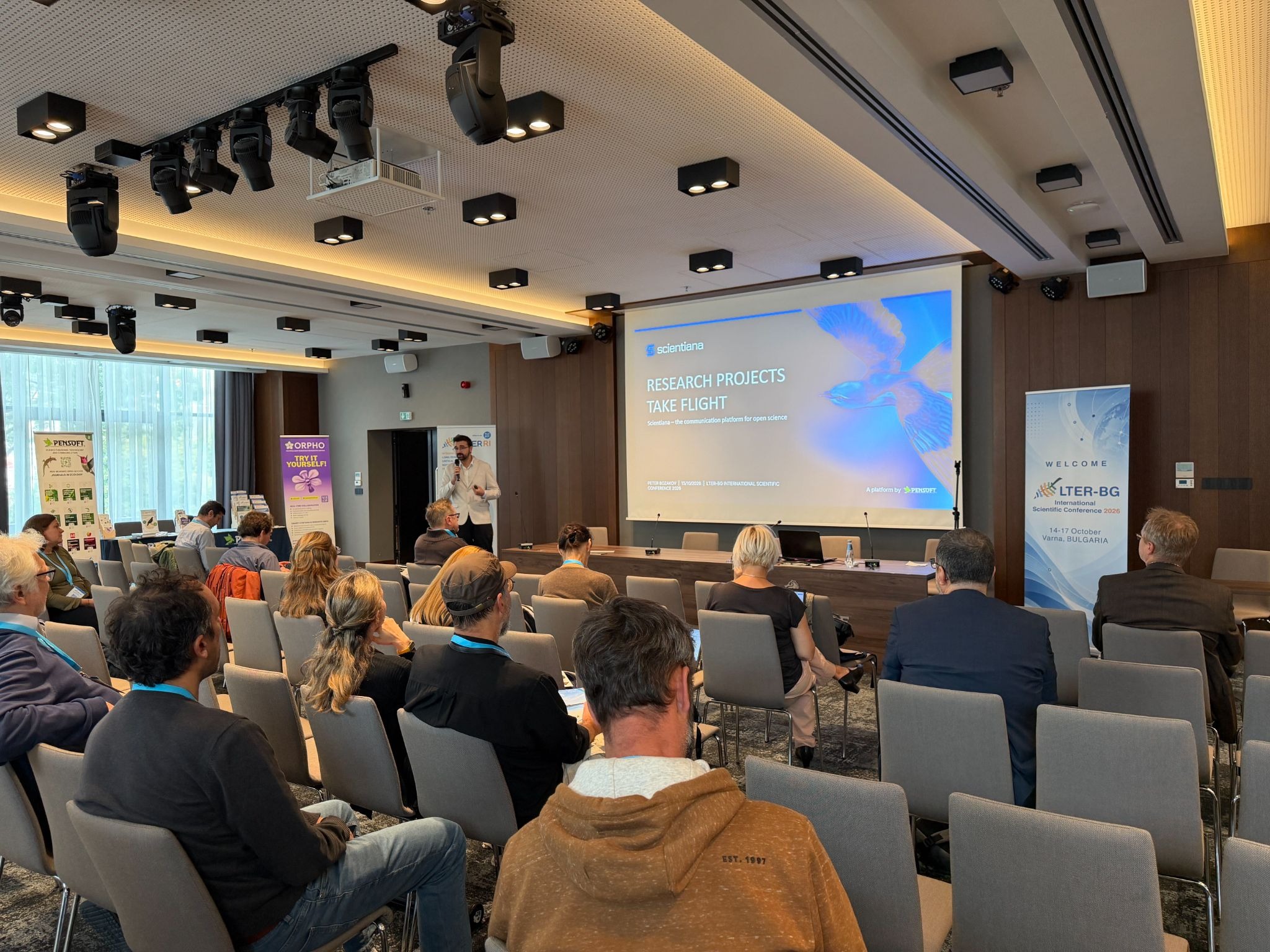
Pensoft’s newest platform Scientiana
Peter Bozakov introduces Pensoft’s newest platform – Scientiana.

While, Events and Marketing Coordinator Victoria Stoyanova explored the new frontiers that an AI-FAIR outlook unveils in the domain of academic publishing. Specifically, she showcased the evolution of the ARPHA platform and the newly launched ORPHO, Pensoft’s next-gen collaborative writing tool, as examples of innovation placed directly in the hands of authors.

Together, ARPHA and ORPHO support the entire manuscript workflow from submission to publication, with structuring, taxon tagging, classification, and data publication  taking place as part of the publication process itself. 
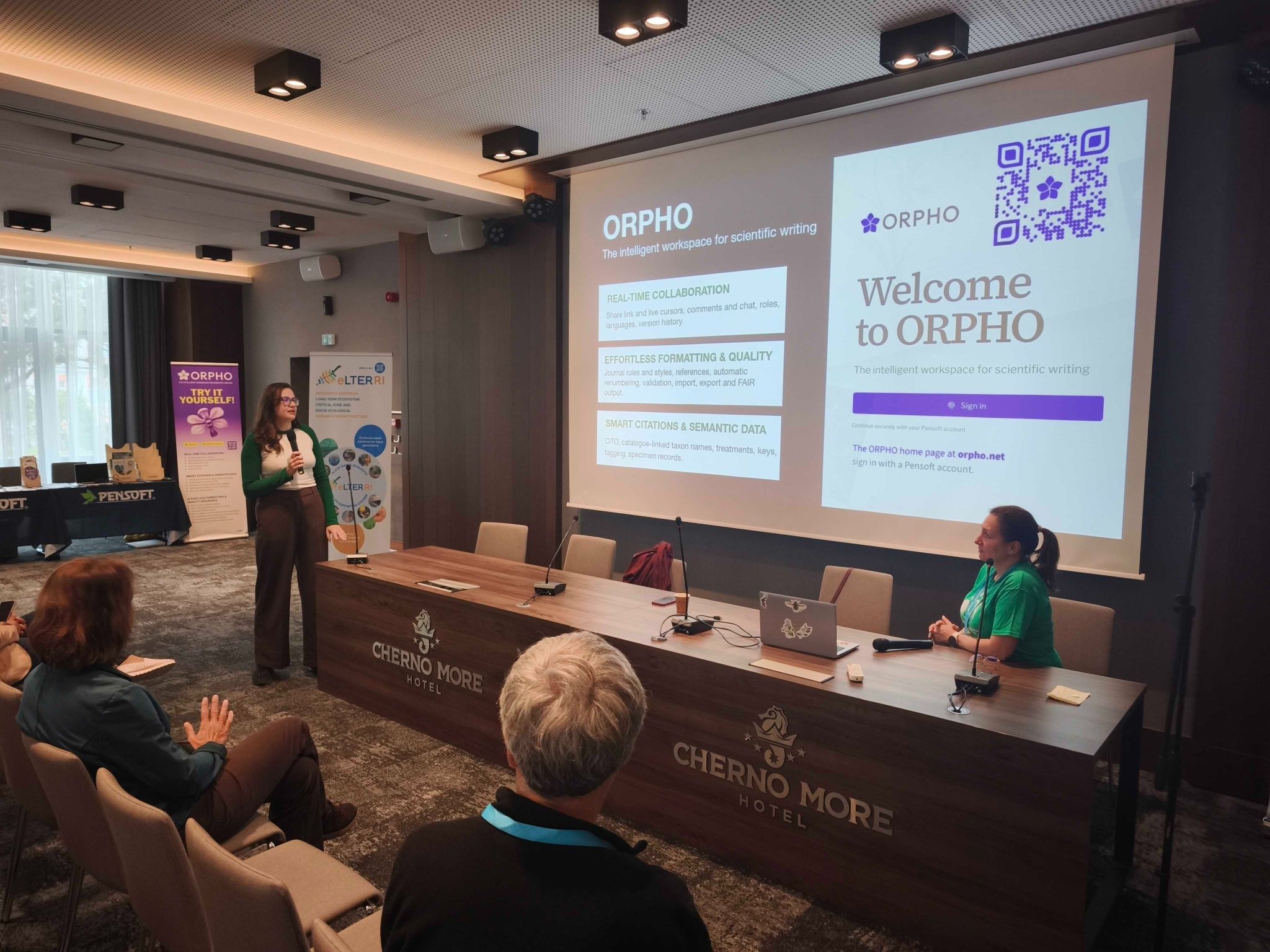
A crash course in using ORHPO
A crash course in using ORHPO by Victoria Stoyanova

The presentations proved themselves a stepping stone to further discussions on potential collaborations with scientists, conversations that were bolstered by on-site demonstrations of the tools in question.

The conference in Varna was enjoyable, fruitful and full of hope and esteem for the better future of long-term ecosystem research. And our Pensoft team left with many ideas and an affirmed ambition to keep working to provide better solutions and services for the development of European science. What we will always remember are the words of our host – the national coordinator of LTER Bulgaria in the past 20 years, Svetla Doncheva-Bratanova: 

I would like to thank the Pensoft team for the wonderful participation in the conference. You are amazing and I am certain we could do wonders together!

Many thanks to the Bulgarian LTER community and the wider eLTER community for bringing together so many passionate researchers and making these past few days special.

Pensoft at TDWG2026: Pushing the boundaries of innovation in biodiversity data management forward

Last week marked another annual meeting of the Biodiversity Information Standards network, otherwise known as TDWG, with the Norwegian capital Oslo hosting the event between 20 and 25 September.

Last week marked another annual meeting of the Biodiversity Information Standards network, otherwise known as TDWG, with the Norwegian capital Oslo hosting the event between 21 and 25 September.

TDWG is the international, non-profit organisation formerly known as the Taxonomic Databases Working Group, which develops and maintains the standards, such as Darwin Core, that allow biodiversity data to be shared, integrated and understood across institutions worldwide.

The six-day programme was a meeting point for over 300 stakeholders from research, practitioner and corporate circles, with proceedings centred around one central topic – “Research and Robot-Ready Biodiversity Data Standards”. In that sense, the themes of accessibility, responsibility, innovation and collaboration were foremost on the minds of participants as they contemplated how information on the biosphere should be extracted, consolidated and shared in the years to come.

As a long-standing partner of TDWG, Pensoft Publishers served as both a sponsor and an exhibitor for the event. In the latter capacity, the company contributed with a joint booth for three of the EU-funded projects it is leading the outreach efforts for:

  • BMD – an initiative working towards a Biodiversity Explorer for high-throughput biodiversity monitoring tools, biodiversity data and biodiversity analyses for better conservation across Europe
  • TETTRIX – a new arrival building a next-generation taxonomic system connecting knowledge, expertise and innovation for all across the Old Continent
  • ANERIS – a pan-European effort to mobilise a network of operational marine biology via a new technological infrastructure
The Pensoft team at the joint booth of the BMD, TETTRIX and ANERIS projects.

A number of other projects from Pensoft’s communication portfolio also found a place in the display, including BEAGLE, OneSTOP, B-Cubed, MAMBO, OBSGESSION and BioAgora. Furthermore, 14 of the company’s journals were in the spotlight, including Biodiversity Information Science and Standards (BISS), the official journal of the TDWG community (where all of the conference’s abstracts are set to be published).  

Crucially, the event also saw the official launch of ORPHO, Pensoft’s new collaborative workspace for scientific writing. Founder and CEO Prof. Lyubomir Penev and CTO Teodor Georgiev conducted live demos of the tool, showcasing how manuscripts crafted within it with full version control for authors become discoverable, interoperable and FAIR-compliant.

In the context of TDWG2026’s agenda, they also presented ORPHO’s integrated semantic annotation and communication instruments as part of the workshop “How Literature Services can Support & Benefit from Biodiversity Publication and Data Standards?” on 24 September. The workspace was received with anticipation and enthusiasm by attendees, with many expressing a desire to test it out for themselves.

They were also treated with a tease of Pensoft’s next large-scale endeavour, as Senior Communications Officer Peter Bozakov pulled the curtain behind the forthcoming communication platform for research projects Scientiana.

As for other notable contributions to the wider conference agenda by researchers affiliated with Pensoft’s publishing or project activities:

  • The session “Operationalising Biodiversity Digital Twins within Data Space Ecosystems”, which was co-led by BMD coordinator and long-time author and reviewer across several Pensoft journals, including Biodiversity Data Journal and Research Ideas and Outcomes, Niels Raes, and showcased a number of innovative outputs from the project. As such, it was an important occasion to assess the initiative’s progress towards unifying Europe’s Data Space within a single Biodiversity Explorer.
Niels Raes presenting “Mainstreaming high-throughput biodiversity monitoring using AI” at TDWG 2026.
  • The symposium “Publishing and Communications Promoting Biodiversity, Natural History Collections, People, Data and Data Standards”, for which Deborah Paul (co-Editor-in-Chief of the Natural History Collections and Museomics (NHCM) journal) had the role of co-organiser. Within it, the TETTRIX project’s vision for the automated tracking of taxonomic research activities was laid out by consortium member David Fichtmüller. Moreover, Shelley James (co-Editor-in-Chief for NHCM) delivered an insightful talk on the creative promotion of biodiversity data and standards for success and recognition.
Co-Editors-in-Chief of NHCM, Shelley James and Deborah Paul, presenting “Hit or miss? Creative promotion of biodiversity data and standards for success and recognition” at TDWG 2026.

Notably, the Biodiversity Information Science and Standards (BISS) journal is the home for TDWG conference abstracts. TDWG 2026 presenters can currently submit their abstracts there and publish them in an extended abstract or mini-paper format completely free of charge. The journal also hosts abstracts from conferences held over the past decade. You can browse the TDWG 2026 collection here.

Last but not least, the company’s sponsorship supported two awards at TDWG2026 (with a free publication in a Pensoft journal as an accompanying prize):

  • Best Student Oral Presentation – awarded to Yeshan Qui for “Reporting structure and sampling-bias correction in citizen-science bird data across Asian cities”
  • Best Student Poster – awarded to Claudia Campanini for “Improving marine fieldwork documentation and metadata with Adaptable Standardised Methods Reporting (ASMR)”
Claudia Campanini receiving the Pensoft Best Student Poster Award at TDWG 2026.

Overall, TDWG2026 proved itself a crucial forum for mapping out the future of biodiversity monitoring and the management of the myriad data streams that emerge from it. Pensoft is proud to be an important actor in this process, contributing with innovative tools and solutions at the heart of the interface between research and practice. As summarised by Prof. Penev:

“Given its status as a large-scale conference centred around the future of biodiversity sciences in the age of AI, TDWG2026 was a crucial venue for unveiling Pensoft’s forward-looking vision for academic publishing and science communication. The “pearl” of these pursuits is undoubtedly the ORPHO workspace, a tool that is well-placed to introduce a new standard when it comes to collaborative AI-FAIR research in Europe and beyond.”

***


Follow us on Bluesky, Facebook, X, and LinkedIn for future conference updates.

Pensoft at the Nordic Oikos-GfÖ 2026 conference: Integrating the Diversity of Ecology

Between 13-17 September 2026, Pensoft Publishers joined the Nordic Oikos-GfÖ 2026 conference in Odense, Denmark.

Between 13-17 September 2026, Pensoft Publishers joined the Nordic Oikos-GfÖ 2026 conference, jointly organised by the Nordic Society Oikos and the Ecological Society of Germany, Austria and Switzerland (GfÖ) in Odense, Denmark.

Themed “Integrating the Diversity of Ecology”, the event welcomed over 1,000 researchers in the field from across career stages, who had the opportunity to enjoy conference talks across 36 thematic sessions, as many as six keynote talks, two poster sessions, several open society meetings and quite a few social events, including excursions and a conference dinner. 

Conference delegates enjoying the musical clock installation mounted on an elevated balcony on the glass façade of the ODEON building, where the Nordic Oikos-GfÖ 2026 conference took place between 13 and 17 September 2026.

Throughout the scientific event, conference delegates had the opportunity to also explore the various publishing services offered by Pensoft to authors of research, journal managers, conference organisers; the diverse portfolio of almost 100 open-access peer-reviewed journals published on Pensoft’s ARPHA Publishing Platform.

Beyond publishing solutions, a key focus was given to OBSGESSION: a Horizon Europe-funded project where Pensoft is actively involved. To better understand and predict changes in terrestrial and freshwater ecosystems, the OBSGESSION consortium integrates multi-source Earth Observation data (such as high-resolution satellite imagery and drone monitoring) with ground-based in-situ research, including advanced environmental DNA (eDNA) sampling. By coupling these data streams with cutting-edge detection-attribution modelling and machine learning algorithms, the project generates scalable Essential Biodiversity Variables (EBVs). These ecological approaches and analytical frameworks are actively tested and validated through six biodiversity pilots across diverse European ecosystems. In the open-science Research Ideas and Outcomes journal, you can find a collection of project outputs, including research papers, project reports and deliverables, and guideline papers published across journals and platforms.

At the Pensoft-OBSGESSION-branded booth, conference participants would stop by to chat with Pensoft’s Head of Journal development and PR: Iva Boyadzhieva and Senior Communications Officer: Desislava Raykova.

As a leader of the “Dissemination, Multi-stakeholder outreach and synergies” work package at OBSGESSION, Pensoft is tasked with stakeholder engagement and community building, ultimately contributing to the high impact of the resulting outputs, methodologies and policy recommendations that aim to strengthen public understanding of biodiversity change.

*

One of the six keynote talks was presented by Prof. Dr. Isabell Hensen (Martin Luther University Halle, Germany), who received the GfÖ Honorary Medal 2026 for her leading, forward-looking contributions to ecological research and the scientific community. Her work examines how genetic variation, environmental conditions, disturbance, and plant-animal interactions shape plant populations, with particular emphasis on rare species, biological invasions, and the regeneration of degraded forests.

In her talk, titled “One spark is enough: regeneration ecology of Andean forests under global change”, she reported on post-fire regeneration processes in tropical Andean forests, based on long-term field experiments and observational studies. 

Hensen focused on the well-studied endemic plant genus Polylepis, which forms the world’s highest-elevation forests and illustrates how fire has shaped ecosystem dynamics over millennia. Her talk also mentioned a 2022 monograph of the genus, published in the Pensoft journal PhytoKeys by Tatiana Erika Boza Espinoza (Pontificia Universidad Católica del Perú) and Michael Kessler (University of Zurich), which brought together results from 35 years of field and herbarium experience.

*

On Wednesday, Pensoft’s Iva Boyadzhieva delivered a presentation titled “Scholarly Communication: Lessons from the Publisher’s Kitchen”. She highlighted the vital role publishers play in helping researchers communicate their insights not only to peers, but also to decision-makers and the public. Emphasizing the publisher’s responsibility to support authors with robust infrastructure and dedicated human expertise, she outlined how Pensoft works to FAIRify scholarly publishing and future-proof scientific knowledge in an era of rapid AI development and expanding research output.

*

Pensoft’s team was delighted to meet up with dedicated readers, authors, reviewers, and editors from across Pensoft’s portfolio, as well as introduce Pensoft journals to attendees discovering them for the first time.

Unsurprisingly, well-established society journals published by Pensoft, such as Frontiers of Biogeography, NeoBiota, Vegetation Classification and Survey, Vegetation Ecology and Diversity and Italian Botanist drew plenty of attention, alongside long-standing Pensoft’s own titles like Nature Conservation, PhytoKeys, One Ecosystem and the Biodiversity Data Journal. 

Visitors were also particularly intrigued by several newly launched Pensoft journals. Developed in close collaboration with passionate researchers, these fresh outlets directly address key gaps in academic publishing. 

One of the newly launched journals in the spotlight was Agricultural and Environmental Modelling (AEM), which provides a unique scholarly outlet thanks to its modern approach to publishing by increasing transparency, giving credit to research objects across the entire modelling research lifecycle. This is achieved through publishing specialised article types, such as: Formal Model, Model Testing and Calibration, Model Implementation and Documentation, Data Papers and Software Descriptions. These new publishing formats are designed to keep pace with advances in Modelling research and to make it FAIR (Findable, Accessible, Interoperable, and Reusable) by enabling scholarly credit for diverse research outputs, often created by different groups of authors. For the time being, AEM remains a Diamond Open Access journal, meaning that it will not charge authors for open-access publication. 

Other recently founded journals addressing emerging and fast-developing disciplines within the ecological field that took the spotlight were:

  • Individual-Based Ecology: launched to support understanding and predicting ecological systems’ response to rapidly changing and novel conditions by linking individual responses to responses at higher levels of organisation.
  • Advances in Pollinator Research: a multidisciplinary journal publishing research on pollination ecology, pollinator-plant interactions, pollinator health and drivers of pollinator declines, crop and wild flower pollination, pollinator conservation practices, molecular ecology of pollinators, pollinator and pollination monitoring, decision support for policy and socio-economics.
  • Journal of Regeneration: a multidisciplinary journal for the dissemination of research results on regeneration and tissue repair across phyla. These mechanisms can be framed within an evolutionary framework and integrate a variety of cellular processes involving stem cells, dedifferentiating or even transdifferentiating cells. 

All of these journals operate with no article fees for either authors, nor readers.

To receive updates on new publications and relevant news, sign up for Email Alerts on any journal’s homepage. Creating a Pensoft account also allows users to  easily customise their notification preferences, follow additional journals, or filter updates by research topic. You can also follow journals on social media, including BlueSky, Facebook and Linkedin.

*

Supporting European Policy Through Priority Essential Biodiversity Variables (EBVs)

Delegates at the event showed strong interest in OBSGESSION’s first policy brief: “Prioritising Essential Biodiversity Variables (EBVs) to support European Union (EU) policy needs based on the EU’s Biodiversity Strategy for 2030.” To tackle a critical challenge in environmental monitoring, OBSGESSION focuses on prioritising key EBVs to directly support the EU Biodiversity Strategy 2030 – a roadmap designed to put Europe’s biodiversity on a path to recovery through 102 specific actions and sub-actions.

To align these policy needs with actionable data, the OBSGESSION team conducted an assessment to identify priority EBV candidates. By categorising EBV-applicable actions and indicators across different ecosystem realms and implementation stages, the project pinpointed the most essential variables needed to strengthen monitoring, reporting, and policy execution. The document is based on a deliverable by the project (D1.1 Policy Landscape and Needs Assessment).

This policy brief is part of a broader, ongoing effort within OBSGESSION to bridge the gap between biodiversity data and policy execution. To dive deeper into the science behind this topic, the project has hosted a dedicated seminar series exploring key aspects of the framework:

Bringing Methodologies to Life Across European Ecosystems

Beyond theoretical frameworks, OBSGESSION grounds its research in six biodiversity validation pilots across Europe. The case studies represent European biodiversity and ecosystem conservation challenges at scales varying from local to regional. Full details on each ecosystem pilot are now available in a collection of newly published pilot factsheets, which made their debut at the conference, where people could take a look at their digital versions. 

Reading those materials gives an insight into the practical testing environment to demonstrate how Earth observation, field research, and ecological modelling come together to deliver actionable biodiversity insights. You can also check out OBSGESSION’s biodiversity pilots on the project’s website.

The OBSGESSION in a Nutshell video presents a concise overview of the project’s overarching mission and components.

*

To relive the conference by exploring the detailed programme alongside the full abstracts, visit the conference website.

Keep up with future updates and news from Pensoft by following us on Bluesky, Facebook, X, and LinkedIn. 

Pensoft launches ORPHO: A new intelligent workspace for scientific writing

The beta release of an innovative collaborative stand-alone authoring tool transforms manuscript preparation with semantic enrichment and real-time collaboration capabilities.

Scholarly publisher and technology provider Pensoft Publishers announces the beta launch of ORPHO, a revolutionary online platform designed to streamline collaborative scientific writing and produce AI-ready, future-proof scholarly literature. 

ORPHO presents a significant advancement in scholarly publishing technology, combining intuitive writing features with sophisticated semantic enrichment capabilities. The new platform builds upon Pensoft’s fifteen years of experience as a developer of semantic publishing infrastructure.

Key Features

Within a shared online workspace, researchers can start with built-in customisable templates, create their own or import an existing file. They can then team up with collaborators in real time using track changes, role-based user rights, inline comments, and document-level chat. More significantly, ORPHO automatically structures scientific content according to international publishing standards, making research outputs findable, discoverable, interoperable and reusable (FAIR) once published. 

Unlike its predecessor, the ARPHA Writing Tool, ORPHO is available as a standalone real-time collaborative workspace decoupled from journals hosted on Pensoft’s ARPHA Publishing Platform. Once a manuscript is ready, authors receive AI-FAIR machine-readable content that can be formatted to meet multiple journal requirements at the click of a button.

The platform’s adaptability to domain-specific workflows is currently being piloted in biodiversity science. ORPHO integrates seamlessly with leading biodiversity data aggregators, including the Global Biodiversity Information Facility (GBIF), Barcode of Life Data Systems (BOLD) and PlutoF, via import and export facilities for structured data, making ORPHO particularly valuable for researchers handling taxonomic, ecological and biodiversity data. 

Taxon names, for example, can be automatically imported and linked through persistent identifiers from sources like the Catalogue of Life (CoL), International Plant Names Index (IPNI), World Register of Marine Species (WoRMS) and World Flora Online (WFO).

Why ORPHO?

The name draws inspiration from multiple sources which reflect the tool’s philosophy and heritage. Named after Orphium: a unique plant genus endemic to South Africa whose sole species (Orphium frutescens) is known as the sea rose, ORPHO reflects the platform’s distinctive nature, heritage, and core philosophy.

It also evokes Orpheus, the legendary musician of ancient Thrace whose home region, the Rhodopi Mountains, lies in present-day Bulgaria, where ORPHO’s developer, Pensoft, is headquartered. The name thus honours the tool’s origins whilst embodying the exceptional creative performance it enables. 

***

Prof. Dr. Lyubomir Penev, founder and CEO of Pensoft, comments:

“We are well aware that researchers today face an overwhelming list of formatting requirements and technical demands in an AI-driven landscape. It is true that rapid technological advancement presents both immense opportunities and mounting complexities for researchers.

We built ORPHO to remove that friction by offering an intuitive, collaborative workspace that lets scientists focus on their research. As a scientific publisher, our mission is to make scholarly publishing a seamless, rewarding experience fit for the modern age.”

The beta release invites researchers, institutions and publishing platforms to trial ORPHO and provide feedback. Access is available at orpho.net.

Pensoft at SERE2026: Connecting Projects, Publications and People in Brest

Pensoft attended the 15th European Conference on Ecological Restoration (SERE2026) in Brest, France, where it presented a selection of EU-funded projects and scientific journals.

From 24 to 28 August 2026, Pensoft joined around 600 researchers and professionals at the 15th European Conference on Ecological Restoration (SERE2026) in Brest, France, bringing together the ecological restoration community to share knowledge, strengthen collaborations and explore new approaches to restoring ecosystems across Europe.

Hosted by the University of Brest in collaboration with the French Ecological Restoration Network (REVER) and the European Chapter of the Society for Ecological Restoration (SER-Europe), SERE2026 provided a vibrant meeting point for researchers, practitioners and policymakers working across ecological restoration. The conference covered a broad range of topics, including wetlands, coastal and marine ecosystems, ecological networks and the implementation of European restoration policies.

Pensoft was there with a selection of EU-funded projects and open-access journals, offering conference participants the chance to discover new research, explore project results and learn more about opportunities to publish and share their work.

Pensoft at SERE 2026.

A showcase of Pensoft projects

The Pensoft team presented materials from a diverse group of EU-funded projects, reflecting the wide range of environmental research and collaboration supported through the Pensoft network.

Among the projects showcased were FERRO, SpongeBoost, BioAgora, ForestPaths, EUFAWREADY, eLTER, SELINA, COAST SCAPES and COOP4CBD.

The projects cover a broad spectrum of topics, from biodiversity and ecosystem restoration to forest resilience, environmental governance, ecosystem monitoring and nature conservation. Their presence at SERE2026 offered researchers an opportunity to discover ongoing initiatives and see how scientific knowledge is being translated into practical approaches for addressing environmental challenges.

The project materials attracted interest throughout the conference, with participants stopping by to learn more about individual initiatives and explore their latest activities and results.

From ecological restoration to open-access publishing

Alongside the projects, Pensoft presented a selection of its journals and publishing platforms.

Visitors could discover titles including Nature Conservation, One Ecosystem, Research Ideas and Outcomes (RIO), Agricultural and Environmental Modelling, Biodiversity Data Journal, Check List, Journal of Regeneration and NeoBiota, alongside several other journals from Pensoft’s open-access, peer-reviewed scholarly portfolio.

The broad selection reflected the interdisciplinary nature of ecological restoration itself. Researchers working on biodiversity, ecosystems, conservation, environmental modelling, species diversity and regeneration could all find publication venues relevant to their work.

There was considerable interest in the journals throughout the conference, with discussions ranging from publishing research articles and project outputs to discovering new ways of sharing scientific data, ideas and results with the wider research community.

Celebrating excellent science

Scientific exchange was at the heart of SERE2026, and participants also had the opportunity to recognise some of the strongest contributions presented during the conference.

Several awards were presented based on votes from conference participants, highlighting outstanding talks and presentations.

Pensoft was pleased to contribute to these celebrations with the Best Talk Award. The award recognises an exceptional conference presentation and comes with a special prize: a free publication in a Pensoft journal.

This time around, the award went to Chloé Dagnelie of Gembloux AgrobioTech for her presentation: “Spontaneous succession under soil and landscape constraints: dispersal filtering and urban species pools shape brownfield true bugs communities”

By supporting awards such as this, Pensoft aims to encourage clear, engaging and impactful scientific communication while helping researchers share their work through open-access publishing.

Connecting research, restoration and communication

SERE2026 offered an inspiring setting for conversations about the future of ecological restoration and the role of research in supporting healthier and more resilient ecosystems.

Pensoft Publishers at 15th European Conference on Ecological Restoration

For Pensoft, the conference was also an opportunity to bring together several strands of its work: supporting EU-funded research projects, publishing scientific knowledge through open-access journals and creating opportunities for researchers to connect, communicate and collaborate.

The strong interest in both the projects and journals showcased in Brest was a reminder of the value of bringing science and scientific communication together in one place.

As Europe moves towards ambitious restoration goals, strengthening the connections between research, practice, policy and communication will be essential. Events such as SERE2026 provide an important space for these connections to grow.

Pensoft was delighted to be part of the ecological restoration community in Brest and looks forward to continuing these conversations at future events.

Pensoft at ESA 2026: Connecting with the Ecology Community in Salt Lake City, USA

Between 26-31 July, Pensoft Publishers joined more than 2,600 ecologists, researchers, and conservation professionals in Salt Lake City for the 111th Annual Meeting of the Ecological Society of America (ESA2026).

Pensoft Publishers joined more than 2,600 ecologists, researchers, and conservation professionals in Salt Lake City for the 111th Annual Meeting of the Ecological Society of America (ESA2026) between 26-31 July.

Ecology in an Era of Uncertainty

  • Opening ceremony of ESA 2026.
  • Opening ceremony of ESA 2026.

This year’s conference theme, “Ecology in an Era of Uncertainty,” could not have felt more timely. Uncertainty is nothing new to ecological research – it’s built into measurements, mechanisms, and predictions.

But new sources of uncertainty are now reshaping the field: the rise of artificial intelligence, post-pandemic shifts in career development, and growing instability in research funding. Throughout the week, the ESA community came together not only to share cutting-edge ecological research, but also to think collectively about how to navigate these emerging challenges – trading multidisciplinary, creative solutions to keep the field resilient in the face of what’s next.

The Opening Session

The Grand Ballroom was packed for the opening session, where Conference Chairs Daniel Stover and Andrea Swei welcomed attendees. Despite a challenging year for funding and travel, the 111th annual meeting of ESA 2026 hosted 2,600 registered attendees 330 sessions and 884 posters,

The opening address was delivered by Diane Pitaki, Chief Scientist and Vice President for Science at the National Wildlife Federation, who spoke about ecology standing at a crossroads amid the biodiversity crisis and shifting political headwinds, urging the community to actively “defend conservation science.”

Among the meeting’s standout moments was the plenary from Tanya Berger-Wolf, Professor of Computer Science and Ecology at Ohio State University and a leading figure in AI for ecology and biodiversity.

Notably, Berger-Wolf will be a keynote speaker at TDWG 2026 in Oslo (20-25 September) – where Pensoft Publishers will once again be exhibiting, so stay tuned for future updates.

Pensoft’s booth

Situated right at the entrance of the exhibition hall, Pensoft’s booth revelled in attention from attendees throughout the week.

  • Pensoft's team at ESA 2026 in Salt Palace Convention Center.
  • Pensoft's busy stand at the 111th Annual Meeting of the Ecological Society of America.
  • Pensoft's busy stand at the 111th Annual Meeting of the Ecological Society of America.
  • The beautiful Denitsa Peneva's illustrations at ESA 2026.

A particular highlight was our trio of diamond open-access journals – free to publish in and free to read – that drew considerable interest from attendees:

  • Individual-Based Ecology promotes a distinctive individual-based perspective on ecology, aiming to bridge individual behaviour and broader ecological patterns.
  • Advances in Pollinator Research is designed as an innovative platform for the full spectrum of pollinator science, from pollination ecology and pollinator-plant interactions to molecular ecology, conservation, and more.
  • Agricultural and Environmental Modelling (AEM), meanwhile, offers an innovative approach to publishing, dedicated to advancing both the science and practice of modelling across agriculture, food systems, natural resources, and environmental sciences.
  • Brochure of the diamond open-access Individual-Based Ecology Journal.
  • Close up photo of the Advances in Pollinator Research brochure at ESA 2026.
  • Nicole Nogoy, managing editor of Agricultural and Environmental Modelling at ESA 2026.

Attendees curious about AEM had the chance to speak directly with its Managing Editor, Nicole Nogoy, who was on site throughout the conference to discuss publishing opportunities and promote the journal’s search for Subject Editors. 

The booth also gave visitors a window into the rest of Pensoft’s open-access portfolio. On the conservation side, that meant Nature Conservation and Neotropical Biology and Conservation; on the ecosystem side, One Ecosystem, Frontiers of Biogeography, and NeoBiota. 

  • NeoBiota brochure presented at ESA 2026.
  • Neotropical Biology and Conservation brochure at ESA 2026.

Attendees also had the chance to learn more about our diamond open-access journal Estuarine Management and Technologies, which was accepted into the Directory of Open Access Journals (DOAJ) earlier this year. 

Estuarine Management and Technologies brochure.

Rounding out the display were several more specialised titles: Biodiversity Data Journal and Metabarcoding and Metagenomics; Quite popular amongst the visitors were also our our fungi-focused IMA Fungus and MycoKeys journals; and our vegetation titles, Vegetation Classification and Survey and Vegetation Ecology and Diversity.

We also introduced attendees to our newest addition, the diamond open-access Journal of Regeneration. For those interested in sharing early-stage research or project outcomes, Research Ideas and Outcomes (RIO) offered another avenue worth exploring, publishing everything from project proposals and data to policy briefs and null results.

Those looking for a new publisher or white-label solutions had the opportunity to explore ARPHA, Pensoft’s own publishing platform, which supports the full journey from manuscript writing and peer review to publication, dissemination, and archiving – all in one seamless workflow. 

Combined brochure of EU-Funded project in which Pensoft participates.

Beyond the journals and publishing solutions, the team took the opportunity to spotlight some of Pensoft’s ongoing EU-funded projects, including our pollination initiatives and our continued work with eLTER. 

Two Interactive Activities at Our Booth

Building on the success of interactive formats at previous events, namely the Fortune Wheel at the 8th European Congress of Conservation Biology in Leiden, our team brought two activities to ESA2026.

The Pensoft Species Quiz

Attendees taking our fun quiz at ESA 2026.

This time around, our team created “Pensoft Species Quiz,” challenging booth visitors to identify the correct Latin name for a series of species beautifully illustrated by Denitsa Peneva. Being more than just a fun activity, it became a natural conversation starter – leading into deeper discussions about Pensoft’s journals, services, and potential collaborations with attendees.

  • Some of the winners from our quiz at ESA 2026.
  • Some of the winners from our quiz at ESA 2026.
  • Some of the winners from our quiz at ESA 2026.
  • Attendees interacting with our fun quiz.

The Agricultural and Environmental Modelling Poster Award

AEM’s Managing Editor – Nicole Nogoy ran a poster competition at the meeting, and it turned out to be one of the highlights of our week. Three researchers stood out:

  • Julian Resasco (University of Colorado, Boulder) took home the prize for overall best presentation with a hand-drawn comic-book poster on climate change effects on Basque country thistles;
  • Gwendolyn Lloyd (Indiana University) impressed us with her research on arthropods and mites in agricultural soils;
  • Emily Redding (Fort Hays State University, KS) joined in with a poster on fire suppression’s effects on Juniper-dependent bird species, having been inspired to bring modelling into her own research. 

We also took part in a raffle organised by ESA, to which each exhibitor contributed a prize.

  • Kanchana Balasubramanian one of the winners of Pensoft Publishers' raffle prizes at ESA2026.
  • Elizabeth Afkhami Searcy received our book "Mapping Ecosystem Services" as part of the Ecological Society of America's conference raffle.

Looking Ahead

ESA2026 was a strong reminder of just how much energy – and uncertainty – is currently shaping the ecology community. Between thought-provoking plenaries on AI and conservation science, engaging conversations sparked by our species quiz, and the enthusiasm we saw around the AEM poster competition, it was a week full of meaningful connections for Pensoft.

We’re already looking forward to the next time, and we hope you’re looking forward to it, too!

Keep up with future updates and news by following us on Bluesky, Facebook, X, and LinkedIn.

Pensoft awarded the FAO AGRIS Seal of Recognition for 2027

The seal recognises institutions that consistently share open-access agricultural research with the global community.

Pensoft has been awarded the Seal of Recognition for the FAO AGRIS Active Data Provider of the Year for 2027. The seal is granted by the Food and Agriculture Organisation of the United Nations through its AGRIS initiative, and it recognises institutions that consistently share open-access agricultural research with the global community.

Notably, Pensoft joined the FAO AGRIS network back in 2024, and the organisation has renewed our seal every year since, a recognition we’re proud to have kept.

What has changed is the scale of our contribution. In 2024, Pensoft’s records on AGRIS numbered just under 15,000. Today, that figure has doubled to nearly 30,000, drawn from all 51 of our journals that fall within the scope of FAO AGRIS. The subjects covered are wide-ranging, spanning taxonomy, biodiversity, conservation and biogeography – these are all areas that feed directly into sustainable agriculture and natural resource management.

Through AGRIS, this research travels well beyond our own journals to researchers, policymakers and practitioners worldwide, adding to the shared pool of open knowledge that supports global food security and environmental sustainability. We’re glad to keep contributing to that effort, and look forward to continuing our work with FAO AGRIS in the years to come.


About FAO

The Food and Agriculture Organisation (FAO) is a specialised agency of the United Nations that leads international efforts to defeat hunger. Its goal is to achieve food security for all, ensuring that people have regular access to enough high-quality food to lead active, healthy lives. With 194 members, 193 countries and the European Union, FAO works in over 130 countries worldwide.

About Pensoft

Founded in 1992 “by scientists, for scientists,” Pensoft is an academic open-access publishing company well known worldwide for its cutting-edge publishing tools, workflows and methods for text and data publishing of journals, books and conference materials. In 2010, Pensoft became the first scientific publisher to introduce semantic enrichments in scholarly publications. Through its Research and Technical Development department, the company is involved in a range of research and technology projects.

Pensoft at the European Congress of Conservation Biology 2026 in Leiden

Highlights from Pensoft’s booth from the 8th European Congress of Conservation Biology (ECCB 2026) in Leiden.

Between 6-10 July, more than 850 participants from 25 countries gathered in Leiden, the Netherlands, for the 8th European Congress of Conservation Biology (ECCB) 2026.

The congress was organised by the Society for Conservation Biology (SCB) and hosted at Leiden University (FWN/CML), in partnership with Hortus botanicus, Wageningen University & Research (WUR), and NIOO-KNAW, with support from the Leiden Biodiversity Network.

  • Opening ceremony of ECCB 2026
  • Pensoft's booth at ECCB 2026
  • Exhibitor and poster hall at ECCB 2026.

Effective Biodiversity Conservation

Under the theme “Effective Biodiversity Conservation,” the congress brought together researchers, policymakers, and practitioners to explore how biodiversity can be safeguarded over the long term. Its core message was that effective conservation cannot rest on the efforts of conservationists alone. It requires coordinated, multidisciplinary, science-based action across society.

  • Opening ceremony of ECCB 2026
  • Prof. Dr. Geert de Snoo and his "1% of GDP for safeguarding nature!" presentation

Dr. Laura Bosco, President of SCB Europe, opened the congress and set the scene for the week ahead. Prof. Dr. Geert de Snoo, one of the congress’s co-organisers, followed with the presentation: “1% of GDP for safeguarding nature!” – a call to set aside 1% of global GDP to help close the biodiversity funding gap, given that half of the world’s GDP depends on natural ecosystem services, and to protect 30% of the Earth’s land and oceans by 2030.

From there, the programme ran packed with symposia, roundtables, and workshops covering policymaking and effectiveness, conservation planning, new methods for measuring and quantifying biodiversity, eDNA for conservation, citizen science, and remote sensing, alongside a poster session held each day.

Pensoft’s booth

Pensoft at he 8th European Congress of Conservation Biology (ECCB) 2026.

Our stand stood out with professionally designed booth walls and enjoyed a strong flow of visitors throughout the congress. Delegates met Pensoft’s Head of Journal Development and PR, Iva Boyadzhieva, who answered questions about publishing opportunities and scholarly resources, including Advanced Books, Pensoft’s platform for publishing open-access monographs, edited volumes, and other book-length scholarly works.

She also shared updates from the Horizon Europe-funded projects Biodiversity Meets Data and SpongeBoost. 

  • Pensoft's Fortune Wheel at ECCB 2026.
  • Pensoft's Fortune Wheel at ECCB 2026.
  • People signing up to Pensoft's newsletter and spinning the wheel.

For the first time, our booth also ran an interactive game, where visitors could spin a wheel to win some prizes. The game rules were simple: visitors filled out a subscription form for one or more journals, spun a wheel featuring the names of journals relevant to the congress, and won a sticker matching the journal they landed on. 

Visitor at Pensoft’s booth at the 8th European Congress of Conservation Biology, interacting with the wheel.

Curiously, the illustrations on the vivid stickers are not coincidental: each features a scientific illustration by Denitsa Peneva of a species discussed in a publication from across Pensoft’s scholarly portfolio – a nod to the authors who chose one of our journals to share their research.

Our journal portfolio on display

Visitors had the chance to explore Pensoft’s diverse open-access portfolio, from conservation-focused titles like Nature Conservation and Neotropical Biology and Conservation, to ecosystem-focused journals such as One Ecosystem, Frontiers of Biogeography, and NeoBiota.

  • Several journal materials at Pensoft's booth at ECCB 2026.
  • Several journal materials at Pensoft's booth at ECCB 2026.

The stand also showcased more specialised outlets, including Biodiversity Data Journal and Metabarcoding and Metagenomics, alongside our fungi-focused IMA Fungus and MycoKeys, and our vegetation titles Vegetation Classification and Survey and Vegetation Ecology and Diversity. Attendees also had the chance to learn more about our newly launched diamond open-access Journal of Regeneration.

Close up of Individual-Based Ecology and Agricultural and Environmental Modelling journals.
Individual-Based Ecology and Agricultural and Environmental Modelling on focus at ECCB 2026.

A particular highlight was our trio of diamond open-access journals, free to publish in and free to read, that drew considerable interest from attendees: 

  • Individual-Based Ecology promotes a distinctive individual-based perspective on ecology, aiming to bridge individual behaviour and broader ecological patterns. 
  • Advances in Pollinator Research covers the full spectrum of pollinator science, from pollination ecology to conservation, designed as an innovative platform for the full spectrum of pollinator science, from pollination ecology and pollinator-plant interactions to molecular ecology, conservation and more. 
  • Agricultural and Environmental Modelling, meanwhile, offers an innovative approach to publishing, dedicated to advancing both the science and practice of modelling across Agriculture, Food Systems, Natural Resources, and Environmental Sciences. 

Familiar faces at the stand

  • Deputy Editor-in-Chief, Dr. Annegret Grimm-Seyfarth, at Pensoft's booth at ECCB 2026.
  • Prof. Davy McCracken, Subject Editor at Nature Conservation.
  • Dr. Niels Raes, project coordinator of Biodiversity Meets Data.
  • Martina Viti and Annika Zuleger, authors that have published across Pensoft's journal at ECCB 2026.

Our booth was visited by Nature Conservation’s Deputy Editor-in-Chief Annegret Grimm-Seyfarth. Earlier that week, she also co-organised a symposium, “How can Wildlife Detection Dogs contribute to effective biodiversity conservation in Europe?” As well as one of Nature Conservation’s Subject Editor, Prof. Davy McCracken and Dr. Niels Raes, the project coordinator of Biodiversity Meets Data.

We also met one of our authors, Andra Neagu, in person. We recently ran a PR campaign on her and her team’s research analysing more than 1,100 media reports from 2007 to 2024 to uncover patterns in wildlife poaching across Romania, which you can read here.

  • Andra Neagu, an author at Nature Conservation at Pensoft's booth at ECCB 2026.
  • Andra Neagu next to her scientific poster at ECCB 2026.

Looking ahead

  • Closing ceremony of ECCB 2026.
  • Closing ceremony of ECCB 2026.

It was a pleasure to be part of ECCB 2026 and to connect with so many researchers, policymakers, and practitioners working toward effective biodiversity conservation.

Save the date: SCB’s 33rd International Congress for Conservation Biology (ICCB 2027) will be held in Puebla, Mexico, at the end of June or beginning of July 2027.

Follow us on Bluesky, Facebook, X, and LinkedIn for more future updates.

Understanding Ecosystems Through Vegetation: Highlights from the 68th IAVS Annual Symposium

Pensoft attended the 68th IAVS Annual Symposium in Gijon, Spain.

This summer, Gijón, Spain played host to the 68th Annual Symposium of the International Association for Vegetation Science (IAVS), welcoming 465 participants from 49 countries for five extraordinary days under the theme “Understanding Ecosystems Through Vegetation.“

Held from 22-26 June 2026, the symposium brought together researchers working across the full spectrum of the field, from Earth Observation and vegetation databases to plant community interactions, seed regeneration, and long-term vegetation dynamics. From opening keynotes to the closing ceremony, the energy, curiosity, and collegiality of our community made this one for the books.

A Packed Scientific Programme

  • The opening ceremony of the 68th IAVS Annual Symposium.
  • Pensoft's stand at the 68th IAVS Annual Symposium.

Alongside the core symposium topics, this year’s programme featured seven special sessions on some of the field’s most pressing questions, including bringing different vegetation classification approaches together, plant biogeography and macroecology, scaling laws in vegetation ecology, belowground functional ecology and more.

Moreover, the session themed “Bringing the different vegetation classification approaches together”, sponsored by the IAVS Vegetation Classification Working Group, will be used as a basis for assembling a Special Collection in the open-access journal Vegetation Classification and Survey (VCS).

Two of VCS’ Editors-in-Chief also took the stage this year: Prof. Jürgen Dengler shared a presentation called “Plant invasions in grasslands of Switzerland: invaders, spatial patterns and effects on biodiversity”.

While Dr. Idoia Biurrun presented “The power of scale: uncovering biodiversity patterns and environmental drivers in riparian forests”.

Spotlight On Our Vegetation Science Journals

Speaking of that journal, we’ve been proud collaborators with IAVS since 2020, when we launched Vegetation Classification and Survey (VCS) together as the association’s newest journal. At this year’s symposium, we had the chance to showcase both VCS and our other flagship vegetation title, Vegetation Ecology and Diversity (VED), to the community. 

Vegetation Classification and Survey promotional materials from the 68th IAVS Annual Symposium.

Vegetation Classification and Survey (VCS) is an international, peer-reviewed, online journal on plant community ecology, published on behalf of IAVS. It is devoted to vegetation survey and classification at any organisational and spatial scale, welcoming original papers that develop new vegetation typologies as well as applied studies, from vegetation mapping and ecosystem modelling to nature conservation and land-use management.

Five years after launch, VCS is boasting a 2025 Scopus CiteScore of 4.7 (up from 3.6 the year before), and the journal is now ranked Q1 across all the categories in which it is indexed.

Vegetation Ecology and Diversity  promotional materials from the 68th IAVS Annual Symposium.
Vegetation Ecology and Diversity promotional materials from the 68th IAVS Annual Symposium.

Vegetation Ecology and Diversity (VED) is a peer-reviewed, open-access journal owned by the Italian Society of Vegetation Science (SISV). It publishes original research covering all aspects of vegetation, from plant communities to landscapes, with a particular focus on plant community ecology and vegetation surveys used to advance ecological models, classify vegetation, map ecosystems, and monitor and conserve European habitats.

A Productive Conversation About VCS’s Future

  • Pensoft's team presenting during the Editorial Meeting at the 68th IAVS Annual Symposium.
  • Editorial meeting at the 68th IAVS Symposium.
  • Editorial Meeting at IAVS 2026.

For Pensoft, one of the standout moments of the symposium was the VCS editorial meeting, where we had the chance to sit down with members of the journal’s editorial board for a candid and productive discussion about Vegetation Classification and Survey‘s current position and its prospects for future growth. It was a valuable opportunity to hear directly from the people shaping the journal’s direction and to plan the next steps together.

Pensoft's Head of Marketing, Sales and Events with  Susan WiserP resident of IAVS during the 68th Annual Symposium.
Pensoft’s Head of Marketing, Sales and Events with Susan WiserP resident of IAVS during the 68th Annual Symposium.

During the symposium, Pensoft’s stand was visited by Susan Wiser, President of IAVS, giving our on-site team the chance to discuss our ongoing publishing collaboration. 

Our Diverse Journal Portfolio On Display

Beyond VCS and VED, our stand featured a wide range of open-access, peer-reviewed journals from our vegetation science and biodiversity portfolio – spanning plant-focused scientific outlets like Plant Ecology and Evolution, Italian Botanist, and PhytoKeys to conservation and ecosystem titles such as Nature Conservation, One Ecosystem, NeoBiota, Frontiers of Biogeography, and Neotropical Biology and Conservation. On display were also Pensoft’s fungi-focused journals: IMA Fungus and MycoKeys.

  • Some of the journal materials on display wtih Denitsa Peneva's beautiful illustrations.
  • Vegetation Classification and Survey along with CheckList and Neotropical Biology and Conservation promotional materials at IAVS 2026.
  • Agricultural and Environmental Modelling flyer in front of the 68th IAVS Annual Symposium banner.
  • Frontiers of Biogeography in focus, alongside stickers illustrated by Denitsa Peneva.
  • Metabarcoding and Metagenomics, Individual-Based Ecology and Nature Conservation brochures in focus at IAVS 2026.

Аttendees also stopped by to explore and learn more about Pensoft’s more specialised outlets such as Metabarcoding and Metagenomics, Biodiversity Data Journal, Individual-Based Ecology and the recently relaunched Agricultural and Environmental Modelling as well as Check List, all of which sparked great conversations at the stand.

Our recently launched diamond open-access journal, Advances in Pollinator Research, also drew plenty of interest.

Celebrating The Next Generation Of Vegetation Scientists

Celia González-López receiving the Young Scientist Award at the 68th IAVS Annual Symposium.

Оne of the many highlights that week was seeing the Young Scientist Award go to Celia González-López, recognising her outstanding early-career contributions to the field. Curiously, González-López is among the co-authors of a recent paper in Natural History Collections and Museomics, describing a workflow for creating 3D-printed insect replicas to make museum collections more accessible for education and outreach.

Looking Ahead

IAVS group photo
Group photo at the end of the conference. Credit to IAVS.

It was a great pleasure to become part of the IAVS community, and we look forward to an even stronger collaboration and many productive achievements together in the years to come.

Save the date: the 69th IAVS Annual Symposium will be held in Kumasi, Ashanti Region, Ghana, from 12-16 July 2027.

You can follow Pensoft on Bluesky, Facebook, X and LinkedIn to keep up all the latest updates and the events we are attending.

Pensoft at the World Biodiversity Forum 2026

Between 14-19 June, the 4th World Biodiversity Forum (WBF) brought together ~1,100 participants from 70 countries in Davos, Switzerland. This highly regarded event was held under the theme “Leading Transformation Together,” and united science, arts, society, and business across generations and fields to build the leadership and networks essential for effective biodiversity protection and resilience.

The event spanned 10 thematic tracks, covering topics such as biodiversity-ecosystem functioning, legislation and biodiversity, connecting science, society and practice, and many more.

4th World Biodiversity Forum opening ceremony
The opening ceremony at the 4th World Biodiversity Forum in Davos, 2026.

Pensoft had the largest exhibition stand at the forum, and throughout the week it saw a steady flow of attendees interested in the company’s work across EU-funded projects and scholarly publishing, with dissemination materials for both on display.

Pensoft’s stand at the World Biodiversity Forum 2026

  • Pensoft's stand at WBF 2026.
  • Pensoft's stand at WBF 2026.

At the heart of Pensoft’s presence at the forum were four EU Horizon-funded projects working to turn biodiversity science into action on policy: BioAgora, OBSGESSION, B-Cubed, and OneStop.

As an active consortium partner in each, Pensoft draws on decades of experience in science communication, stakeholder engagement, and data management to help move that work forward. The stand also featured two further policy-oriented projects, CO-OP4CBD and RESPIN,

Beyond the projects on display, attendees also had the chance to explore Pensoft’s extensive open-access journal portfolio, including flagship titles such as ZooKeys, PhytoKeys, and MycoKeys, Biodiversity Data Journal .

Attendees also had the chance to learn more about the ARPHA Platform, Pensoft’s self-developed end-to-end publishing solution that streamlines the entire editorial workflow –  from manuscript submission and peer review through to editing, publication, and archiving – ultimately making research easy for both people and machines to access, cite, and reuse.

Brochures for Pensoft's journals - MycoKeys, PhytoKeys and ZooKeys featuring the beautiful illustrations by Denitsa Peneva.
Brochures for Pensoft’s journals featuring the beautiful illustrations by Denitsa Peneva.

While at the booth, visitors also had the opportunity to learn more about Pensoft’s diamond open-access journals, including Individual-based Ecology, the recently relaunched Agricultural and Environmental Modelling, and the newly launched Advances in Pollinator Research, as well as the more ecology and conservation-focused journals such as One Ecosystem, Nature Conservation, Frontiers of Biogeography and more.

Attendees were able to speak directly with members of the Pensoft team, who were on hand to walk them through the journals’ scope, submission processes, and the broader vision behind the diamond open-access model – publishing that is free for both authors and readers.

Brochures for Pensoft's journals featuring the beautiful illustrations by Denitsa Peneva.
Journals and brochures published by Pensoft featuring illustrations by Denitsa Peneva.

Communicating science across different audiences

As leaders and innovators in the move toward open, FAIR and linked biodiversity data, the Pensoft team took an active role in the session CON4: Biodiversity Evidence – Extracting and Liberating Biodiversity Knowledge from Scientific Literature, joining long-time collaborators from Plazi, Wikimedia Foundation, Biodiversity Literature Repository, SIB Swiss Institute of Bioinformatics, and Muséum national d’Histoire naturelle.

  • Alexandra Korcheva presenting at the WBF 2026.
  • Alexandra Korcheva presenting at the WBF 2026.
  • BioAgora, Selina, COOP4CBD and Respin among the mentioned projects at WBF 2026.

During this session, Pensoft’s talk, “From FAIR Data to FAIR Policy: Strengthening the Biodiversity Science-Policy Interface through Open Science,“ examined how FAIR data principles and open sicence practices can strengthen the biodiversity science-policy interface, drawing on practical examples from EU-funded projects including BioAgora, SELINA, CO-OP4CBD, and RESPIN.

Pensoft’s team also contributed to the session Telling the Future: The Significance of Environmental Narratives – Communication and Transdisciplinarity, delivering a second presentation titled “Communicating Science to Policy: The Perspective of EU-funded Research Projects for Building a Joint Narrative, Collaboration and Impact Across the Biodiversity Science-Policy Interface”.

  • Desislava Raykova presenting at WBF 2026.

The presentation explored how a shared narrative can drive collaboration and increase impact among policy-oriented projects working at the science-policy interface, showing how such efforts can be brought to life through policy briefs, illustrations, and interactive science-policy events. The talk drew on communication successes from B-Cubed, OBSGESSION, OneStop, BioAgora, RESPIN and CO-OP4CBD.

This year’s forum offered an opportunity to forge strong networks across policy, science, arts, and business – catalysing future action and, in doing so, to leading transformation together. The next World Biodiversity Forum will be in 2028, so stay tuned to learn more from us!

Don’t miss out on our latest updates, follow Pensoft on LinkedIn, Facebook, Bluesky, X, Instagram and TikTok.