Pensoft publishes the collection of abstracts for LTER Bulgaria 20th anniversary conference

The “sea capital” of Bulgaria, the city of Varna, hosted a very special occasion during the past week – an international conference marking the 20th anniversary of the LTER-BG network. Over the past two decades, its members have been dedicated to establishing roadmaps and infrastructures for generating, consolidating and sharing ecosystem research data across the Balkan country and beyond.

In celebration of this milestone, members of the wider eLTER community, encompassing the whole of Europe, contributed to a three-day agenda packed with progress updates, innovative showcases and meaningful discussions on the past and future of long-term ecosystem, critical zone and socio-ecological research.

 eLTER network at the LTER-BG International Scientific Conference 2026
The participants in the LTER Bulgaria international scientific conference 2026.

Pensoft Publishers has served as the communication and dissemination partner for the eLTER Research Infrastructure for the past six years. Pensoft has also always supported the activities of LTER Bulgaria.

For this 20th anniversary conference, all 55 abstracts for oral and poster presentations were organised and published in a special collection titled “Long-Term Ecosystem Research: Contributions, Challenges and Future Perspectives” on the ARPHA Conference Abstracts, and for less than a week it has already garnered over 6,000 views.

ARPHA Conference Abstracts from LTER-BG International Scientific Conference 2026

Conference abstracts published in ARPHA Conference Abstracts.

Impressed by the statements of engagement made by young scientists within the eLTER community, the Pensoft team supported the organisers’ idea to provide an Early Career Scientist Award, which granted its recipient a free publication in the One Ecosystem journal.

Following a unanimous vote by the  dedicated jury members Svetla Doncheva, Vesela Evtimova, Elena Todorova and Alexandra Tzvetkova, early career researcher Sabica Naz from the Slovak Academy of Sciences was selected as the winner. She distinguished herself with the presentation “Impacts of pre-season climatic and functional drivers on the spring onset of phenocam-derived GCC”. 

As the official communication partner of eLTER and its affiliated projects, Pensoft provided dissemination materials by eLTER RI at the dedicated booth where attendees also had the opportunity to familiarise themselves with the company’s wider publishing and research project portfolio.

At the booth, participants could get acquainted with Pensoft’s wider scientific journal portfolio. With One Ecosystem and Nature Conservation covering ecosystem science and conservation practices, NeoBiota focuses on biological invasions and Advances in Pollinator Research dedicated to all things pollinator science. Individual-based Ecology publishes research on individual-level ecological processes while the Biodiversity Data Journal supports the publication of biodiversity data. Alongside these, Research Ideas and Outcomes offers a platform for sharing research across the whole project cycle, from proposals to final results.

  • ORPHO and Scientiana promo materials
  • Metabarcoding and Metagenomics brochure.
  • Frontiers of Biogeography brochure.
  • Advances in Pollinator Research
  • Individual-based Ecology
  • One Ecosystem journal
  • NeoBiota promo materials.

Beyond these commitments, Pensoft was front and centre within the event’s agenda as well.

Alexandra Tzvetkova during the opening panel of LTER-BG International Scientific Conference 2026
Alexandra Tzvetkova during the opening panel.

During the opening panel, Alexandra Tzvetkova, part of the Pensoft team working for eLTER RI, welcomed the participants, reminded them to start sharing the special collection of abstracts with their networks and highlighted the innovative propositions from Pensoft that were about to be presented in the next days and could be very useful for the eLTER community in the future – Scientiana and ORPHO.

Further, two Pensoft presentations were delivered as part of the thematic session “Emerging Technologies in Ecosystem Research, Data Management and Open Science in LTER”, and brought the audience closer to the publisher’s vision for the future:

Senior Communications Officer Peter Bozakov delved into the forthcoming science communication platform for research projects Scientiana. Launching in early 2027, it is set to be a portal for consolidating knowledge, mapping out collaborations and innovating outreach in the context of past, present and future scientific initiatives at all scales.
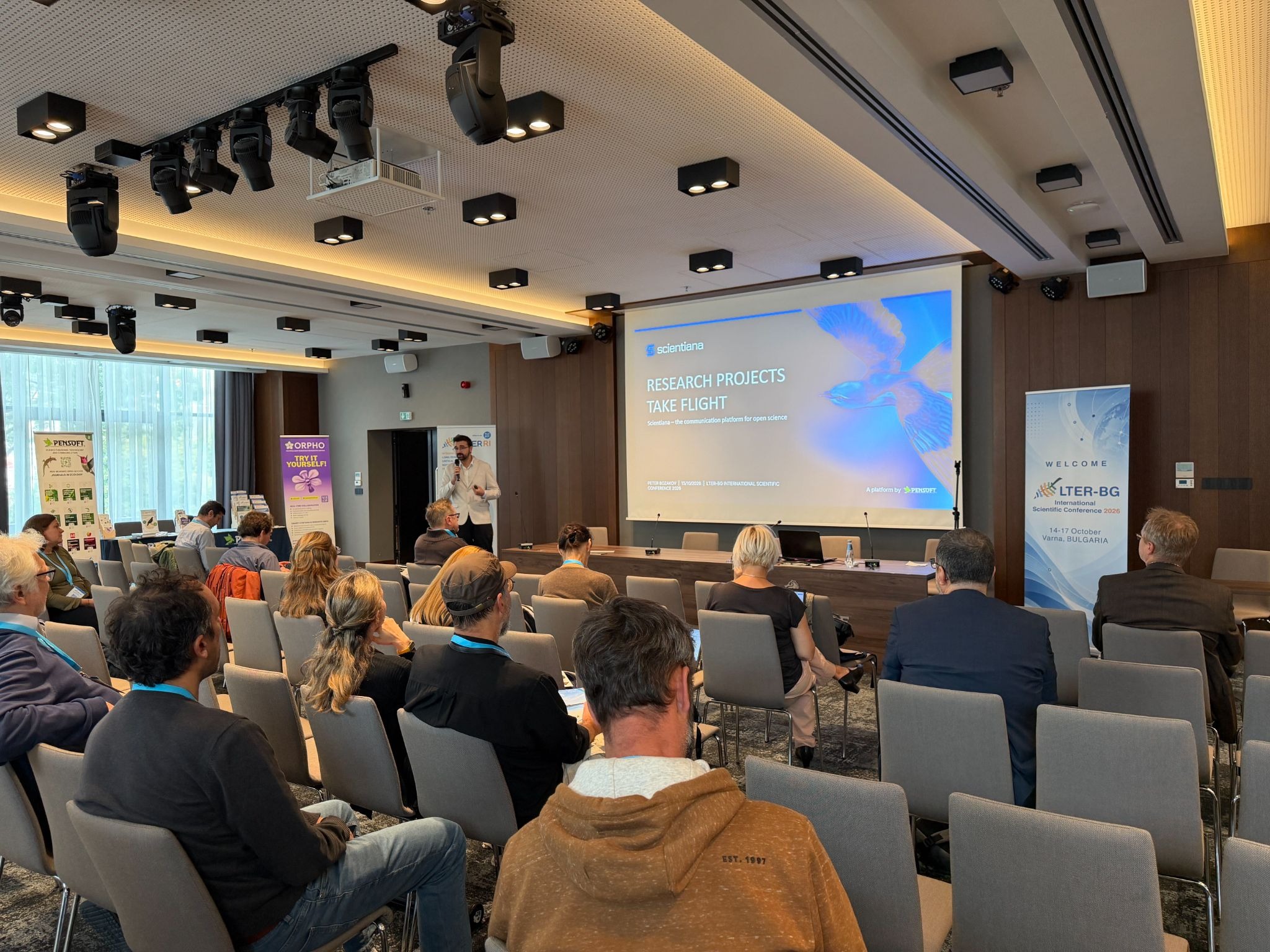
Pensoft’s newest platform Scientiana
Peter Bozakov introduces Pensoft’s newest platform – Scientiana.

While, Events and Marketing Coordinator Victoria Stoyanova explored the new frontiers that an AI-FAIR outlook unveils in the domain of academic publishing. Specifically, she showcased the evolution of the ARPHA platform and the newly launched ORPHO, Pensoft’s next-gen collaborative writing tool, as examples of innovation placed directly in the hands of authors.

Together, ARPHA and ORPHO support the entire manuscript workflow from submission to publication, with structuring, taxon tagging, classification, and data publication  taking place as part of the publication process itself. 
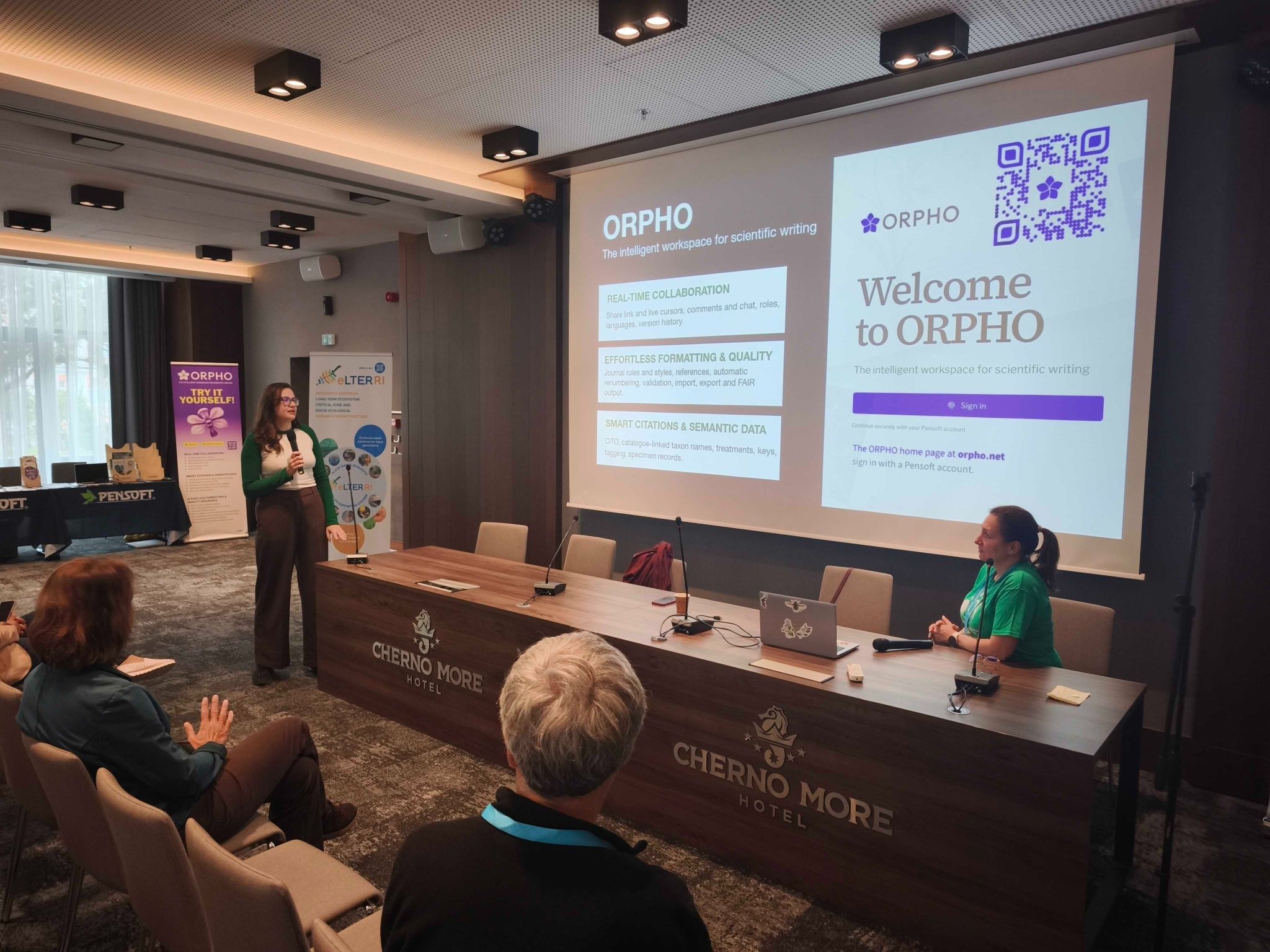
A crash course in using ORHPO
A crash course in using ORHPO by Victoria Stoyanova

The presentations proved themselves a stepping stone to further discussions on potential collaborations with scientists, conversations that were bolstered by on-site demonstrations of the tools in question.

The conference in Varna was enjoyable, fruitful and full of hope and esteem for the better future of long-term ecosystem research. And our Pensoft team left with many ideas and an affirmed ambition to keep working to provide better solutions and services for the development of European science. What we will always remember are the words of our host – the national coordinator of LTER Bulgaria in the past 20 years, Svetla Doncheva-Bratanova: 

I would like to thank the Pensoft team for the wonderful participation in the conference. You are amazing and I am certain we could do wonders together!

Many thanks to the Bulgarian LTER community and the wider eLTER community for bringing together so many passionate researchers and making these past few days special.

Open Access Week 2026: Why Pensoft Chose Open from the Start

This Open Access Week, discover how Pensoft championed open access since ZooKeys through fair APCs, ARPHA tools and FAIR data.

For millennia, people have gathered data and knowledge – about where to hunt, eat, trade, and live – and shared it through experiences, stories and songs. Today, we continue to do so by creating and sharing knowledge in order to “advance human understanding and the common good.”

This year’s International Open Access Week theme, “The Cost of Knowledge,” reminds us that sharing knowledge has a price: subscription fees and article processing charges, the time and expertise of authors, reviewers and editors, and the investment and know-how behind user-friendly digital infrastructures. 

The themes echo the ones we looked at during Peer Review Week 2026, where we gave our Editors-in-Chief the chance to share the challenges they face in sustaining the peer review process, from the influx of papers and data to the shortage of researchers willing to review – you can read what they told us here: https://blog-pensoft.blogs.awt-2.arphahub.com/2026/09/11/peer-review-week-2026-building-capacity-for-the-long-run/ 

Open from the very beginning

ZooKeys journal homepage
ZooKeys journal homepage.

At Pensoft, open access has never been an add-on. Founded in 1992 by scientists for scientists, we launched our first journal, ZooKeys, as fully open access in 2008, and it has been open from its very first issue. After all, it has always been our thinking that research can only serve the common good when everyone can read it, use it and build on it. This is why from the very start, we wanted ZooKeys to speed up research and free the exchange of information in taxonomy.

That principle has shaped every journal we have incepted since from PhytoKeys and MycoKeys to Biodiversity Data Journal to more recently launched Natural History Collections and Museomics and Individual-Based Ecology. 

Research Ideas and Outcomes journal homepage
RIO journal homepage.

In 2025, together with long-term collaborators from the open-science community, we founded the quite revolutionary and unique journal Research Ideas and Outcomes (RIO) with the aim to catalyse the culture change in research communication by publishing ideas, project proposals, data/software management plans and various other outcomes that would typically be lost for the scientific community. The recognition for RIO’s approach to scholarly communication came only half a year later when SPARC went on to name an Open Science Innovator.

ARPHA Publishing Platform
ARPHA Publishing Platform – homepage.

Throughout our existence as a publisher all of our journals have been 100% open access. Hosted on our own ARPHA Publishing Platform and operating under CC BY license, all scholarly titles in our portfolio make sure that every article can be read, shared and reused freely while authors retain the copyright to their work.

Yet, open should also mean fair. Our article processing charges are among the most competitive in the field, and we are transparent about what they cover: we were among the first publishers to share our pricing and services through Plan S’s Journal Comparison Service, and publicly provide our Open Access and APC Policies in full compliance with the Plan S requirements. We also work with international consortia to further reduce financial frictions and administrative burden for researchers and their institutions. As of this year, for instance, we’ve partnered up with Bibsam Consortium to advance open scholarly publishing across Sweden.

A streamlined process

ARPHA Publishing Platform services
ARPHA services

Our proprietary ARPHA Publishing Platform offers a full-featured, end-to-end open access publishing and hosting solution, with a suite of connected services built around it.

The ARPHA suite

Apart from about 100 open-access scholarly journals, ARPHA powers the ARPHA Preprints platform, which seamlessly integrates with journals to let authors make their manuscripts publicly available upon submission; the platform also provides high-quality and technologically advanced open-access publication for conference outputs through ARPHA Proceedings and ARPHA Conference Abstracts. Through Advanced Books, authors and researchers can bring whole open access books to readers in semantically enhanced HTML and PDF formats.  

ORPHO – the next-gen tool for scientific writing

Most recently, we launched ORPHO, our next-generation collaborative workspace for scientific writing. Within ORPHO, researchers and authors can enrich their manuscripts semantically, so that their research, as well as underlying data remains FAIR (Findable, Accessible, Interoperable, and Reusable) and AI-ready. 

Together, these tools streamline the publication of text and semantically rich data, making openness a natural part of the research workflow rather than an extra step.

Also, along with Plazi, we run the Biodiversity Literature Repository on Zenodo, which gives articles, figures and taxonomic treatments their own DOIs and releases them under CC0, so the data inside publications can be found, cited and reused by platforms such as GBIF.

This is what a publisher built by scientists can offer: a model that treats knowledge as something to be shared, prices that stay open and transparent, and infrastructure that makes research easier to find, reuse and trust.

Throughout our existence as a scholarly publisher and technology provider, Pensoft has always considered it our responsibility to ensure that valuable research outputs are shared efficiently with the world. This gives everyone, everywhere, the opportunity to make sense of and use this knowledge, while giving full credit to the scientists behind it. This is how, in our vision, scientific work and knowledge can achieve optimal impact on society and future research.

comments Iva Boyadzhieva, Head of Journal development and PR at Pensoft.

Reclaiming knowledge as a common good

Open Access Week 2026 at Pensoft

As this year’s Open Access Week puts it:

“Momentum is growing for approaches to treat knowledge as a common good and not a commodity to be mined.” – Open Access Week 2026

We believe that momentum is real, and we have seen it grow ever since the first issue of ZooKeys. At Pensoft we are proud to say that we have championed open access in publishing, building the tools, workflows and partnerships that make it work in practice, and we will keep doing so alongside the institutions, funders, editors and researchers who share this commitment.

Explore our journals and services at pensoft.net

ANERIS at EGI2026: Bringing Operational Marine Biology to Europe Digital Research Infrastructure Community

Between 21-25 September 2026, our team joined the EGI2026 conference in Ghent, Belgium.

Between the 21st and the 25th of September 2026, the ANERIS project, joined the EGI2026 Conference in Ghent, Belgium, as an exhibitor and conference partner.

Group photo EGI 2026
Group photo provided by EGI Foundation


Every year, the EGI Conference brings together digital and research infrastructure providers, data scientists and innovators to advance data-intensive science. Organised by the EGI Foundation in collaboration with partners from the EGI Federation, this year’s edition took place at the Bijloke, a former hospital site turned arts and knowledge campus on the banks of the river Lys. The five-day programme covered topics ranging from AI for European science and the European Open Science Cloud (EOSC) to federated compute and data infrastructures for research.

For ANERIS, the conference was a natural fit as the EGI Foundation is one of the project’s 25 partners, and the project’s vision of faster, more reliable and accessible marine life data depends directly on the kind of digital infrastructure discussed in Ghent.

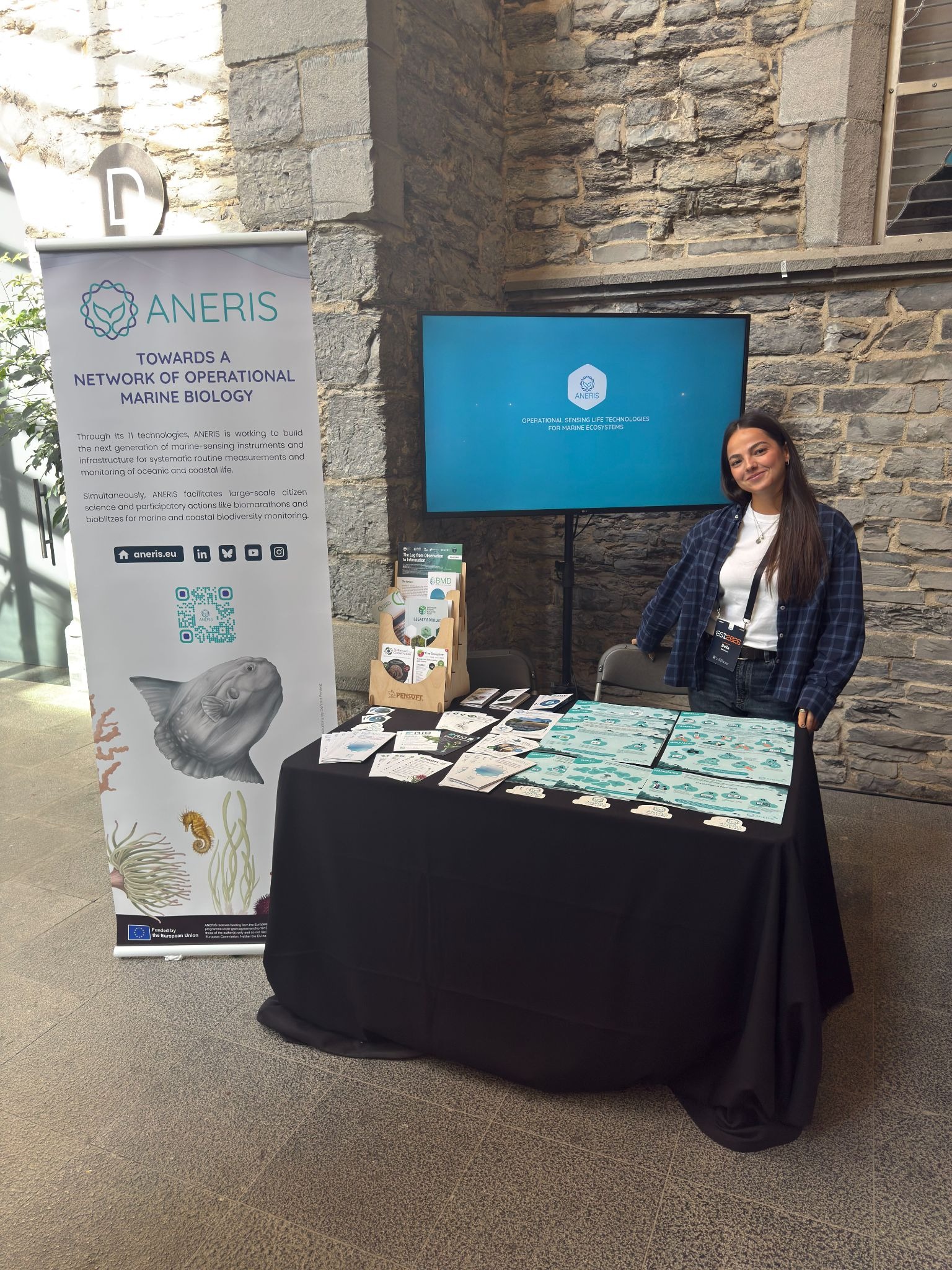
A person behind a stand
ANERIS booth at EGI2026 in Ghent.

During the opening ceremony, all exhibitors were invited to present their projects and initiatives to the audience in short pitches. Pensoft’s Communication Officer Bella Dimitrova used the opportunity to introduce ANERIS and its concept of Operational Marine Biology. Many attendees later came by the booth specifically to learn more about the project.

ANERIS materials
ANERIS materials.

The ANERIS booth welcomed a steady stream of visitors. Although most participants came from engineering and computing backgrounds, the project’s scientific illustrations and sticker sheets quickly became a highlight of the exhibition. The marine species featured on the stickers are among the most frequently observed and photographed during ANERIS citizen science campaigns. This made them a natural starting point for conversations about how volunteers, researchers and new technologies work together to monitor coastal biodiversity. Visitors also showed strong interest in the project’s newly produced case study factsheets and infographics, which made their print debut at the conference.

  • paper materials
  • paper materials
  • paper materials

At the booth, attendees could also learn more about Pensoft’s expertise and experience as a scientific publisher through a selection of journals aligned with the conference themes. They could also find out about Pensoft’s role as an active consortium member in the COAST-SCAPES, B-Cubed and Biodiversity Meets Data projects.   

Funded by the European Union’s Horizon Europe programme and coordinated by the Institute of Marine Sciences (ICM-CSIC), ANERIS brings together 25 partners from 13 countries. Over four years, the consortium has developed 11 technologies for marine life sensing and monitoring. They cover AI-assisted imaging of plankton and macrofauna, genomic and eDNA approaches and citizen science observatories such as MINKA.

As the project nears its end in December 2026, the focus is on making these tools usable beyond the project’s lifetime. This includes integrating them into European research infrastructures, which is why conversations with the EGI community were especially valuable. Combining large-scale imaging data, AI-based identification and citizen observations requires reliable storage, compute and data services. These are exactly the services EGI2026 participants build and operate.

The project’s results will be further showcased at the ANERIS Final Workshop “The future of marine monitoring – imaging, AI, and research infrastructures” on the 16th of November 2026. The hybrid event will be hosted by VLIZ in Oostende, Belgium. Through real-world case studies, partners will present tools including AI-driven underwater image restoration, automated organism identification platforms and integrated citizen science observatories. Shortly after, ANERIS will also take part in the 7th World Conference on Marine Biodiversity in Bruges.

The full plenary recordings and the detailed programme are available on the conference’s official website. 

Pensoft at TDWG2026: Pushing the boundaries of innovation in biodiversity data management forward

Last week marked another annual meeting of the Biodiversity Information Standards network, otherwise known as TDWG, with the Norwegian capital Oslo hosting the event between 20 and 25 September.

Last week marked another annual meeting of the Biodiversity Information Standards network, otherwise known as TDWG, with the Norwegian capital Oslo hosting the event between 21 and 25 September.

TDWG is the international, non-profit organisation formerly known as the Taxonomic Databases Working Group, which develops and maintains the standards, such as Darwin Core, that allow biodiversity data to be shared, integrated and understood across institutions worldwide.

The six-day programme was a meeting point for over 300 stakeholders from research, practitioner and corporate circles, with proceedings centred around one central topic – “Research and Robot-Ready Biodiversity Data Standards”. In that sense, the themes of accessibility, responsibility, innovation and collaboration were foremost on the minds of participants as they contemplated how information on the biosphere should be extracted, consolidated and shared in the years to come.

As a long-standing partner of TDWG, Pensoft Publishers served as both a sponsor and an exhibitor for the event. In the latter capacity, the company contributed with a joint booth for three of the EU-funded projects it is leading the outreach efforts for:

  • BMD – an initiative working towards a Biodiversity Explorer for high-throughput biodiversity monitoring tools, biodiversity data and biodiversity analyses for better conservation across Europe
  • TETTRIX – a new arrival building a next-generation taxonomic system connecting knowledge, expertise and innovation for all across the Old Continent
  • ANERIS – a pan-European effort to mobilise a network of operational marine biology via a new technological infrastructure
The Pensoft team at the joint booth of the BMD, TETTRIX and ANERIS projects.

A number of other projects from Pensoft’s communication portfolio also found a place in the display, including BEAGLE, OneSTOP, B-Cubed, MAMBO, OBSGESSION and BioAgora. Furthermore, 14 of the company’s journals were in the spotlight, including Biodiversity Information Science and Standards (BISS), the official journal of the TDWG community (where all of the conference’s abstracts are set to be published).  

Crucially, the event also saw the official launch of ORPHO, Pensoft’s new collaborative workspace for scientific writing. Founder and CEO Prof. Lyubomir Penev and CTO Teodor Georgiev conducted live demos of the tool, showcasing how manuscripts crafted within it with full version control for authors become discoverable, interoperable and FAIR-compliant.

In the context of TDWG2026’s agenda, they also presented ORPHO’s integrated semantic annotation and communication instruments as part of the workshop “How Literature Services can Support & Benefit from Biodiversity Publication and Data Standards?” on 24 September. The workspace was received with anticipation and enthusiasm by attendees, with many expressing a desire to test it out for themselves.

They were also treated with a tease of Pensoft’s next large-scale endeavour, as Senior Communications Officer Peter Bozakov pulled the curtain behind the forthcoming communication platform for research projects Scientiana.

As for other notable contributions to the wider conference agenda by researchers affiliated with Pensoft’s publishing or project activities:

  • The session “Operationalising Biodiversity Digital Twins within Data Space Ecosystems”, which was co-led by BMD coordinator and long-time author and reviewer across several Pensoft journals, including Biodiversity Data Journal and Research Ideas and Outcomes, Niels Raes, and showcased a number of innovative outputs from the project. As such, it was an important occasion to assess the initiative’s progress towards unifying Europe’s Data Space within a single Biodiversity Explorer.
Niels Raes presenting “Mainstreaming high-throughput biodiversity monitoring using AI” at TDWG 2026.
  • The symposium “Publishing and Communications Promoting Biodiversity, Natural History Collections, People, Data and Data Standards”, for which Deborah Paul (co-Editor-in-Chief of the Natural History Collections and Museomics (NHCM) journal) had the role of co-organiser. Within it, the TETTRIX project’s vision for the automated tracking of taxonomic research activities was laid out by consortium member David Fichtmüller. Moreover, Shelley James (co-Editor-in-Chief for NHCM) delivered an insightful talk on the creative promotion of biodiversity data and standards for success and recognition.
Co-Editors-in-Chief of NHCM, Shelley James and Deborah Paul, presenting “Hit or miss? Creative promotion of biodiversity data and standards for success and recognition” at TDWG 2026.

Notably, the Biodiversity Information Science and Standards (BISS) journal is the home for TDWG conference abstracts. TDWG 2026 presenters can currently submit their abstracts there and publish them in an extended abstract or mini-paper format completely free of charge. The journal also hosts abstracts from conferences held over the past decade. You can browse the TDWG 2026 collection here.

Last but not least, the company’s sponsorship supported two awards at TDWG2026 (with a free publication in a Pensoft journal as an accompanying prize):

  • Best Student Oral Presentation – awarded to Yeshan Qui for “Reporting structure and sampling-bias correction in citizen-science bird data across Asian cities”
  • Best Student Poster – awarded to Claudia Campanini for “Improving marine fieldwork documentation and metadata with Adaptable Standardised Methods Reporting (ASMR)”
Claudia Campanini receiving the Pensoft Best Student Poster Award at TDWG 2026.

Overall, TDWG2026 proved itself a crucial forum for mapping out the future of biodiversity monitoring and the management of the myriad data streams that emerge from it. Pensoft is proud to be an important actor in this process, contributing with innovative tools and solutions at the heart of the interface between research and practice. As summarised by Prof. Penev:

“Given its status as a large-scale conference centred around the future of biodiversity sciences in the age of AI, TDWG2026 was a crucial venue for unveiling Pensoft’s forward-looking vision for academic publishing and science communication. The “pearl” of these pursuits is undoubtedly the ORPHO workspace, a tool that is well-placed to introduce a new standard when it comes to collaborative AI-FAIR research in Europe and beyond.”

***


Follow us on Bluesky, Facebook, X, and LinkedIn for future conference updates.

Pensoft at the European Small Mammal Conservation Conference 2026

The inaugural conference took place in Sofia, Bulgaria, bringing together researchers, conservationists and practitioners to address gaps in small mammal research and monitoring. 

The inaugural European Small Mammal Conservation Conference (SMCC 2026) took place in Sofia, Bulgaria, from 21 to 25 September 2026, bringing together researchers, conservationists and practitioners from across Europe and beyond to address gaps in small mammal research and monitoring. 

Organised jointly by the Habitat Foundation, the Institute of Biodiversity and Ecosystem Research at the Bulgarian Academy of Sciences, the Dutch Mammal Society and Mammal Conservation Europe, with support from the Faculty of Biology at Sofia University, the conference formed part of the Life for Falcons project, funded by the EU LIFE Programme.

This year’s conference was held jointly with the 33rd Hamster Working Group and the VIII European Ground Squirrel Meeting, making hamsters and sousliks the primary focus, alongside broader topics including renewable energy development, agricultural impacts, reintroductions, predator–prey interactions and innovative methodologies in small mammal research.

Pensoft’s Participation

We were delighted to participate in SMCC 2026 with an exhibition booth, showcasing the breadth of publishing services we offer to the biodiversity and conservation community. It was a pleasure to present our portfolio of journals dedicated to advancing research across ecology, biodiversity and conservation.

We were particularly proud to present the following journals:

Meeting delegates from across the small mammal research community was tremendously rewarding, and we thoroughly enjoyed discussing how our journals can support and amplify their work.

Beyond our academic offerings, we were particularly excited to showcase beautiful art prints illustrated by our in-house scientific illustrator, Denitsa Peneva. The collection featured stunning depictions of otters, olinguitos and hamsters.

Pensoft’s art prints at SMCC 2026.

Conference Highlights

The scientific programme was exceptional, and we were privileged to attend many outstanding presentations that demonstrated the importance of innovative monitoring approaches and conservation action.

Lessons from Citizen Science for Small Mammal Conservation Monitoring in Great Britain

We were delighted to attend a talk by Matt Larsen-Daw, Chief Executive of the Mammal Society (UK), which presented a portfolio of citizen science programmes designed to address distribution knowledge and population monitoring across Great Britain. The programmes, united by the Mammal Mapper smartphone app, included the National Harvest Mouse Survey, the Searching for Shrews initiative, and the University Mammal Challenge. 

The presentation highlighted the value of standardised effort data, the differing trade-offs between structured and opportunistic recording, and the potential for these approaches to be applied across European contexts.

Matt Larsen-Daw presenting “Lessons from citizen science for small mammal conservation monitoring in Great Britain” at SMCC 2026.

Strong Decline of Hamster Populations in Bulgaria

We were equally impressed by Nedko Nedyalkov’s presentation documenting the significant decline in distribution and abundance of both the common hamster (Cricetus cricetus) and the Romanian hamster (Mesocricetus newtoni) across Bulgaria. The research revealed that population reductions, detected through owl pellet analysis and trapping methods, likely began in the 1950s with agricultural intensification and continue today. 

Given that both species are strictly protected under the EU Habitats Directive yet lack active conservation projects, the presentation substantiated the urgent need for targeted conservation measures. We are also pleased to note that Nedko serves as a subject editor for two of our open-access journals, ZooKeys and the Biodiversity Data Journal.

Nedko Nedyalkov presenting “Strong decline of the distribution and abundance of Cricetus cricetus and Mesocricetus newtoni (Mammalia: Cricetinae) in Bulgaria” at SMCC 2026.

Reintroduced Saker Falcons and Their Dependence on European Ground Squirrels

Yana Andonova’s presentation on the diet of Bulgaria’s reintroduced saker falcon population provided compelling evidence of the breeding birds’ overwhelming dependence on the European ground squirrel (Spermophilus citellus) as a primary food source.

Through food-remain analysis, visual observations and camera-trap monitoring, the research documented that ground squirrels comprised over 80 per cent of identified prey items, with small rodents accounting for 89 per cent overall! It is also worth mentioning that Andonova is an author in our open-access Biodiversity Data Journal.

Yana Andonova presenting “Reintroduced Saker Falcons (Falco cherrug Gray, 1834) are dependent on European ground squirrels during the breeding period in Bulgaria” at SMCC 2026.

Looking Forward

Attending SMCC 2026 was a genuine pleasure and particularly meaningful given that the conference took place in Sofia, the city in which our company is based. Connecting with researchers and conservationists working at the forefront of small mammal conservation, and sharing our commitment to advancing biodiversity research through open-access publishing, reinforced our dedication to supporting this important field. 

We look very much forward to engaging with this community again at future events!


Follow us on Bluesky, Facebook, X, and LinkedIn for future conference updates.

Pensoft at SERE2026: Connecting Projects, Publications and People in Brest

Pensoft attended the 15th European Conference on Ecological Restoration (SERE2026) in Brest, France, where it presented a selection of EU-funded projects and scientific journals.

From 24 to 28 August 2026, Pensoft joined around 600 researchers and professionals at the 15th European Conference on Ecological Restoration (SERE2026) in Brest, France, bringing together the ecological restoration community to share knowledge, strengthen collaborations and explore new approaches to restoring ecosystems across Europe.

Hosted by the University of Brest in collaboration with the French Ecological Restoration Network (REVER) and the European Chapter of the Society for Ecological Restoration (SER-Europe), SERE2026 provided a vibrant meeting point for researchers, practitioners and policymakers working across ecological restoration. The conference covered a broad range of topics, including wetlands, coastal and marine ecosystems, ecological networks and the implementation of European restoration policies.

Pensoft was there with a selection of EU-funded projects and open-access journals, offering conference participants the chance to discover new research, explore project results and learn more about opportunities to publish and share their work.

Pensoft at SERE 2026.

A showcase of Pensoft projects

The Pensoft team presented materials from a diverse group of EU-funded projects, reflecting the wide range of environmental research and collaboration supported through the Pensoft network.

Among the projects showcased were FERRO, SpongeBoost, BioAgora, ForestPaths, EUFAWREADY, eLTER, SELINA, COAST SCAPES and COOP4CBD.

The projects cover a broad spectrum of topics, from biodiversity and ecosystem restoration to forest resilience, environmental governance, ecosystem monitoring and nature conservation. Their presence at SERE2026 offered researchers an opportunity to discover ongoing initiatives and see how scientific knowledge is being translated into practical approaches for addressing environmental challenges.

The project materials attracted interest throughout the conference, with participants stopping by to learn more about individual initiatives and explore their latest activities and results.

From ecological restoration to open-access publishing

Alongside the projects, Pensoft presented a selection of its journals and publishing platforms.

Visitors could discover titles including Nature Conservation, One Ecosystem, Research Ideas and Outcomes (RIO), Agricultural and Environmental Modelling, Biodiversity Data Journal, Check List, Journal of Regeneration and NeoBiota, alongside several other journals from Pensoft’s open-access, peer-reviewed scholarly portfolio.

The broad selection reflected the interdisciplinary nature of ecological restoration itself. Researchers working on biodiversity, ecosystems, conservation, environmental modelling, species diversity and regeneration could all find publication venues relevant to their work.

There was considerable interest in the journals throughout the conference, with discussions ranging from publishing research articles and project outputs to discovering new ways of sharing scientific data, ideas and results with the wider research community.

Celebrating excellent science

Scientific exchange was at the heart of SERE2026, and participants also had the opportunity to recognise some of the strongest contributions presented during the conference.

Several awards were presented based on votes from conference participants, highlighting outstanding talks and presentations.

Pensoft was pleased to contribute to these celebrations with the Best Talk Award. The award recognises an exceptional conference presentation and comes with a special prize: a free publication in a Pensoft journal.

This time around, the award went to Chloé Dagnelie of Gembloux AgrobioTech for her presentation: “Spontaneous succession under soil and landscape constraints: dispersal filtering and urban species pools shape brownfield true bugs communities”

By supporting awards such as this, Pensoft aims to encourage clear, engaging and impactful scientific communication while helping researchers share their work through open-access publishing.

Connecting research, restoration and communication

SERE2026 offered an inspiring setting for conversations about the future of ecological restoration and the role of research in supporting healthier and more resilient ecosystems.

Pensoft Publishers at 15th European Conference on Ecological Restoration

For Pensoft, the conference was also an opportunity to bring together several strands of its work: supporting EU-funded research projects, publishing scientific knowledge through open-access journals and creating opportunities for researchers to connect, communicate and collaborate.

The strong interest in both the projects and journals showcased in Brest was a reminder of the value of bringing science and scientific communication together in one place.

As Europe moves towards ambitious restoration goals, strengthening the connections between research, practice, policy and communication will be essential. Events such as SERE2026 provide an important space for these connections to grow.

Pensoft was delighted to be part of the ecological restoration community in Brest and looks forward to continuing these conversations at future events.

Pensoft at ESA 2026: Connecting with the Ecology Community in Salt Lake City, USA

Between 26-31 July, Pensoft Publishers joined more than 2,600 ecologists, researchers, and conservation professionals in Salt Lake City for the 111th Annual Meeting of the Ecological Society of America (ESA2026).

Pensoft Publishers joined more than 2,600 ecologists, researchers, and conservation professionals in Salt Lake City for the 111th Annual Meeting of the Ecological Society of America (ESA2026) between 26-31 July.

Ecology in an Era of Uncertainty

  • Opening ceremony of ESA 2026.
  • Opening ceremony of ESA 2026.

This year’s conference theme, “Ecology in an Era of Uncertainty,” could not have felt more timely. Uncertainty is nothing new to ecological research – it’s built into measurements, mechanisms, and predictions.

But new sources of uncertainty are now reshaping the field: the rise of artificial intelligence, post-pandemic shifts in career development, and growing instability in research funding. Throughout the week, the ESA community came together not only to share cutting-edge ecological research, but also to think collectively about how to navigate these emerging challenges – trading multidisciplinary, creative solutions to keep the field resilient in the face of what’s next.

The Opening Session

The Grand Ballroom was packed for the opening session, where Conference Chairs Daniel Stover and Andrea Swei welcomed attendees. Despite a challenging year for funding and travel, the 111th annual meeting of ESA 2026 hosted 2,600 registered attendees 330 sessions and 884 posters,

The opening address was delivered by Diane Pitaki, Chief Scientist and Vice President for Science at the National Wildlife Federation, who spoke about ecology standing at a crossroads amid the biodiversity crisis and shifting political headwinds, urging the community to actively “defend conservation science.”

Among the meeting’s standout moments was the plenary from Tanya Berger-Wolf, Professor of Computer Science and Ecology at Ohio State University and a leading figure in AI for ecology and biodiversity.

Notably, Berger-Wolf will be a keynote speaker at TDWG 2026 in Oslo (20-25 September) – where Pensoft Publishers will once again be exhibiting, so stay tuned for future updates.

Pensoft’s booth

Situated right at the entrance of the exhibition hall, Pensoft’s booth revelled in attention from attendees throughout the week.

  • Pensoft's team at ESA 2026 in Salt Palace Convention Center.
  • Pensoft's busy stand at the 111th Annual Meeting of the Ecological Society of America.
  • Pensoft's busy stand at the 111th Annual Meeting of the Ecological Society of America.
  • The beautiful Denitsa Peneva's illustrations at ESA 2026.

A particular highlight was our trio of diamond open-access journals – free to publish in and free to read – that drew considerable interest from attendees:

  • Individual-Based Ecology promotes a distinctive individual-based perspective on ecology, aiming to bridge individual behaviour and broader ecological patterns.
  • Advances in Pollinator Research is designed as an innovative platform for the full spectrum of pollinator science, from pollination ecology and pollinator-plant interactions to molecular ecology, conservation, and more.
  • Agricultural and Environmental Modelling (AEM), meanwhile, offers an innovative approach to publishing, dedicated to advancing both the science and practice of modelling across agriculture, food systems, natural resources, and environmental sciences.
  • Brochure of the diamond open-access Individual-Based Ecology Journal.
  • Close up photo of the Advances in Pollinator Research brochure at ESA 2026.
  • Nicole Nogoy, managing editor of Agricultural and Environmental Modelling at ESA 2026.

Attendees curious about AEM had the chance to speak directly with its Managing Editor, Nicole Nogoy, who was on site throughout the conference to discuss publishing opportunities and promote the journal’s search for Subject Editors. 

The booth also gave visitors a window into the rest of Pensoft’s open-access portfolio. On the conservation side, that meant Nature Conservation and Neotropical Biology and Conservation; on the ecosystem side, One Ecosystem, Frontiers of Biogeography, and NeoBiota. 

  • NeoBiota brochure presented at ESA 2026.
  • Neotropical Biology and Conservation brochure at ESA 2026.

Attendees also had the chance to learn more about our diamond open-access journal Estuarine Management and Technologies, which was accepted into the Directory of Open Access Journals (DOAJ) earlier this year. 

Estuarine Management and Technologies brochure.

Rounding out the display were several more specialised titles: Biodiversity Data Journal and Metabarcoding and Metagenomics; Quite popular amongst the visitors were also our our fungi-focused IMA Fungus and MycoKeys journals; and our vegetation titles, Vegetation Classification and Survey and Vegetation Ecology and Diversity.

We also introduced attendees to our newest addition, the diamond open-access Journal of Regeneration. For those interested in sharing early-stage research or project outcomes, Research Ideas and Outcomes (RIO) offered another avenue worth exploring, publishing everything from project proposals and data to policy briefs and null results.

Those looking for a new publisher or white-label solutions had the opportunity to explore ARPHA, Pensoft’s own publishing platform, which supports the full journey from manuscript writing and peer review to publication, dissemination, and archiving – all in one seamless workflow. 

Combined brochure of EU-Funded project in which Pensoft participates.

Beyond the journals and publishing solutions, the team took the opportunity to spotlight some of Pensoft’s ongoing EU-funded projects, including our pollination initiatives and our continued work with eLTER. 

Two Interactive Activities at Our Booth

Building on the success of interactive formats at previous events, namely the Fortune Wheel at the 8th European Congress of Conservation Biology in Leiden, our team brought two activities to ESA2026.

The Pensoft Species Quiz

Attendees taking our fun quiz at ESA 2026.

This time around, our team created “Pensoft Species Quiz,” challenging booth visitors to identify the correct Latin name for a series of species beautifully illustrated by Denitsa Peneva. Being more than just a fun activity, it became a natural conversation starter – leading into deeper discussions about Pensoft’s journals, services, and potential collaborations with attendees.

  • Some of the winners from our quiz at ESA 2026.
  • Some of the winners from our quiz at ESA 2026.
  • Some of the winners from our quiz at ESA 2026.
  • Attendees interacting with our fun quiz.

The Agricultural and Environmental Modelling Poster Award

AEM’s Managing Editor – Nicole Nogoy ran a poster competition at the meeting, and it turned out to be one of the highlights of our week. Three researchers stood out:

  • Julian Resasco (University of Colorado, Boulder) took home the prize for overall best presentation with a hand-drawn comic-book poster on climate change effects on Basque country thistles;
  • Gwendolyn Lloyd (Indiana University) impressed us with her research on arthropods and mites in agricultural soils;
  • Emily Redding (Fort Hays State University, KS) joined in with a poster on fire suppression’s effects on Juniper-dependent bird species, having been inspired to bring modelling into her own research. 

We also took part in a raffle organised by ESA, to which each exhibitor contributed a prize.

  • Kanchana Balasubramanian one of the winners of Pensoft Publishers' raffle prizes at ESA2026.
  • Elizabeth Afkhami Searcy received our book "Mapping Ecosystem Services" as part of the Ecological Society of America's conference raffle.

Looking Ahead

ESA2026 was a strong reminder of just how much energy – and uncertainty – is currently shaping the ecology community. Between thought-provoking plenaries on AI and conservation science, engaging conversations sparked by our species quiz, and the enthusiasm we saw around the AEM poster competition, it was a week full of meaningful connections for Pensoft.

We’re already looking forward to the next time, and we hope you’re looking forward to it, too!

Keep up with future updates and news by following us on Bluesky, Facebook, X, and LinkedIn.

A new PollinERA policy brief proposes regional budget system for pesticide management for Europe

The brief proposes assigning ecological regions an annual toxic-unit (TU) budget linked to environmental carrying capacity.

A new policy brief from the PollinERA project calls for a major shift in EU pesticide regulation, arguing that current assessments of individual substances fail to address the cumulative environmental impacts of pesticide use across landscapes, and that many pesticide bans are unnecessary if the scale of use is managed.

The brief, “A Regional Budget System for Pesticide Management: Systems-first environmental risk assessment: the case for change,” proposes assigning ecological regions an annual toxic-unit (TU) budget linked to environmental carrying capacity. Farmers would register pesticide applications digitally, with approvals dependent on available regional budget capacity.

The authors, Christopher John Topping, Johan Axelman and James Henty Williams, argue that the approach would better align pesticide regulation with EU environmental obligations under the Water Framework Directive, Natura 2000 and the Nature Restoration Law. The brief also outlines key advantages, including environmental protection, regulatory simplification, resistance management, improved farmer access, fair access, and stronger market incentives for lower-impact products.

The brief also proposes implementation through three targeted amendments within the current EU Omnibus process: linking pesticide use conditions under Regulation (EC) 1107/2009 to regional ecological limits; introducing Regional Pesticide Management Plans under the Sustainable Use Directive (2009/128/EC); and aligning regional budget calibration with Water Framework Directive and Nature Restoration Law targets. According to the authors, no new legislative framework would be required.

The policy brief is accompanied with a commentary for further reading, “Pesticide Regulation and the Omnibus Process: A systems-based regional management approach: operational framework, fair access, and market incentives.” Both the policy brief and technical support document are available on the Research Ideas and Outcomes (RIO) journal, in PollinERA’s open-access collection, as well as on PollinERA’s website. 

Read the policy brief here.

About PollinERA
PollinERA (Understanding pesticide-Pollinator interactions to support EU Environmental Risk Assessment and policy) is a four-year Horizon Europe project that aims to move the evaluation of the risk and impacts of pesticides and suggestions for mitigation beyond the current situation of assessing single pesticides in isolation on honey bees to an ecologically consistent assessment of effects on insect pollinators.

You can follow RIO Journal on Facebook, Bluesky and LinkedIn.

ResearchGate and Pensoft Publishers announce expansion of their Journal Home partnership

The partnership now expands to 40 journals, covering the majority of Pensoft’s and partner’s journals.

Berlin (Germany) and Sofia (Bulgaria), 10th February, 2026 – ResearchGate, the professional network for researchers, and Pensoft Publishers, an independent open access publisher and provider of high-quality scholarly publishing services, today announced an expansion of their Journal Home partnership. Building on an earlier collaboration announced in 2023, the list now expands to 40 journals, covering the majority of Pensoft’s and partners’ journals using the publisher’s ARPHA Publishing Platform. 

Amongst the journals now enjoying increased visibility across the ResearchGate’s community of 25+ million researcher members are well-renowned scholarly titles affiliated with the Natural History Museum in Berlin, Swiss Academy of Sciences, International Association for Vegetation Science and The International Biogeography Society, as well as recently launched Pensoft journals, such as Individual-based Ecology, Natural History Collections and Museomics, and Food and Ecological Systems Modelling Journal.

With most of Pensoft’s eligible partner journals choosing to participate, the expansion reflects strong demand for greater exposure and engagement opportunities, particularly among smaller and developing journals in niche research areas. Through Journal Home, partner publishers can reach more relevant audiences, improve discoverability, and connect more effectively with researchers worldwide.

Participating Pensoft journals will also benefit from:

  • Increased usage and readership, with full-text open access journal content seamlessly surfaced to highly relevant researcher communities across the ResearchGate platform.
  • Stronger engagement from new and returning authors, connecting partner journals, including specialist and emerging titles, with targeted researchers and potential authors throughout the research lifecycle.
  • Dedicated Journal Profiles and prominent placement of Pensoft journals to enhance visibility and branding, boosting recognition of partner journals with researcher communities around the world.
  • Improved author experience, with the automatic addition of published articles to author profiles, clearer insight into reader engagement, and greater opportunities for meaningful collaboration.

“Journal Home allows us to provide our partner journals with improved visibility and stronger connections with global researcher communities. Many of these journals serve highly specialised fields, and Journal Home helps make sure their articles reach the right researchers, who will benefit from them most.”

Lyubomir Penev, CEO and founder of Pensoft Publishers

“We’re pleased to expand our Journal Home partnership with Pensoft to support an increasing number of partner journals. By bringing these journals onto the platform, smaller and emerging titles can expand their reach, attract high-quality submissions, and connect with the most relevant researcher communities at key moments in their research journey.”

Robyn Mugridge, Head of Partnership Development at ResearchGate

For more information about Journal Home, please visit www.researchgate.net/journal-home.

For more information about ResearchGate, please visit www.researchgate.net.

For more information about Pensoft Publishers, please visit www.pensoft.net.

About ResearchGate

ResearchGate is the professional network for researchers. Over 25 million researchers use researchgate.net to share and discover research, build their networks, and advance their careers. Based in Berlin, ResearchGate was founded in 2008. Its mission is to connect the world of science and make research open to all.

About Pensoft Publishers

Pensoft is an independent, open-access scholarly publisher and technology provider, best known for its 40+ biodiversity journals, including ZooKeys, Biodiversity Data Journal, PhytoKeys, MycoKeys, One Ecosystem, and Metabarcoding and Metagenomics. Ever since becoming the first to introduce semantic enrichments and hyperlinks within a scientific article in the field of biodiversity in 2010, Pensoft has been working on various tools and workflows designed to facilitate data findability, accessibility, discoverability and interoperability.

Using AI to Uncover the Secret Lives of Fungi

AI holds the potential to automatically identify fungal versatility from the available scientific literature.

Fungi are the hidden architects of our ecosystems, acting as everything from helpful partners for plants to aggressive decomposers that recycle dead wood. However, many fungi don’t stick to just one job; they can switch lifestyles depending on their environment.  

Understanding this flexibility is vital for predicting how forests and farms will react to climate change. Unfortunately, the information researchers need is buried in decades of scientific papers that would take too long to comb through manually. 

A new study led by Northern Arizona University doctoral student Beatrice M. Bock and published in the open-access journal Research Ideas and Outcomes demonstrates how AI can solve this problem. By using a specialized language model called BioBERT, Bock developed an automated workflow that assesses scientific abstracts and accurately identifies whether a fungus has a single lifestyle or a dual, flexible one. 

A high-accuracy hack 

Bock said that for years, mycologists have relied on manual databases to track what different fungi do in the environment. While these tools are essential, they are difficult to keep updated as new research is published every day. 

“Manually identifying fungal versatility from the literature is time-consuming and difficult to scale. By using machine learning, we can now scan thousands of papers in just a few minutes to flag species that might be switching roles—such as a fungus that normally helps a plant grow but also turns into a decomposer when the plant dies.” 

Beatrice M. Bock

The pilot study tested four different AI models to see which was best at understanding the nuances of biological language. The top-performing model, BioBERT, achieved nearly 90% accuracy in identifying fungal lifestyles. 

What did BioBERT have that the other models didn’t? For one, it had the power of capitalization. Bock found that “cased” models—those that recognize capital letters—performed significantly better than those that did not. That’s likely because capital letters often signal species’ scientific names, like Fusarium, which are crucial for AI to understand the context of the research. 

The path ahead 

Bock said that in a commitment to transparency, she has made all the code and data available for free online, allowing other scientists to build upon her work and track traits in other organisms, like insects or plants. 

While Bock’s study focused on a small group of papers as a proof-of-concept, it opens the door for much larger projects. Future versions of the tool could predict how a fungus’s behavior might change under specific environmental conditions, such as drought or extreme heat. 

“As fungal trait databases continue to grow in importance for biodiversity assessments, automated text mining offers a path toward more efficient, consistent and comprehensive trait annotation.”

Beatrice M. Bock

Original sources:

Bock B (2026) Automated extraction of fungal trophic modes from literature using BioBERT: an open pilot workflow. Research Ideas and Outcomes 12: e176590. https://doi.org/10.3897/rio.12.e176590

Story originally published by: EurekAlert! (2026). Using AI to uncover the secret lives of fungi. [online] Available at: https://www.eurekalert.org/news-releases/1114462 [Accessed 2 Feb. 2026]. Republished with permission.

Follow the latest publications and news from the Research Ideas and Outcomes (RIO) journal on Bluesky, Facebook and LinkedIn.