Pensoft publishes the collection of abstracts for LTER Bulgaria 20th anniversary conference

The “sea capital” of Bulgaria, the city of Varna, hosted a very special occasion during the past week – an international conference marking the 20th anniversary of the LTER-BG network. Over the past two decades, its members have been dedicated to establishing roadmaps and infrastructures for generating, consolidating and sharing ecosystem research data across the Balkan country and beyond.

In celebration of this milestone, members of the wider eLTER community, encompassing the whole of Europe, contributed to a three-day agenda packed with progress updates, innovative showcases and meaningful discussions on the past and future of long-term ecosystem, critical zone and socio-ecological research.

 eLTER network at the LTER-BG International Scientific Conference 2026
The participants in the LTER Bulgaria international scientific conference 2026.

Pensoft Publishers has served as the communication and dissemination partner for the eLTER Research Infrastructure for the past six years. Pensoft has also always supported the activities of LTER Bulgaria.

For this 20th anniversary conference, all 55 abstracts for oral and poster presentations were organised and published in a special collection titled “Long-Term Ecosystem Research: Contributions, Challenges and Future Perspectives” on the ARPHA Conference Abstracts, and for less than a week it has already garnered over 6,000 views.

ARPHA Conference Abstracts from LTER-BG International Scientific Conference 2026

Conference abstracts published in ARPHA Conference Abstracts.

Impressed by the statements of engagement made by young scientists within the eLTER community, the Pensoft team supported the organisers’ idea to provide an Early Career Scientist Award, which granted its recipient a free publication in the One Ecosystem journal.

Following a unanimous vote by the  dedicated jury members Svetla Doncheva, Vesela Evtimova, Elena Todorova and Alexandra Tzvetkova, early career researcher Sabica Naz from the Slovak Academy of Sciences was selected as the winner. She distinguished herself with the presentation “Impacts of pre-season climatic and functional drivers on the spring onset of phenocam-derived GCC”. 

As the official communication partner of eLTER and its affiliated projects, Pensoft provided dissemination materials by eLTER RI at the dedicated booth where attendees also had the opportunity to familiarise themselves with the company’s wider publishing and research project portfolio.

At the booth, participants could get acquainted with Pensoft’s wider scientific journal portfolio. With One Ecosystem and Nature Conservation covering ecosystem science and conservation practices, NeoBiota focuses on biological invasions and Advances in Pollinator Research dedicated to all things pollinator science. Individual-based Ecology publishes research on individual-level ecological processes while the Biodiversity Data Journal supports the publication of biodiversity data. Alongside these, Research Ideas and Outcomes offers a platform for sharing research across the whole project cycle, from proposals to final results.

  • ORPHO and Scientiana promo materials
  • Metabarcoding and Metagenomics brochure.
  • Frontiers of Biogeography brochure.
  • Advances in Pollinator Research
  • Individual-based Ecology
  • One Ecosystem journal
  • NeoBiota promo materials.

Beyond these commitments, Pensoft was front and centre within the event’s agenda as well.

Alexandra Tzvetkova during the opening panel of LTER-BG International Scientific Conference 2026
Alexandra Tzvetkova during the opening panel.

During the opening panel, Alexandra Tzvetkova, part of the Pensoft team working for eLTER RI, welcomed the participants, reminded them to start sharing the special collection of abstracts with their networks and highlighted the innovative propositions from Pensoft that were about to be presented in the next days and could be very useful for the eLTER community in the future – Scientiana and ORPHO.

Further, two Pensoft presentations were delivered as part of the thematic session “Emerging Technologies in Ecosystem Research, Data Management and Open Science in LTER”, and brought the audience closer to the publisher’s vision for the future:

Senior Communications Officer Peter Bozakov delved into the forthcoming science communication platform for research projects Scientiana. Launching in early 2027, it is set to be a portal for consolidating knowledge, mapping out collaborations and innovating outreach in the context of past, present and future scientific initiatives at all scales.
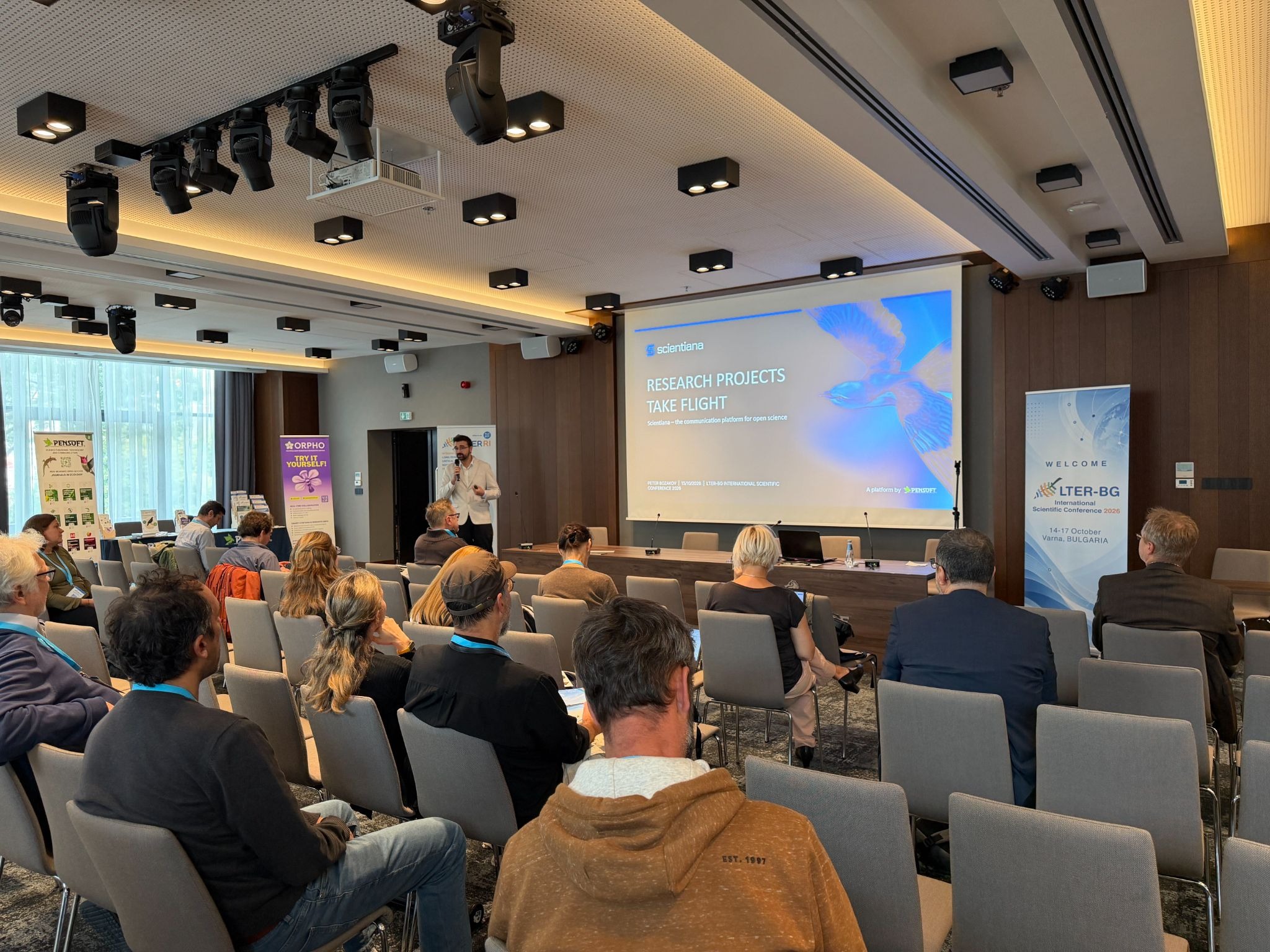
Pensoft’s newest platform Scientiana
Peter Bozakov introduces Pensoft’s newest platform – Scientiana.

While, Events and Marketing Coordinator Victoria Stoyanova explored the new frontiers that an AI-FAIR outlook unveils in the domain of academic publishing. Specifically, she showcased the evolution of the ARPHA platform and the newly launched ORPHO, Pensoft’s next-gen collaborative writing tool, as examples of innovation placed directly in the hands of authors.

Together, ARPHA and ORPHO support the entire manuscript workflow from submission to publication, with structuring, taxon tagging, classification, and data publication  taking place as part of the publication process itself. 
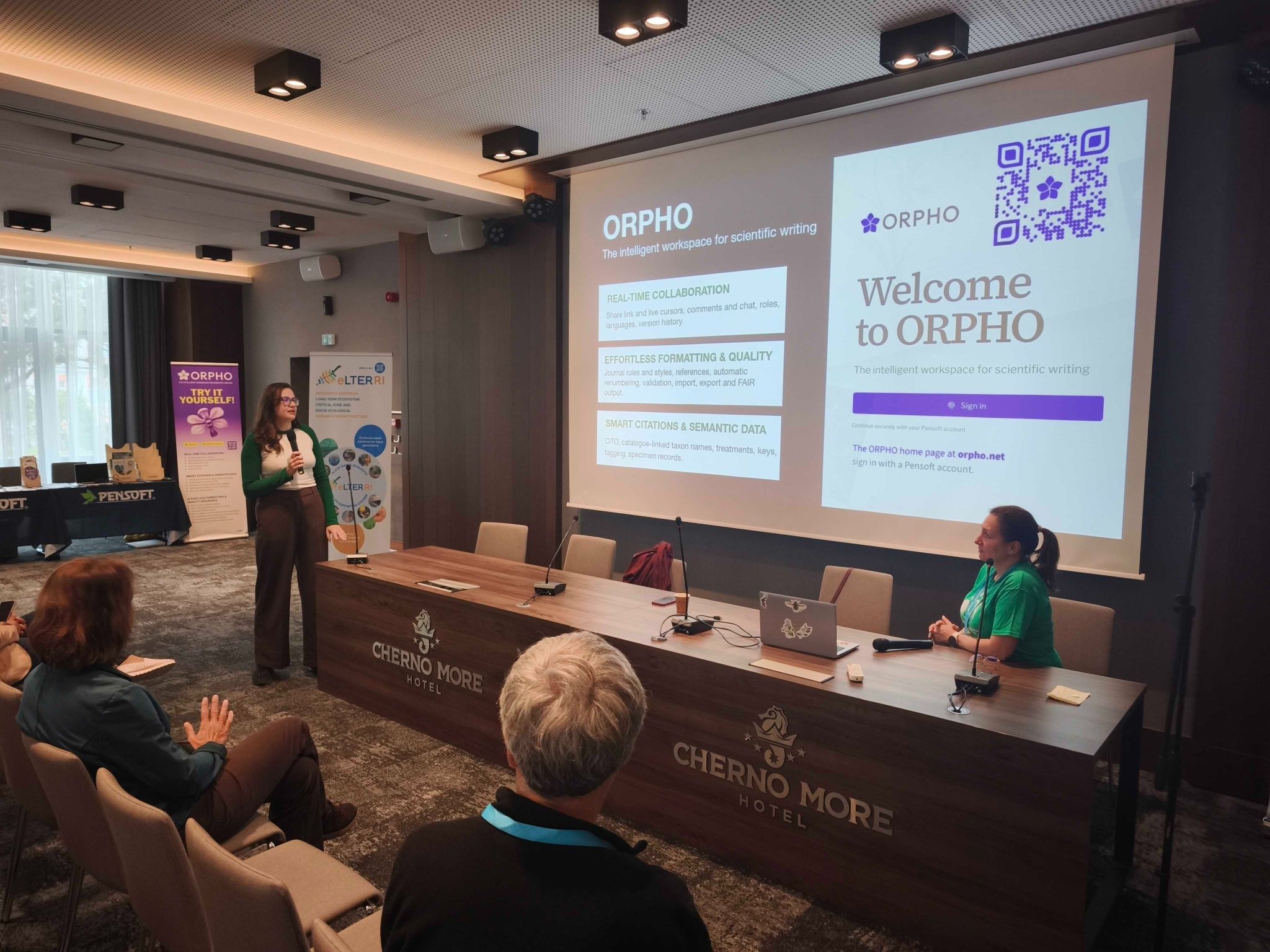
A crash course in using ORHPO
A crash course in using ORHPO by Victoria Stoyanova

The presentations proved themselves a stepping stone to further discussions on potential collaborations with scientists, conversations that were bolstered by on-site demonstrations of the tools in question.

The conference in Varna was enjoyable, fruitful and full of hope and esteem for the better future of long-term ecosystem research. And our Pensoft team left with many ideas and an affirmed ambition to keep working to provide better solutions and services for the development of European science. What we will always remember are the words of our host – the national coordinator of LTER Bulgaria in the past 20 years, Svetla Doncheva-Bratanova: 

I would like to thank the Pensoft team for the wonderful participation in the conference. You are amazing and I am certain we could do wonders together!

Many thanks to the Bulgarian LTER community and the wider eLTER community for bringing together so many passionate researchers and making these past few days special.

Open Access Week 2026: Why Pensoft Chose Open from the Start

This Open Access Week, discover how Pensoft championed open access since ZooKeys through fair APCs, ARPHA tools and FAIR data.

For millennia, people have gathered data and knowledge – about where to hunt, eat, trade, and live – and shared it through experiences, stories and songs. Today, we continue to do so by creating and sharing knowledge in order to “advance human understanding and the common good.”

This year’s International Open Access Week theme, “The Cost of Knowledge,” reminds us that sharing knowledge has a price: subscription fees and article processing charges, the time and expertise of authors, reviewers and editors, and the investment and know-how behind user-friendly digital infrastructures. 

The themes echo the ones we looked at during Peer Review Week 2026, where we gave our Editors-in-Chief the chance to share the challenges they face in sustaining the peer review process, from the influx of papers and data to the shortage of researchers willing to review – you can read what they told us here: https://blog-pensoft.blogs.awt-2.arphahub.com/2026/09/11/peer-review-week-2026-building-capacity-for-the-long-run/ 

Open from the very beginning

ZooKeys journal homepage
ZooKeys journal homepage.

At Pensoft, open access has never been an add-on. Founded in 1992 by scientists for scientists, we launched our first journal, ZooKeys, as fully open access in 2008, and it has been open from its very first issue. After all, it has always been our thinking that research can only serve the common good when everyone can read it, use it and build on it. This is why from the very start, we wanted ZooKeys to speed up research and free the exchange of information in taxonomy.

That principle has shaped every journal we have incepted since from PhytoKeys and MycoKeys to Biodiversity Data Journal to more recently launched Natural History Collections and Museomics and Individual-Based Ecology. 

Research Ideas and Outcomes journal homepage
RIO journal homepage.

In 2025, together with long-term collaborators from the open-science community, we founded the quite revolutionary and unique journal Research Ideas and Outcomes (RIO) with the aim to catalyse the culture change in research communication by publishing ideas, project proposals, data/software management plans and various other outcomes that would typically be lost for the scientific community. The recognition for RIO’s approach to scholarly communication came only half a year later when SPARC went on to name an Open Science Innovator.

ARPHA Publishing Platform
ARPHA Publishing Platform – homepage.

Throughout our existence as a publisher all of our journals have been 100% open access. Hosted on our own ARPHA Publishing Platform and operating under CC BY license, all scholarly titles in our portfolio make sure that every article can be read, shared and reused freely while authors retain the copyright to their work.

Yet, open should also mean fair. Our article processing charges are among the most competitive in the field, and we are transparent about what they cover: we were among the first publishers to share our pricing and services through Plan S’s Journal Comparison Service, and publicly provide our Open Access and APC Policies in full compliance with the Plan S requirements. We also work with international consortia to further reduce financial frictions and administrative burden for researchers and their institutions. As of this year, for instance, we’ve partnered up with Bibsam Consortium to advance open scholarly publishing across Sweden.

A streamlined process

ARPHA Publishing Platform services
ARPHA services

Our proprietary ARPHA Publishing Platform offers a full-featured, end-to-end open access publishing and hosting solution, with a suite of connected services built around it.

The ARPHA suite

Apart from about 100 open-access scholarly journals, ARPHA powers the ARPHA Preprints platform, which seamlessly integrates with journals to let authors make their manuscripts publicly available upon submission; the platform also provides high-quality and technologically advanced open-access publication for conference outputs through ARPHA Proceedings and ARPHA Conference Abstracts. Through Advanced Books, authors and researchers can bring whole open access books to readers in semantically enhanced HTML and PDF formats.  

ORPHO – the next-gen tool for scientific writing

Most recently, we launched ORPHO, our next-generation collaborative workspace for scientific writing. Within ORPHO, researchers and authors can enrich their manuscripts semantically, so that their research, as well as underlying data remains FAIR (Findable, Accessible, Interoperable, and Reusable) and AI-ready. 

Together, these tools streamline the publication of text and semantically rich data, making openness a natural part of the research workflow rather than an extra step.

Also, along with Plazi, we run the Biodiversity Literature Repository on Zenodo, which gives articles, figures and taxonomic treatments their own DOIs and releases them under CC0, so the data inside publications can be found, cited and reused by platforms such as GBIF.

This is what a publisher built by scientists can offer: a model that treats knowledge as something to be shared, prices that stay open and transparent, and infrastructure that makes research easier to find, reuse and trust.

Throughout our existence as a scholarly publisher and technology provider, Pensoft has always considered it our responsibility to ensure that valuable research outputs are shared efficiently with the world. This gives everyone, everywhere, the opportunity to make sense of and use this knowledge, while giving full credit to the scientists behind it. This is how, in our vision, scientific work and knowledge can achieve optimal impact on society and future research.

comments Iva Boyadzhieva, Head of Journal development and PR at Pensoft.

Reclaiming knowledge as a common good

Open Access Week 2026 at Pensoft

As this year’s Open Access Week puts it:

“Momentum is growing for approaches to treat knowledge as a common good and not a commodity to be mined.” – Open Access Week 2026

We believe that momentum is real, and we have seen it grow ever since the first issue of ZooKeys. At Pensoft we are proud to say that we have championed open access in publishing, building the tools, workflows and partnerships that make it work in practice, and we will keep doing so alongside the institutions, funders, editors and researchers who share this commitment.

Explore our journals and services at pensoft.net

In memoriam: Josef Settele (1961-2026)

It is with deep sadness that Pensoft bids farewell to Prof. Dr. Josef Settele, a longtime friend, author, editor, and partner.

On 9 October 2026, Prof. Dr. Josef Settele passed away unexpectedly. The news has left all of us at Pensoft shaken and deeply saddened. To the wider scientific world, he was considered one of Europe’s most influential biodiversity researchers. But to us, he was “Sepp”: a good friend, a colleague and a collaborator of many years.

A scientist who built bridges

Prof. Dr. Josef Settele trained as an agroecologist at the University of Hohenheim and later joined the newly founded Helmholtz Centre for Environmental Research (UFZ) in Leipzig in 1993. There he headed the Department of Conservation Biology. Over the following decades he became a leading voice on insect conservation, and on how climate change and land use affect biodiversity.

Josef Settele speaking to people
Prof. Settele. Photo from Prof. Stoev’s personal archive.

He coordinated large international teams, and his work reached from the lab and the field to the halls where policy is made. He served as a Coordinating Lead Author for the IPCC’s Fifth Assessment Report. He was a Co-Chair of the IPBES Global Assessment on Biodiversity and Ecosystem Services, and had been a member of the IPBES Multidisciplinary Expert Panel since 2022. He was also a regular on the “Highly Cited Researchers” list. 

Josef Settele

His great expertise in the ecology of insects in cultural landscapes, in biodiversity, land use and social-ecological systems, and at the science-society-policy interface made him an invaluable voice in the global conversation on biodiversity, one that scientists, policymakers and the public alike trusted and listened to.

A partner from the very start

Our collaboration with Sepp began with a milestone in Pensoft’s own history. When Pensoft was still an emerging publisher and partner in the early years of EU-funded research, Sepp played an essential role in our journey. 

Remembering the long friendship between Sepp and Pensoft, the company’s founder and CEO Prof. Lyubomir Penev, said:

It is hard to believe that my beloved friend Sepp is no longer with us! He has been with Pensoft since the very early days of our company, starting as a keen lover of our butterfly books in the late 1990s. His attitude to Pensoft since then has always been encouraging, supportive and inspirational!

Reflecting on Pensoft’s early days working on EU-funded research projects, Prof. Penev adds:

Sepp was also the first to invite us to join an EU consortium, that of the famous EU’s Sixth Framework Programme project ALARM (Assessing LArge-scale environmental Risks for biodiversity with tested Methods), running 2004-2009. In ALARM Sepp not only foresaw but also prototyped the concept of the European Research Area (ERA) in the field of ecology by bringing together 67 partners from 35 countries, producing more than 1,000 scientific publications.

ALARM was so brilliantly coordinated by Sepp, with such a passion, tolerance and love, that it still motivates and excites its partners to continue working together, keeping the ALARM spirit of collaboration and friendship! 

Thank you my friend, for all your love and courage! We miss you!

says Prof. Lyubomir Penev.  
ATLAS of Biodiversity Risk book cover.

One stark example for his legacy is the book “Atlas of Biodiversity Risk”, published by Pensoft in 2010, which was entirely the result of Josef’s efforts as a coordinator of ALARM. Together with R. Grabaum, V. Grobelnick, V. Hammen, S. Klotz, L. Penev, and I. Kühn (Eds.), he succeeded in synthesizing a vast amount of information to present in a comprehensive, easy-to-read, and richly illustrated format the major pressures, impacts, and risks associated with biodiversity loss on a global scale.

Lyubomir Penev and EC Commissioner Janez Potocnik
EC Commissioner Janez Potocnik in conversations with Lyubomir Penev short before a copy of the “Atlas of Biodiversity Risk” was handed over by the editors to Commissioner Potocnik on the June 1, 2010, during the Green Week in Brussels. Dr. Penev is co-editor of the atlas and director of Pensoft Publishing Company Sofia, which produced the atlas. The cooperation with Pensoft is one of the success stories of cooperations with small and medium sized enterprises within EC research projects on biodiversity. Photo Credit to GREEN WEEK 2010/ EUROPEAN COMMISSION.

The book immediately attracted the attention of the scientific community and policymakers, who required such an analysis to formulate and develop relevant policies within the European Commission. A case in point is the interest shown in the book by EU Commissioner Janez Potočnik during Green Week in Brussels on June 1, 2010.

Josef Settele
Karl Falkenberg, Director General of the DG Environment of the European Commission, in active dialogue with Josef Settele short before a copy of the “Atlas of Biodiversity Risk” was handed over to him on the June 2, 2010, during the Green Week in Brussels. Dr. Settele is the main editor of the Atlas. Together with a team of five colleagues he coordinated the EC project ALARM, from which this atlas originated. He is scientist at the Helmholtz-Centre for Environmental Research — UFZ. Photo Credit to GREEN WEEK 2010/ EUROPEAN COMMISSION.

Shortly after ALARM, Sepp went on to initiate two further EU-funded projects and once again invited Pensoft to join. MACIS examined how climate change, and our responses to it, affect biodiversity across Europe, and what policies could limit the damage. COCONUT which examined how historic and current land use change drives biodiversity loss, and used that knowledge to model future scenarios and develop policy options for land use management.

Reminiscing about his relationship with Sepp, Pensoft’s Chief Operating Officer, Prof. Pavel Stoev, says:

I must have met Sepp sometime around 2009–2010, when our more intensive correspondence regarding the SCALES (Securing the Conservation of biodiversity across Administrative Levels and spatial, temporal, and Ecological Scales) project in which he was involved began. However, we became truly close during the LEGATO project (“Land-use Intensity and Ecological Engineering – Assessment Tools for Risks and Opportunities in Irrigated Rice-Based Production Systems”), which he coordinated. Throughout the project, we held numerous scientific meetings and conducted fieldwork in Vietnam, Malaysia, Indonesia, and the Philippines, spending a great deal of time together discussing various scientific issues and planning publications.

The friendship we forged during that project endured for many years across a series of subsequent scientific initiatives; the last of these collaborations was the MAMBO project (“Modern Approaches to the Monitoring of Biodiversity”), where we co-led Work Package 7, focusing on communication and policy.

Josef Settele and the LEGATO project
Prof. Dr. Josef Settele giving a talk about LEGATO project. Photo from Prof. Stoev’s personal archive.

Reflecting on his character, he adds: 

Sepp was always a smiling, deeply spirited man with a wonderful sense of humour. He pursued his scientific path with immense enthusiasm and the composure of someone truly in his element. Yet, for him, practical application was just as important as fundamental research. This is clearly evident from the many leadership roles he held in international nature conservation initiatives, such as IPBES.

One of the conservation efforts to which he dedicated significant energy was securing support for the Nature Restoration Law, an endeavour that ultimately succeeded. We actively participated in this campaign by writing letters to Bulgarian Members of the European Parliament.

Sepp was a trusted partner in further collaborative projects over the years. He was part of the ongoing project BioAgora, which his team at UFZ co-coordinates, contributing to the effort for the development of the EU Science Service for Biodiversity.

Alexandra Korcheva, a science-policy communications officer working on BioAgora adds:

Rarely does one meet people that are so free, so wise, and yet so down-to-Earth. Prof. Settele was easy to talk to, and at the same time he was so experienced and knowledgeable. From my interactions with him, I have been inspired both as a biodiversity science-policy communicator, and as an early-career researcher. He left a bright trail in his field of work, and has inspired many to follow in his steps. May he rest in peace, and sincere condolences to all his family and friends!

BioRisk journal overview.

Sepp was one of the founders of our BioRisk – Biodiversity & Ecosystem Risk Assessment journal, which grew out of the ALARM community and gave risk-focused biodiversity research a home of its own. He remained its Editor-in-Chief until the very end. One of its early landmark works was the Climatic Risk Atlas of European Butterflies, co-authored by Sepp and colleagues. 

Books soon followed, and over the years Sepp became one of our most prolific authors, with 97 works published with us. Several of them became some of the most influential book titles in our portfolio:  

Beyond the lab

Prof. Josef Settele giving a talk.

Sepp never saw science as something that should stay inside academia. Thus, in 2005 he launched the German Butterfly Monitoring Scheme, which became one of the country’s best-known citizen science projects and invited ordinary people to help track the state of nature. 

Communicating science effectively became a large part of his life’s work. He explained why biodiversity matters, how ecosystems are faring, what drives their decline and what can be done to protect them for the long term. He took that message to politicians and journalists, and he was just as willing to sit down with groups whose political or economic goals, and views, differed from his own.

Our farewell

Prof. Dr. Josef Settele, circa 2012.
Prof. Dr. Josef Settele, circa 2012. From Prof. Stoev’s personal archive.

Pensoft has lost a dear friend, and the biodiversity community has lost a great champion. We are deeply grateful for everything he gave us: his trust, his ideas, his energy and his friendship. His work lives on in the journals, the books, the projects and the many researchers he inspired.

Our thoughts are with his family, his colleagues at UFZ and all who knew him.

Not Only Boring Issues: What Fossil Bones Reveal About cretaceous Haţeg Island

Sometimes, the smallest marks on a fossil bone can tell us some of the most interesting stories.

Guest Blog Post by Anne Betterman and Felix J. Augustin

Sometimes, the smallest marks on a fossil bone can tell us some of the most interesting stories. In our recent study, published in Fossil Record, we investigated “bioerosion”  – traces left by organisms during feeding and other activities – on fossil bones from Upper Cretaceous deposits of Haţeg Basin in Romania. These traces gave us a new perspective on what happened to animal remains and on how the ancient ecosystem of Haţeg Island functioned.

Palaeoart reconstruction of the Haţeg Island coastal ecosystem, showing the diverse vertebrate fauna. Illustrated by Peter Nickolaus © Peter Nickolaus.

Although bioerosion can provide important information about ancient ecosystems, it is still rarely studied in detail. Precious few previous studies had documented bioerosion from the Haţeg Basin, the principal area for fossils from Haţeg Island, but only from a limited number of bones and localities. We therefore wanted to figure out how common and widespread bioerosion was across the Haţeg Basin, and whether differences in taphonomy, local fauna, and depositional environments influenced its occurrence.

To investigate this, the extensive Upper Cretaceous vertebrate fossil collection of the University of Bucharest was inspected. We discovered numerous new examples of bioerosion on dinosaur and turtle remains, coming from several different localities and geological formations. This allowed us to compare traces from different parts of the Haţeg Basin and from different depositional environments.

Bioerosion (‘star-shaped pit’) on a dinosaur bone likely produced by termites.

What stood out to us most was how widespread these traces turned out to be. We found evidence of bioerosion across a larger geographical and temporal range than previously recognized. Even more striking was the similarity between different environments, including braided and meandering river systems and floodplains, as well as generally well drained and more poorly drained environments.

It appears that despite these environment-related differences, the overall patterns of carcass decomposition were remarkably consistent. This suggests that similar processes may have affected carcasses on Haţeg Island both across different environments and throughout millions of years.

Bioerosion (‘boreholes’ and ’tunnel’) on a turtle carapace likely produced by dermestid beetles.

The traces also provide information about the organisms that interacted with the carcasses, and which most often fail to be preserved on their own. We documented several types of bioerosion, including grooves, pits and boreholes. Some of these traces were probably produced by multituberculate mammals, skin beetles or termites, revealing that a range of organisms fed on the carcasses of different dinosaurs and turtles after their death.

Bioerosion (‘parallel paired grooves’) likely produced by multituberculate mammals and drawing of the potential producer. Redrawn after Smith and Codrea (2015).

These findings provide valuable insights into the functioning of the ecosystem of Haţeg Island, as death and decomposition are important ecological processes. Once an animal died, its carcass became a resource for other organisms. The traces preserved on fossil bones provide a rare record of these interactions, which usually remain cryptic.

With this research, we hope to add another layer to our understanding of ancient Haţeg Island. By looking beyond the spectacular dinosaurs and paying attention to the marks left on their bones, we can develop a more complete picture of how this Late Cretaceous ecosystem functioned.

Palaeoart reconstruction of the Haţeg Island inland ecosystem, showing the diverse vertebrate fauna. Illustrated by Peter Nickolaus © Peter Nickolaus.

In the end, our study shows that fossils can represent much more than just the remains of individual animals. A small groove, pit or borehole found on them may record an ecological interaction that took place millions of years ago. These seemingly “boring” traces are therefore anything but boring – they can help us understand not only how animals lived on Haţeg Island, but also what happened after they died.

Original source:

Bettermann A, Csiki-Sava Z, Bocherens H, Augustin FJ (2026) Not only boring issues: bioerosion on bones from the Upper Cretaceous of the Haţeg Basin (Romania) and the implications for carcass decomposition on Haţeg Island. Fossil Record 29(2): 675-705. https://doi.org/10.3897/fr.29.189421


For more articles on palaeontology, visit the Fossil Record website and follow the journal on BlueSky and Facebook.

New special issue highlights threatened fish of European wetlands

A recently published special issue in the journal Nature Conservation is dedicated the unique and highly specialised fish and their importance for the conservation of wetlands in Europe.

At first glance, muddy, low-oxygen waters seem unattractive. For some highly specialized fish species, however, they are vital refuges. It is precisely these habitats that are increasingly threatened in Europe.

A new special issue in the journal Nature Conservation, recently published and edited by an expert group led by Josef Wanzenböck, is dedicated to these unique fish and their importance for wetland conservation.

The special issue “Biology and conservation of wetland fishes in Europe” brings together selected papers from the international conference “The Fish of Muddy Waters,” which took place in Vienna in October 2025. The focus was on fish species adapted to the specific conditions of wetlands and their surrounding areas.

Fish fauna monitoring

Fish fauna monitoring in Illés Pond VI in the Szada Pilot Area. Photo by Sándor Tatár. From Bajomi et al., 2026

These include, among others, the European mud minnow (Umbra krameri), the weatherfish (Misgurnus fossilis), and the crucian carp (Carassius carassius). At the same time, non-native fish species that have since become established in the peripheral areas of floodplains and other wetland habitats were also examined, and their impact on ecosystems was discussed.

What makes these fish special is their ability to cope with conditions under which many other species could not survive. In small, muddy bodies of water, oxygen levels can be very low at times. The fish species found there are adapted to these extreme conditions and can therefore provide important insights into the state of their habitat. This means that fish inhabiting wetlands are much more than just rare species. They can serve as indicators of the ecological health of their habitats. If these specialized fish are struggling, this often points to changes or a deterioration in the entire ecosystem.

Distribution of Umbra krameri in Hungary
Distribution patterns of Umbra krameri in Hungary in the past 50 years. Black dots show the occurrences within the certain 10 × 10 km ETRS rectangle. Red lines show the borders of the 12 geographic regions of the country. Sallai et al., 2026

For instance, a study by Sallai et al., covers 50 years of records from Hungary, the core of the European mud minnow’s range, found that the species has disappeared from 44% of its historically known localities. Its lineage is roughly 60 million years old, yet surviving populations are increasingly confined to artificial canals. In the research article, drying wetlands emerged as the clearest threat.

Umbra krameri
38-day-old Umbra krameri fry reared at the Hungarian University of Agriculture and Life Sciences for stocking. Photo credit: Csaba Posztós.

The issue also offers cause for hope. Bajomi and col. showed that in two small, isolated artificial ponds, mud minnows released by conservation teams were still breeding 7 to 10 years later, which shows that carefully designed translocations can create safe refuges for the European mudminnow (Umbra krameri).

For more research like this, access the full Special Issue here: https://natureconservation.pensoft.net/issue/5260/

This was precisely the focus of the conference “The Fish of Muddy Waters.” The goal was to strengthen the link between research and conservation and to draw attention to fish species that often receive less public attention than larger or economically more significant species. The exchange between international scientists and representatives of nature conservation organizations should help to consolidate existing knowledge and develop new approaches to the protection of endangered wetland fish.

Fish have always held a firm place in our culture and are closely linked to the use of water bodies. However, the little-known inhabitants of wetlands reveal another side of this relationship: they highlight just how closely the conservation of individual species is tied to the protection of their habitats. Research on these species can thus also help raise awareness of the importance of wetlands and lay the groundwork for more effective biodiversity conservation.

This newly published special issue offers insight into current research on these specialized fish species and makes selected results of the Vienna conference accessible to an international audience of experts.

Cover image credit to: Lukas Fuxjaeger

ANERIS at EGI2026: Bringing Operational Marine Biology to Europe Digital Research Infrastructure Community

Between 21-25 September 2026, our team joined the EGI2026 conference in Ghent, Belgium.

Between the 21st and the 25th of September 2026, the ANERIS project, joined the EGI2026 Conference in Ghent, Belgium, as an exhibitor and conference partner.

Group photo EGI 2026
Group photo provided by EGI Foundation


Every year, the EGI Conference brings together digital and research infrastructure providers, data scientists and innovators to advance data-intensive science. Organised by the EGI Foundation in collaboration with partners from the EGI Federation, this year’s edition took place at the Bijloke, a former hospital site turned arts and knowledge campus on the banks of the river Lys. The five-day programme covered topics ranging from AI for European science and the European Open Science Cloud (EOSC) to federated compute and data infrastructures for research.

For ANERIS, the conference was a natural fit as the EGI Foundation is one of the project’s 25 partners, and the project’s vision of faster, more reliable and accessible marine life data depends directly on the kind of digital infrastructure discussed in Ghent.

A person behind a stand
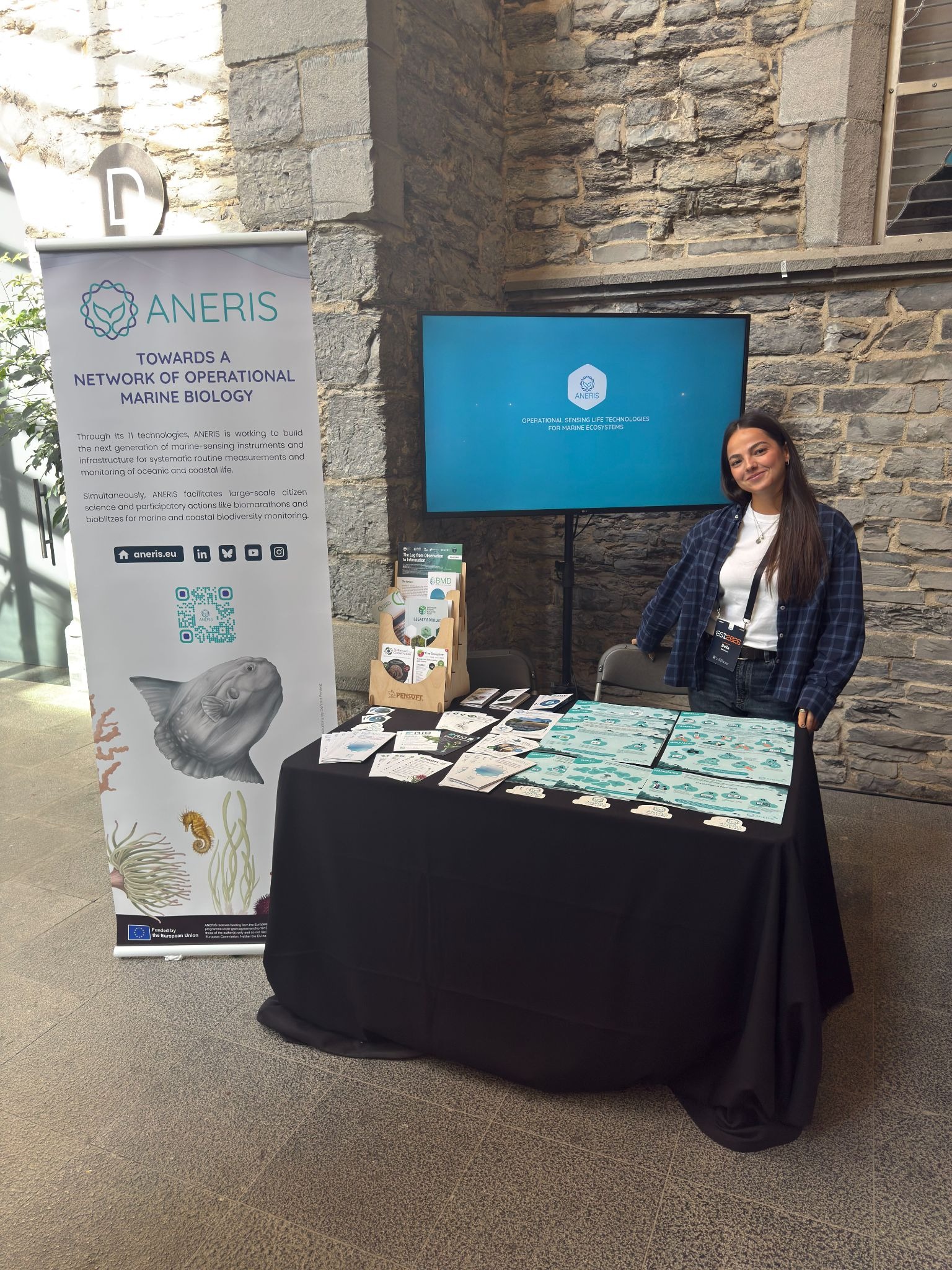
ANERIS booth at EGI2026 in Ghent.

During the opening ceremony, all exhibitors were invited to present their projects and initiatives to the audience in short pitches. Pensoft’s Communication Officer Bella Dimitrova used the opportunity to introduce ANERIS and its concept of Operational Marine Biology. Many attendees later came by the booth specifically to learn more about the project.

ANERIS materials
ANERIS materials.

The ANERIS booth welcomed a steady stream of visitors. Although most participants came from engineering and computing backgrounds, the project’s scientific illustrations and sticker sheets quickly became a highlight of the exhibition. The marine species featured on the stickers are among the most frequently observed and photographed during ANERIS citizen science campaigns. This made them a natural starting point for conversations about how volunteers, researchers and new technologies work together to monitor coastal biodiversity. Visitors also showed strong interest in the project’s newly produced case study factsheets and infographics, which made their print debut at the conference.

  • paper materials
  • paper materials
  • paper materials

At the booth, attendees could also learn more about Pensoft’s expertise and experience as a scientific publisher through a selection of journals aligned with the conference themes. They could also find out about Pensoft’s role as an active consortium member in the COAST-SCAPES, B-Cubed and Biodiversity Meets Data projects.   

Funded by the European Union’s Horizon Europe programme and coordinated by the Institute of Marine Sciences (ICM-CSIC), ANERIS brings together 25 partners from 13 countries. Over four years, the consortium has developed 11 technologies for marine life sensing and monitoring. They cover AI-assisted imaging of plankton and macrofauna, genomic and eDNA approaches and citizen science observatories such as MINKA.

As the project nears its end in December 2026, the focus is on making these tools usable beyond the project’s lifetime. This includes integrating them into European research infrastructures, which is why conversations with the EGI community were especially valuable. Combining large-scale imaging data, AI-based identification and citizen observations requires reliable storage, compute and data services. These are exactly the services EGI2026 participants build and operate.

The project’s results will be further showcased at the ANERIS Final Workshop “The future of marine monitoring – imaging, AI, and research infrastructures” on the 16th of November 2026. The hybrid event will be hosted by VLIZ in Oostende, Belgium. Through real-world case studies, partners will present tools including AI-driven underwater image restoration, automated organism identification platforms and integrated citizen science observatories. Shortly after, ANERIS will also take part in the 7th World Conference on Marine Biodiversity in Bruges.

The full plenary recordings and the detailed programme are available on the conference’s official website. 

Three New Species of Conger Eel Discovered in the Deep Waters Around Taiwan

Researchers have now described three new species of the conger eel genus Gnathophis, drawing on 130 specimens collected from the deep sea.

Researchers from National Taiwan Ocean University, University of Taipei and the Smithsonian Institution have now described three new species of the conger eel genus Gnathophis, drawing on 130 specimens collected from the deep sea. The findings raise the number of Gnathophis species known from Taiwan from two to five.

Members of this genus are medium-sized eels of tropical and subtropical deep waters, recognisable by a blunt tail tip, a fleshy snout that projects beyond the teeth, and a small fleshy keel on the underside of the snout.

The team compared vertebral counts, the pores of the sensory lateral line, colouring and tooth patterns, and for two of the species they added DNA barcoding to confirm the distinction. The two barcoded species differ from each other by roughly 4.4 to 4.9 per cent in the gene examined, well beyond the variation seen within a single species.

Each name tells a small story about where the eel was found or how it looks:

  • Gnathophis kbalanensis (Kbalan’s conger): named after “Kbalan”, an ancient name for the Yilan region of northeastern Taiwan, in use roughly 800 to 1,300 years ago. It is also known as Cabaran in Spanish and Kat-má-lán in Taiwanese. The largest specimen measured 472 millimetres, and the species is recognised by its blackish fins and a high vertebral count of 134 to 137.
  • Gnathophis melanurum (black tail conger): named from the Greek melan, meaning black, and urum, meaning tail, in reference to its black tail fin. Its dorsal and anal fins are pale, which makes the dark tail stand out. It was found off both northeastern and southwestern Taiwan, mostly at depths of around 200 to 300 metres.
  • Gnathophis nanhaiensis (Nan Hai’s conger): named after “Nan Hai”, the Chinese name for the South China Sea, where the holotype was collected at a depth of about 509 metres. The Latin ending -ensis means “originating in”. Known from only two specimens, it has pale fins and the highest vertebral count of the three, at 139 to 143.

The first two species share a feature that sets them apart from some of their relatives: the lateral line pores above the pectoral fin are raised, and the peritoneum, the lining of the body cavity, is black. Several of the specimens were ripe females carrying loose eggs, which suggests these waters may serve as spawning grounds.

The study also tidies up the regional record. An eel previously listed in Taiwan as Gnathophis xenica was confirmed to be a misidentification, and the researchers found no evidence to split the widespread G. heterognathos into separate species.

The work is dedicated to the late Dr David G. Smith, whose contribution to eel taxonomy inspired the first author.

Original source:

Huang J-F, Liao Y-C, Chan T-Y, Chen H-M, Smith DG (2026) The congrid eel genus Gnathophis in Taiwan (Anguilliformes, Congridae), with descriptions of three new species. ZooKeys 1287: 11-46. https://doi.org/10.3897/zookeys.1287.183842


For more articles on zoology, visit the ZooKeys website and follow the journal on BlueSky and Facebook.

Can We Teach AI to See the World the Way Animals Do?

New paper proposes using deep learning to collect richer ecological data, with the aim of better predicting how ecological communities change.

For decades, ecology has been very good at explaining the past. We can look at a collapsed fishery, a vanished pollinator population, or a coral reef bleaching event and piece together, after the fact, what went wrong. What ecology has struggled to do, and what it needs to get better at, is predicting these changes before they happen.

Conservation policymakers don’t just need to understand why an ecosystem collapsed last year. They need to know what will happen if we build a road through a forest, dam a river, or let a new pesticide into widespread use, before those decisions are made, not after the damage is done.

A new method paper by C. J. M. Musters and Geert R. de Snoo of Leiden University, published in Individual-based Ecology, explores whether combining deep learning with this individual-based framework could offer a way forward. They propose: closing the prediction gap requires not just better data, but an entirely different kind of data – and possibly, machines that sense the world the way animals do. 

Why Predicting Ecosystems Is So Hard

Ecological communities are dazzlingly complex. Every organism in a habitat is constantly responding to its environment and to every other organism around it, like competing for food, avoiding predators, seeking mates, adjusting behavior with the seasons. Traditional ecology often simplifies this complexity by grouping organisms into species-level categories. 

Ecosystem illustration
Example of an ecosystem. Credit to goodstudio via Canva.

Musters and de Snoo point to the work of ecologist John Lawton, who argued that this kind of unpredictability is strongest at “intermediate” scales – not in small populations of a single species, not across whole biomes, but somewhere in between. The authors define this middle ground as spaces of roughly 1 to 1,000,000 km² over 10 to 100 years. Unhelpfully, that’s also roughly the scale at which conservation decisions actually get made. 

Organism-based Ecology or Individual-based Ecology takes a different starting point. Instead of assuming species behave as uniform units, it treats individual organisms as the fundamental actors whose actions and interactions generate the patterns we see in ecosystems. That’s a more realistic picture – but also a far more complicated one. Communities become vast networks of individual organisms, each constantly gathering and responding to information from their surroundings and from each other. 

Where Deep Learning Comes In 

 Binary code
Binary codes. Credit to RDGraphics via Canva.

Deep learning (DL), the technology behind everything from image recognition to language models, is extraordinarily good at finding patterns in complex data. In principle, DL combined with organism-based ecology, the study of how individual organisms behave and interact, could be used to build models that predict how a community will shift as conditions change.

However, deep learning is only as good as the data you feed it, and the data ecology currently collects wasn’t designed with this goal in mind.

Traditional ecological datasets tend to record outcomes: population counts, species distributions, migration patterns. What they largely fail to capture is something more fundamental – the raw sensory information that organisms actually use to make decisions. A bird doesn’t respond to “average temperature over the season.” It responds to what it can see, smell, hear, and feel, moment to moment, in its environment.

Schematic
Flow diagram of the first three time-steps of a Recurrent Neural Network to predict changes in the state of community.  Credit to Musters & de Snoo GR, 2026.

If deep learning models are going to predict how organisms actually behave and interact, the authors argue, they need training data that reflects what the organisms themselves are sensing rather than just retrospective statistics ecologists usually collect. 

Building “Artificial Sense Organs” for Ecology

To generate that new kind of data, Musters and de Snoo propose building sensory instruments that mimic the sense organs of the organisms themselves – broad-spectrum devices that continuously and non-invasively record the same signals animals, plants, fungi, and microbes use to make decisions. Paired with existing tools like camera traps, biologging, satellite imagery, and environmental DNA sampling, this could generate the rich, organism-centered datasets that deep learning models actually need. 

A Call for Caution

Deep Learning models are black boxes, even when their predictions are accurate, it’s often unclear why. Models trained on incomplete or biased data can generate ecologically impossible results, like population sizes that go negative. 

Also, models trained largely on data from wealthy, well-studied regions could embed cultural assumptions that don’t transfer elsewhere. The authors offer a vivid example, Black-tailed Godwits are cherished in the Netherlands but considered agricultural pests in parts of West Africa, where they feed on rice rather than soil invertebrates. Applying a European-trained model globally, without care, risks a kind of “unintentional colonialism” in conservation decision-making. 

In their method paper, the authors are clear, that the models they describe don’t exist yet, and that building them will require new instruments, new interdisciplinary collaboration between ecologists and ethologists, and  critically explicit, published testing of where these models work and where they don’t. What they’re offering instead is a roadmap, by starting small, building sensory prototypes, training experimental models on well-studied plots, and rigorously checking every prediction against reality before trusting it with real conservation decisions. 

Whether “artificial sense organs” turn out to be the right way to get there remains to be seen. But the underlying challenge – teaching machines to understand ecosystems well enough to predict their future – is one of the more important questions facing conservation science today. 

Original source:

Musters CJM, de Snoo GR (2026) Challenges and opportunities for Artificial Intelligence for predicting changes in ecological communities. Individual-based Ecology 2: e199762. https://doi.org/10.3897/ibe.2.199762 

A Blind Snake on the Roof of the World: New Burrowing Species Discovered Beneath the Stones of the Qinghai-Xizang Plateau

Scientists from Yibin University and collaborating institutions have formally described Indotyphlops gyirongensis, the Gyirong blind snake.

High on the Qinghai-Xizang Plateau, often called the “Roof of the World,” a new species of snake waits beneath the stones…

Scientists from Yibin University and collaborating institutions have formally described Indotyphlops gyirongensis, the Gyirong blind snake, a discovery that adds a new member to one of the least understood branches of the snake family tree.

General (top) and ventral (below) views of the holotype of Indotyphlops gyirongensis sp. nov. in life (by Peng Guo).

Blind snakes are small, burrowing reptiles that spend nearly their entire lives underground. Their secretive habits and similar appearances make them notoriously difficult to study.

The family Typhlopidae contains roughly 280 species, yet its relationships remain poorly resolved, and new species continue to surface wherever researchers look carefully. Until now, no blind snake had ever been recorded in the Xizang Autonomous Region, which makes this find a first for the area.

The single specimen, an adult female, was collected in August 2025 at an elevation of 2,262 metres, close to the border between China and Nepal. She was resting beneath a stone at the edge of an evergreen broad-leaved forest, where deep humus and a thick layer of fallen leaves create ideal conditions for a creature that lives by burrowing. Among her neighbours were a Himalayan pit viper and a Himalayan toad!

Microhabitat of the type specimen of Indotyphlops gyirongensis sp. nov. in Gyirong, Xizang, China (by Peng Guo).

The snake itself is slender and elegant. At 265 millimetres, it is large by the standards of its genus, yet it measures just 3.5 millimetres across at midbody. Its glossy scales are light brown, each one darker on its rear half, which gives the body a delicate and finely patterned sheen. The underside is cream and so thin-skinned that it is partly transparent to the internal organs.

Most distinctive is its pale cream head cap, which lacks pigment as far back as the eye. The eye itself is only a dark spot, with no visible pupil or iris, fitting for an animal that navigates by touch and chemical cues rather than sight. Its tail ends in a small nubbin rather than a sharp spine.

Some of the most telling differences are hidden in the arrangement of the scales along the lip. Blind snakes are classified partly by how their upper lip scales overlap the shields above them. In nearly all of the snake’s relatives, the third scale overlaps the one beside the eye, a pattern known as T-III.

The Gyirong blind snake shows a rarer arrangement, called T-V, in which both the second and third lip scales overlap the shields above. Few documented members of its genus share this feature, which provides a clean and reliable way to separate it from most of its kin.

Anatomy alone did not settle the matter. The team sequenced two mitochondrial genes and placed the snake within a broad evolutionary tree. It nested firmly within Indotyphlops, as the sister lineage to I. albiceps, but its genetic divergence was substantial. For one gene, it differed from its closest relatives with available data by more than 24 per cent, and for another by more than 18 per cent, margins far beyond what is typically seen within a single species.

The name honours the place of discovery. Gyirongensis refers to Gyirong Town in Gyirong County, where the holotype was found, and it is formed as a noun in apposition. The authors propose the English common name “Gyirong blind snake” and the Chinese name 吉隆盲蛇 (Jílóng Mángshé).

Map showing the locality of the new species in Gyirong, Xizang, China.

Because the type locality sits so close to the Nepalese border, the researchers consider it highly likely that the species also lives on the other side, thus pending further fieldwork.

Original source:

Lyu B, Tan S, Zhao Z, Wallach V, Liu Q, Guo P (2026) A new species of blind snake, Indotyphlops (Serpentes, Typhlopidae), from the Qinghai-Xizang Plateau, China. ZooKeys 1292: 261-273. https://doi.org/10.3897/zookeys.1292.197322


For more articles on zoology, visit the ZooKeys website and follow the journal on BlueSky and Facebook.

Pensoft at TDWG2026: Pushing the boundaries of innovation in biodiversity data management forward

Last week marked another annual meeting of the Biodiversity Information Standards network, otherwise known as TDWG, with the Norwegian capital Oslo hosting the event between 20 and 25 September.

Last week marked another annual meeting of the Biodiversity Information Standards network, otherwise known as TDWG, with the Norwegian capital Oslo hosting the event between 21 and 25 September.

TDWG is the international, non-profit organisation formerly known as the Taxonomic Databases Working Group, which develops and maintains the standards, such as Darwin Core, that allow biodiversity data to be shared, integrated and understood across institutions worldwide.

The six-day programme was a meeting point for over 300 stakeholders from research, practitioner and corporate circles, with proceedings centred around one central topic – “Research and Robot-Ready Biodiversity Data Standards”. In that sense, the themes of accessibility, responsibility, innovation and collaboration were foremost on the minds of participants as they contemplated how information on the biosphere should be extracted, consolidated and shared in the years to come.

As a long-standing partner of TDWG, Pensoft Publishers served as both a sponsor and an exhibitor for the event. In the latter capacity, the company contributed with a joint booth for three of the EU-funded projects it is leading the outreach efforts for:

  • BMD – an initiative working towards a Biodiversity Explorer for high-throughput biodiversity monitoring tools, biodiversity data and biodiversity analyses for better conservation across Europe
  • TETTRIX – a new arrival building a next-generation taxonomic system connecting knowledge, expertise and innovation for all across the Old Continent
  • ANERIS – a pan-European effort to mobilise a network of operational marine biology via a new technological infrastructure
The Pensoft team at the joint booth of the BMD, TETTRIX and ANERIS projects.

A number of other projects from Pensoft’s communication portfolio also found a place in the display, including BEAGLE, OneSTOP, B-Cubed, MAMBO, OBSGESSION and BioAgora. Furthermore, 14 of the company’s journals were in the spotlight, including Biodiversity Information Science and Standards (BISS), the official journal of the TDWG community (where all of the conference’s abstracts are set to be published).  

Crucially, the event also saw the official launch of ORPHO, Pensoft’s new collaborative workspace for scientific writing. Founder and CEO Prof. Lyubomir Penev and CTO Teodor Georgiev conducted live demos of the tool, showcasing how manuscripts crafted within it with full version control for authors become discoverable, interoperable and FAIR-compliant.

In the context of TDWG2026’s agenda, they also presented ORPHO’s integrated semantic annotation and communication instruments as part of the workshop “How Literature Services can Support & Benefit from Biodiversity Publication and Data Standards?” on 24 September. The workspace was received with anticipation and enthusiasm by attendees, with many expressing a desire to test it out for themselves.

They were also treated with a tease of Pensoft’s next large-scale endeavour, as Senior Communications Officer Peter Bozakov pulled the curtain behind the forthcoming communication platform for research projects Scientiana.

As for other notable contributions to the wider conference agenda by researchers affiliated with Pensoft’s publishing or project activities:

  • The session “Operationalising Biodiversity Digital Twins within Data Space Ecosystems”, which was co-led by BMD coordinator and long-time author and reviewer across several Pensoft journals, including Biodiversity Data Journal and Research Ideas and Outcomes, Niels Raes, and showcased a number of innovative outputs from the project. As such, it was an important occasion to assess the initiative’s progress towards unifying Europe’s Data Space within a single Biodiversity Explorer.
Niels Raes presenting “Mainstreaming high-throughput biodiversity monitoring using AI” at TDWG 2026.
  • The symposium “Publishing and Communications Promoting Biodiversity, Natural History Collections, People, Data and Data Standards”, for which Deborah Paul (co-Editor-in-Chief of the Natural History Collections and Museomics (NHCM) journal) had the role of co-organiser. Within it, the TETTRIX project’s vision for the automated tracking of taxonomic research activities was laid out by consortium member David Fichtmüller. Moreover, Shelley James (co-Editor-in-Chief for NHCM) delivered an insightful talk on the creative promotion of biodiversity data and standards for success and recognition.
Co-Editors-in-Chief of NHCM, Shelley James and Deborah Paul, presenting “Hit or miss? Creative promotion of biodiversity data and standards for success and recognition” at TDWG 2026.

Notably, the Biodiversity Information Science and Standards (BISS) journal is the home for TDWG conference abstracts. TDWG 2026 presenters can currently submit their abstracts there and publish them in an extended abstract or mini-paper format completely free of charge. The journal also hosts abstracts from conferences held over the past decade. You can browse the TDWG 2026 collection here.

Last but not least, the company’s sponsorship supported two awards at TDWG2026 (with a free publication in a Pensoft journal as an accompanying prize):

  • Best Student Oral Presentation – awarded to Yeshan Qui for “Reporting structure and sampling-bias correction in citizen-science bird data across Asian cities”
  • Best Student Poster – awarded to Claudia Campanini for “Improving marine fieldwork documentation and metadata with Adaptable Standardised Methods Reporting (ASMR)”
Claudia Campanini receiving the Pensoft Best Student Poster Award at TDWG 2026.

Overall, TDWG2026 proved itself a crucial forum for mapping out the future of biodiversity monitoring and the management of the myriad data streams that emerge from it. Pensoft is proud to be an important actor in this process, contributing with innovative tools and solutions at the heart of the interface between research and practice. As summarised by Prof. Penev:

“Given its status as a large-scale conference centred around the future of biodiversity sciences in the age of AI, TDWG2026 was a crucial venue for unveiling Pensoft’s forward-looking vision for academic publishing and science communication. The “pearl” of these pursuits is undoubtedly the ORPHO workspace, a tool that is well-placed to introduce a new standard when it comes to collaborative AI-FAIR research in Europe and beyond.”

***


Follow us on Bluesky, Facebook, X, and LinkedIn for future conference updates.