GBIF Marks 25 Years of FAIR Biodiversity Data, Now Spanning 70 Countries and 3.8 Billion Records

As GBIF marks 25 years and 3.8 billion records across 70 countries, a new overview looks ahead – tackling data gaps to shape the next quarter-century.

Digital biodiversity data has come a long way. Twenty-five years ago, the Global Biodiversity Information Facility (GBIF) launched with 21 founding countries and a simple but ambitious goal: make the world’s biodiversity data freely and openly available to anyone, anywhere.

Today, GBIF’s network includes 70 participating countries, along with data providers across more than 120 countries, offering open access to over 3.8 billion biodiversity data records. This milestone is explored in a new overview article published in the Biodiversity Data Journal, which traces GBIF’s trajectory over the past quarter-century and the challenges that remain as it looks ahead.

GBIF Executive Secretary Dr. Joe Miller remarked:

As GBIF celebrates its 25th anniversary, I’m very proud to serve as Executive Secretary of the organisation and to have contributed to this milestone publication. Detailing the history of GBIF both as an infrastructure and a global network, the article pays tribute to all the people involved in the network throughout a quarter century—be they staff, participants, nodes, volunteers, data publishers or data users. It represents the past, present and future of GBIF. I believe the paper will help strengthen our network and its capacity to respond to biodiversity data needs both now and in the future.

GBIF was established in 2001, following a proposal from the Organisation for Economic Cooperation and Development’s Megascience Forum which concluded that “an international mechanism is needed to make biodiversity data and information accessible worldwide”.

The call came in response to a problem facing the international community after the 1992 Rio Earth Summit: the world’s biodiversity knowledge was scattered across a small number of institutions, concentrated in wealthy countries, with no shared way to bring it together in support of the newly signed Convention on Biological Diversity.

Now, a quarter-century later, GBIF has become the foundational infrastructure for biodiversity science and policy worldwide.

A Growing Global Network

Biodiversity data in GBIF
Annual biodiversity data made available through the Global Biodiversity Information Facility as of July 2026. Credit to GBIF.

GBIF’s work is carried out through a distributed network of 47 voting country participants and 42 organisational participants, each represented by a national or thematic “node” that mobilises data, builds local capacity, and connects biodiversity communities to GBIF’s infrastructure. More than 2,700 institutions, including museums, universities, government agencies, citizen science platforms, and a growing number of private-sector organisations, have published data through the network, with new publishers joining at a rate of more than two every three days, totalling nearly 3500 organisations involved.

key numerical metrics of the Global Biodiversity Information Facility
Infographic summary of key numerical metrics of the Global Biodiversity Information Facility as of August 2026. See dynamic metrics at GBIF.org and at https://www.gbif.org/analytics/global.

The Biodiversity Data Journal itself is one example of this network in action, as it operates its own GBIF-hosted data portal – one of more than 20 such portals across Pensoft-published journals – providing direct access to hundreds of datasets and hundreds of thousands of occurrence records drawn from the journal’s publications.

Data Supporting Science and Policy

GBIF data mediation
The universe of GBIF data mediation.

GBIF-mediated data now underpin an average of eight new peer-reviewed research papers per day, and have contributed to more than 15,000 publications to date, spanning fields from climate change and food security to public health and invasive species management. An independent 2023 assessment estimated that GBIF generates roughly €12 in societal benefit for every €1 invested, with researcher time savings alone valued at €35 million annually.

The organisation’s impact also extends deeply into international policy. GBIF-mediated data support multiple indicators under the Kunming-Montreal Global Biodiversity Framework, inform assessments by the International Union for Conservation of Nature (IUCN) and the Intergovernmental Science-Policy Platform on Biodiversity and Ecosystem Services (IPBES), and are increasingly used by the private sector to meet emerging nature-related disclosure requirements.

Adapting to New Kinds of Data

Over 25 years, GBIF has continually expanded to accommodate new sources of biodiversity data – from digitised natural history specimens and citizen science observations to DNA-based records and, most recently, structured survey and monitoring data designed to support large-scale biodiversity tracking. In 2026, GBIF adopted the Catalogue of Life as its taxonomic backbone, the result of a multi-year collaboration to build shared infrastructure for reconciling species names across datasets.

Persistent Gaps Remain

key events of GBIF

A timeline of key events in the history of the Global Biodiversity Information Facility. Credit to Miller et al., 2026.

Despite this growth, GBIF recognises that several significant challenges remain. The global loss of biodiversity continues to be described as a crisis in major international assessments, even as the data infrastructure has improved. And the data itself continues to reflect long-standing imbalances – regions with high biodiversity, particularly in the Global South, remain underrepresented, while well-studied, charismatic groups such as birds are overrepresented compared to less visible taxa; furthermore, many marine species and hard-to-identify cryptic habitats and organisms remain inadequately documented.

Closing these gaps was part of the original motivation for creating GBIF a quarter-century ago, and it remains valid today. GBIF’s own assessment is that the network cannot resolve these asymmetries alone, doing so will depend on broader shifts in global scientific funding, data culture, and capacity, alongside GBIF’s continued efforts to expand its Participant network and to diversify the types of data it can mobilise.

An additional, ongoing challenge is data heterogeneity and data quality, because GBIF indexes data, rather than directly vetting every record, it relies on its network of data publishers to maintain quality at source, and on users to report issues – a distributed model that keeps the network scalable but is not without friction.

Looking Ahead

capacity development at GBIF.
Capacity development across the Global Biodiversity Information Facility community.  Credit to Miller et al., 2026.

Guided by its 2023–2027 Strategic Framework, GBIF is prioritising continued growth of its Participant network, expanded support for survey and monitoring data, and deeper integration of DNA-derived biodiversity records – all aimed at closing longstanding geographic and taxonomic gaps in digital biodiversity data worldwide.

Original source:

Miller J, Mandeville C, Schigel D, Gamboa Martinez J, Nielsen AM, Sheldon S, Hahn A, Raymond M, Bundgaard-Jensen S, Bagard Laursen M, Copas K, Blissett M, Høfft M, Méndez Hernández F, Noesgaard D, Rodrigues A, Russell L, Stjernegaard Jeppesen T, Elkjær Ørum-Kristensen A, Grosjean M, Waller J, Podolskiy M, Goodson H, Novakovikj S, Frøslev T, Ingenloff K, Sørensen Nilsson A, Svenningsen C, van der Meijden D, Suen A, Hakan Uzun A, Vaskova M, Nielsen C, Marentes Herrera E, Schaldemose Reibke N, Robertson T (2026) The Global Biodiversity Information Facility at 25. Biodiversity Data Journal 14: e208528. https://doi.org/10.3897/BDJ.14.e208528

Vivid orange killifish discovered in the Brazilian Amazon

Researchers have described a new species of brilliantly coloured fish from a network of forest streams in the Brazilian Amazon, and have already recommended it for listing as Endangered because of the pressures facing its only known home.

Researchers have described a new species of brilliantly coloured fish from a network of forest streams in the Brazilian Amazon, and have already recommended it for listing as Endangered because of the pressures facing its only known home.

The fish, named Laimosemion laranja, is a killifish measuring less than three centimeters in standard length. Males are strikingly patterned, with rows of orange spots along the front half of the body and bold, chevron-shaped orange bars towards the tail, set against a pale grey flank.

It was found by Brazilian researchers from the Universidade Federal do Rio Grande do Norte, the Instituto Peixe das Nuvens, the Universidade Federal do Pará and University of West Florida, during fieldwork in the Rio Cajari drainage in the southern state of Amapá.

“We are developing a research project aimed at investigating the evolution of life-history strategies in freshwater fishes of the family Rivulidae across different biomes in Brazil.

During our sampling in small rivers locally known as ‘igarapés’ in the Rio Cajari region, in Amapá State, we found this fish with a very striking coloration, which immediately caught our attention.”

Yuri Abrantes of the Universidade Federal do Rio Grande do Norte

Confirming that the fish was new to science required close comparison of its body proportions, scale counts and skeletal features against its closest relatives, together with an analysis of its mitochondrial DNA.

“It was an unexpected moment. Initially, what most caught our attention was the impressive coloration of the males and females, which was unlike anything we had previously encountered in the study area. This sparked our admiration and a great deal of curiosity.”

Yuri Abrantes
Laimosemion laranja sp. nov. Photo credit: Yuri Abrantes.

Once the genetic analysis confirmed the fish’s distinct identity, he said:

“It was something special, as we saw an opportunity to contribute to increasing our knowledge of Amazonian biodiversity and to draw attention to the conservation of areas that are still poorly explored but highly threatened.”

The species’ name, laranja, is Portuguese for both the colour orange and the fruit, a fitting nod to the males’ vivid markings. It also honours Laranjal do Jari, the Amapá municipality where the fish was found.

“We wanted to choose a name that would highlight a characteristic of the fish while also fostering a sense of connection with the people of the region where it was discovered.”

Yuri Abrantes

Laimosemion laranja belongs to a group of Amazonian killifish, some of which have evolved an unusual survival strategy: their embryos can pause development entirely, lying dormant in damp mud until seasonal pools refill with rain.

“Laimosemion represents one of the five independent origins of the annual life cycle within the family Rivulidae.

Laimosemion laranja is particularly interesting because it expands our knowledge of the diversity and evolution of this group in the region.”

Yuri Abrantes

The new species is currently known from just three small forest pools near Laranjal do Jari, all showing signs of disturbance from deforestation, mining and urban expansion; one site lies close to water discolored by mining sediment, while another, within the city itself, is affected by plastic pollution.

Laimosemion laranja in its habitat. Video credit: Yuri Abrantes.

With its entire known range covering an estimated 25 square kilometers, the researchers argue that Laimosemion laranja meets the criteria for an Endangered listing under IUCN guidelines, and have recommended extending the boundaries of the neighboring Rio Cajari Extractive Reserve to help protect it.

The study is published in the open-access journal Zoosystematics and Evolution.

Original source:

Abrantes YG, Lima SMQ, Nielsen DTB, de Lira FO, da Silva MJ, Berbel-Filho WM (2026) A new killifish of the genus Laimosemion (Cyprinodontiformes, Rivulidae) from Rio Cajari in the Brazilian Amazon. Zoosystematics and Evolution 102(4): 1079-1088. https://doi.org/10.3897/zse.102.187659


Check out the Zoosystematics and Evolution website and follow the journal on BlueSky and Facebook.

New species of egg-eating snake described from Harenna Forest in Ethiopia

A new species of snake that feeds exclusively on birds’ eggs has been described from the Harenna Forest in Ethiopia, one of the last substantial tracts of natural forest left in the Horn of Africa.

A new species of snake that feeds exclusively on birds’ eggs has been described from the Harenna Forest in Ethiopia, one of the last substantial tracts of natural forest left in the Horn of Africa.

Named Dasypeltis albigularis, or the ‘White-throated Egg-eater’, the species belongs to a remarkable group of harmless African snakes that survive entirely on a diet of eggs, using specially adapted vertebrae in the throat to crack the shell before swallowing.

Male Dasypeltis albigularis sp. nov. from Manyate village, Harenna Forest, Ethiopia. Image credit: Arthur Tiutenko et al., 2026.

It joins around 20 other known species in the genus Dasypeltis, most of which are notoriously difficult to tell apart, since many are uniformly black, brown or grey with few obvious external differences.

The research, published in the open-access journal Herpetozoa, was led by Arthur Tiutenko of Friedrich-Alexander-Universität Erlangen-Nürnberg, together with colleagues at Ludwig-Maximilians-Universität Munich and South Africa’s National Museum in Bloemfontein.

The new species is superficially similar to the so-called Montane Egg-eater, Dasypeltis atra, a black-coloured snake found in forests across East Africa, but genetic analysis of both mitochondrial and nuclear DNA showed the two are as distinct from one another.

The investigation began when Dr Tiutenko acquired a juvenile female snake from a local collaborator in the Harenna Forest:

“I received a juvenile female of an egg-eater that appeared to me to be an already known species, and I started looking for a male to breed it. As she grew to adult size, I noticed morphological differences.”

To test whether those differences reflected a genuine biological distinction, Dr Tiutenko paired the female with a male of the closely related species she resembled:

“I crossed them nevertheless, to see how the offspring would turn out and how her characteristics would be inherited.”

The resulting hybrid offspring displayed a mix of traits from both parents, providing early evidence that the Harenna Forest snake was something new. Confirming the discovery with a formal description ultimately took seven years, drawing on morphological comparisons, DNA sequencing and captive breeding observations.

Dasypeltis albigularis can be distinguished from its relatives by the pale, sometimes bluish-tinged skin visible between its scales and a distinctive white throat and belly – a feature reflected in its scientific name, which means “white-throated” in Latin.

Unlike some of its relatives, it also appears to lack the ability to produce the rasping, hissing sound that many egg-eating snakes use to fend off predators by rubbing their scales together. Females of the new species reach up to 92 cm in length, somewhat smaller than D. atra and its other closest relatives.

A brown morph of Dasypeltis albigularis sp. nov. photographed in Manyate village, Harenna Forest, Ethiopia. Credit: Abdulkadir M. Hussein.

The snake lives in dense forest between 1,500 and 1,700 metres above sea level, in an area whose undergrowth includes wild coffee plants, and feeds on the eggs of tree-nesting birds.

The description of Dasypeltis albigularis adds to a long list of species Dr Tiutenko has helped bring to scientific attention:

“This is my twentieth taxon that I have named and described. I now have five or six species, and one subgenus, in the queue.”

Original study:

Tiutenko A, Heller TL, Bates MF (2026) A new species of ‘black’ egg-eating snake of the genus Dasypeltis Wagler (Squamata, Colubridae, Colubrinae, Boigini). Herpetozoa 39: 343-366. https://doi.org/10.3897/herpetozoa.39.e205043

Pensoft at the 4th BioSyst.EU Meeting 2026

The 4th BioSyst.EU meeting took place in Uppsala, Sweden, from 17 to 19 August 2026, organised by the Swedish Systematics Association, in collaboration with Uppsala University.

The 4th BioSyst.EU meeting took place in Uppsala, Sweden, from 17 to 19 August 2026, organised by the Swedish Systematics Association, in collaboration with Uppsala University. For three days, the conference brought together European systematists to celebrate the discipline in the very city where it was born, home to Carl Linnaeus and the foundations of modern taxonomy.

BioSyst.EU exists to give individual scientists across Europe a shared platform, working through their national and regional societies rather than institutions. It sits alongside the Consortium of European Taxonomic Facilities (CETAF), which represents natural history institutions, and together the two bodies aim to strengthen systematic biology, phylogenetics and biodiversity research across the continent.

This year’s programme combined talks, workshops and symposia with visits to historical sites connected to Linnaeus. The main event was preceded by an early career meeting on Sunday 16 August, which gave students and early career researchers a chance to connect before the conference proper began.

Meeting the community at our booth

Pensoft were delighted to attend with our own booth, where colleagues came to chat about our publishing services, from manuscript to final publication, as well as our tools for managing and publishing taxonomic and biodiversity data. 

Pensoft’s booth at BioSyst.EU, 2026.

It was a great opportunity to introduce our journal portfolio – more than half of which comprises taxonomy and systematics titles – to old friends and new faces alike, including titles such as: 

  • ZooKeys – one of the world’s leading journals for zoological taxonomy and biodiversity research, publishing new species descriptions and revisions across the animal kingdom
  • MycoKeys – dedicated to fungal systematics, taxonomy and biodiversity, supporting mycologists with rapid, richly illustrated publishing
  • PhytoKeys – focused on plant systematics and biodiversity, covering everything from single species descriptions to large-scale floristic studies
  • Metabarcoding and Metagenomics (MBMG) – a journal built around the fast-growing field of DNA-based biodiversity assessment, from environmental DNA to large-scale metagenomic surveys
  • Zoosystematics and Evolution – published with the Museum für Naturkunde Berlin, covering zoological systematics, morphology and evolutionary biology
  • Evolutionary Systematics – dedicated to whole-organism biology of extant and fossil animals 

…and many more!

Pensoft’s journal portfolio comprising taxonomy and systematics titles.

It was also a pleasure to meet some of our authors, reviewers and subject editors at the booth!

Conference presentation highlights

One of the undoubted highlights of the conference was the keynote talk by Sandra Knapp, editor-in-chief of PhytoKeys, titled Taming the beasts: strategies for studying megadiversity. Knapp tackled the question: what do we do with genera that contain more than a thousand species?

She subsequently made the case that studying genera properly, from geography to identification, pays dividends for both collaborative science and our understanding of evolution.

Another highlight was the keynote lecture by Paul Hebert, Chair of the MBMG Advisory Board: The End Game – All Species & Their Interactions. Hebert reflected on the tens of millions of multicellular species we share the planet with, most still undescribed and many at risk of disappearing before they are even documented.

Paul Hebert’s presentation at BioSyst.EU 2026.

Among the other talks we attended was by one of our long-time partners, Olaf Banki, on the Catalogue of Life: taxonomic data services and infrastructure for all. Olaf reflected on the initiative’s evolution, from its origins thirty years ago to today, where the Catalogue of Life now serves as the taxonomic reference underpinning close to 4 billion species occurrences mediated through GBIF.

He gave a valuable overview of where the initiative stands: what it offers different user groups, including taxonomists and data infrastructures, where taxonomic data gaps remain, and how the community can contribute going forward. 

Olaf Banki’s presentation at BioSyst.EU 2026.

Notably, Pensoft’s journals are integrated with Catalogue of Life to help list the species of the world. You can find out more about this initiative by accessing the following blog post.

A final highlight was Alexander Edwards’ presentation, titled Where Were You Yesterday? Interrogating Floral Constancy in Bumble Bee Workers Using Pollen Metabarcoding. Edwards presented work using ITS2 pollen metabarcoding to study the foraging behaviour of individually marked Bombus terrestris workers in a semi-natural university garden, sampling pollen non-lethally from returning foragers over several days.

It was particularly nice to catch up with Alexander, having worked with him previously on a guest blog post, The bee’s knees: a new, non-lethal way to study pollinator networks, which explored the same non-lethal sampling approach.

Award winners

And a massive congratulations to all our award winners! In the Best Student Poster category, first prize went to Giada Spagliardi of the University of Toronto for her poster Finding depth at the surface: museomics and species boundaries of bubble-rafting gastropods, while the runner-up prize was awarded to Hannah Cremer of the Senckenberg Research Institute and Natural History Museum, Frankfurt, for Long Hidden in Tubes: First Steps Towards Resolving the Filograna/Salmacina Complex (Serpulidae).

In the Best Student Talk category, first prize was awarded to Alexander Edwards of the University of Kassel for his talk Where Were You Yesterday? Interrogating Floral Constancy in Bumble Bee Workers Using Pollen Metabarcoding, with the runner-up prize going to Tina Kiedaisch of the University of Munich (LMU) for Intercontinental dispersal, ecological shifts and repeated origins of C4 photosynthesis shaped the evolution of Amaranthaceae s.s..

The awardees at BioSys.EU 2026.

An excursion to Linnaeus’ Hammarby

On 20 August, participants also had the option to join an excursion to Hammarby, Linnaeus’ summer house just outside Uppsala. It is a rare chance to step inside an authentic 18th century Swedish manor that reveals both the private life of Linnaeus and the scientific work he carried out there! 

Pensoft notably visited the University of Uppsala Botanical Garden, also known as the Linnaean Garden, where Olof Rudbeck the Elder and Carl von Linnaeus worked:

Until next time

The 4th BioSyst.EU meeting was a fitting tribute to the roots of systematics, held in the city where the discipline effectively began. From megadiverse genera to pollen metabarcoding and the future of biodiversity monitoring, the talks reflected how dynamic the field remains. We were delighted to be part of it, and to spend three days connecting with the scientific community. We look forward to the next BioSyst.EU meeting!

Catching up with Michael Schmitt at Pensoft’s booth – our subject editor for Zookeys and Arthropods systematics and phylogeny.

Follow us on Bluesky, Facebook, X, and LinkedIn for future conference updates.

New spider species discovered in Idaho, named in honour of the University of Idaho’s “Vandals”

Researchers at the University of Idaho have identified a new species of spider in the mountains of northern Idaho and given it a name that pays tribute to the university itself: Hexura vandal.

Researchers at the University of Idaho have identified a new species of spider in the mountains of northern Idaho and given it a name that pays tribute to the university itself: Hexura vandal.

The spider belongs to a small group of funnel-web spiders related to tarantulas. Until now, only two species in this genus were known, both living hundreds of miles away in the coastal forests and mountains of Oregon and Washington.

Finding a third species so far inland, in the Rocky Mountains near the town of Kooskia, came as a surprise to the research team, led by Arnau Calatayud-Mascarell, Ethan J. Briggs and Chris A. Hamilton. It extends the known range of the genus by roughly 500 kilometres and is the first new taxonomic work done on this group of spiders in almost fifty years.

Distribution and habitat of Hexura spiders including new records, records from iNaturalist, Gertsch and Platnick (1979), and The Burke Museum of Natural History in Seattle, Washington. Blue = H. picea, Pink = H. rothi, Yellow = H. vandal.

Associate Professor Dr. Chris A. Hamilton stated:

“It’s always exciting when you realize the samples you’ve been looking at are an undescribed new species. This is one of the main reasons we do this job – to document Earth’s incredible biodiversity and expand our foundational biological knowledge of our planet. It just makes it even more exciting when that undescribed diversity can be found in your backyard (figuratively speaking).”

The name is where the story becomes especially local. Rather than a Latin descriptor, the researchers chose “vandal”, which is a direct nod to the university’s own mascot. The nickname dates back to 1917, when student journalist Harry Lloyd McCarty described the men’s basketball team’s fierce style of play as “vandalizing” their opponents. The name stuck, and the University of Idaho remains the only Division I university in the United States with the Vandals as its mascot.

Hexura vandal sp. nov. female (L) and male (R). Credit: Arnau Calatayud-Mascarell et al., (2026).

When discussing how the name was picked, Hamilton said:

“It didn’t take very long for the lab to sit down and decide what to name the new species. It was basically, this is really unique because it’s only found in Idaho and it’s not very far (relative) from campus. It’s black (sorry that it’s not black and gold like the school colors!). It’s a predator that attacks. It’s a Vandal.”

The discovery comes with a note of caution. Hexura vandal has so far only been found in a handful of sites within a very small area of forest in Idaho, despite repeated searches nearby. The region faces pressure from logging, and wildfires, which are becoming more frequent, and tend to strike during the spiders’ breeding season. Taken together, these factors have led the researchers to consider the micro-endemic species likely endangered, and they hope the discovery will help build the case for protecting its habitat.

The findings are described in a newly published scientific paper in ZooKeys by the research team, based at the University of Idaho’s Department of Entomology, Plant Pathology and Nematology.


University of Idaho, home of the Vandals, is Idaho’s land-grant university and the state’s first Carnegie R1 research institution — a ranking reserved for the top 4% of U.S. universities. From its residential campus in Moscow, U of I serves the state through centers in Boise, Coeur d’Alene, Idaho Falls and McCall, nine research and Extension centers, and Extension offices in 42 counties. With more than 12,000 students, U of I is a leader in student-centered experiential learning, interdisciplinary research, business and community service and global outreach. The Vandals compete as a founding member of the Big Sky Conference and as an affiliate in the Big West and Mountain Pacific Sports Federation.

Pensoft is an independent, open-access scholarly publisher and technology provider, best known for its 30+ biodiversity journals, including ZooKeys, Biodiversity Data Journal, PhytoKeys, MycoKeys, One Ecosystem, and Metabarcoding and Metagenomics. Ever since becoming the first to introduce semantic enrichments and hyperlinks within a scientific article in the field of biodiversity in 2010, Pensoft has been working on various tools and workflows designed to facilitate data findability, accessibility, discoverability and interoperability.

Cover image:

Top: US Highway 12, near Hexura vandal sp. nov. type locality, Apgar Campgrounds, Lowell, Idaho.; Bottom: Mixed conifer forest logs, Hexura vandal sp. nov. type locality, Apgar Campgrounds, Lowell, Idaho

Original source:

Calatayud-Mascarell A, Briggs EJ, Hamilton CA (2026) Hidden in the woods: A new species of Hexura (Araneae, Mygalomorphae, Antrodiaetidae) from a highly restricted range in Idaho. ZooKeys 1290: 339–355. https://doi.org/10.3897/zookeys.1290.200898

Two decades of fieldwork produce the first complete guide to the native reptiles of the Turks and Caicos Islands

A researcher from the University of North Carolina Asheville has drawn on 20 years of collaborative fieldwork to create a single illustrated reference for scientists, conservationists and nature enthusiasts.

A researcher from the University of North Carolina Asheville has published the first comprehensive checklist of the native terrestrial reptiles of the Turks and Caicos Islands (TCI), drawing on 20 years of collaborative fieldwork to create a single illustrated reference for scientists, conservationists and nature enthusiasts.

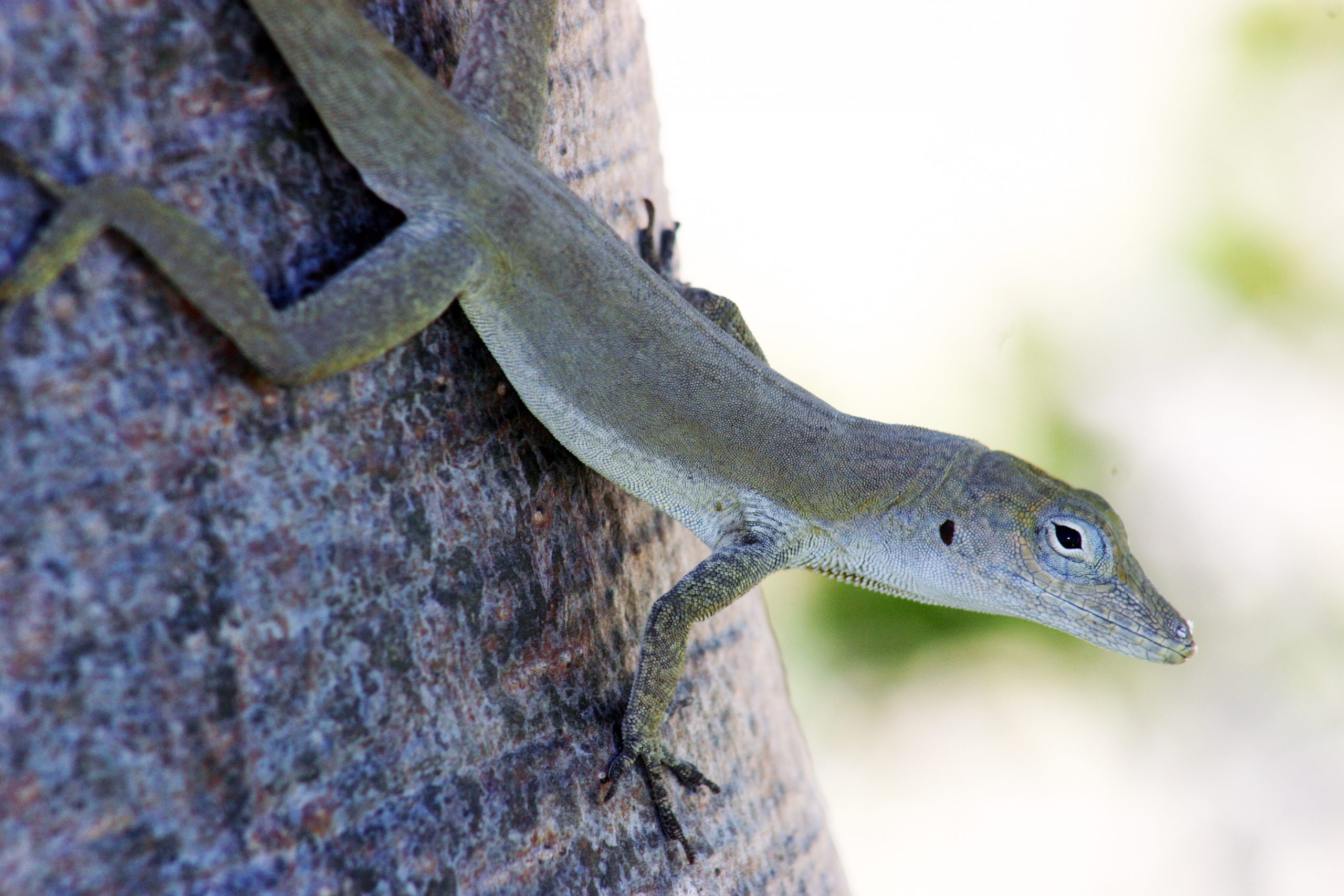
The study, led by Professor R. Graham Reynolds of UNC Asheville’s Department of Biology, is published in the open-access journal ZooKeys. It documents the 11 native reptile species across the archipelago’s Turks and Caicos Banks, eight of which are found nowhere else on Earth.

Two further species are represented in the islands by their own endemic subspecies. The checklist combines published research through 2026 with original field data collected by Dr Reynolds between 2006 and 2025, and includes original photographs, distribution information and conservation assessments for every species.

An adult male Turks and Caicos Anole (Anolis scriptus scriptus) watching his territory from the trunk of a tree. Big Ambergris Cay, Turks and Caicos Islands. Photograph by R. Graham Reynolds, UNC Asheville. 

Dr Reynolds began studying the islands’ reptiles in 2006, in his first year of graduate school, working alongside Dr Glenn Gerber of the San Diego Zoo Wildlife Alliance:

“This quickly turned into a passion, and I have made studying these animals the focus of my career.

I conduct fieldwork several times a year on the islands, and this year is the 20th year of this work. In that time, I have published dozens of papers on the reptiles of the region and collected a huge amount of data, and I felt that, after two decades, it was time to produce something to showcase everything we’ve learned about these animals.”

Although information on the islands’ reptiles has existed scattered across books, online databases and journal articles, no single resource has previously combined photographs, distribution maps, natural history and conservation status for every species.

“Somewhat surprisingly, there has never been a comprehensive checklist for the terrestrial reptiles of the region.

“Portions of this are available elsewhere, such as distribution maps and some photographs on the online database CaribHerp, or island checklists and natural history information in a book chapter. But this is the first time that all of this information has been brought together to fully describe and illustrate the amazing terrestrial reptiles of the Turks and Caicos.”

Dr Reynolds

Seven of the 11 native species are of conservation concern. The Turks Island Skink is Critically Endangered and may now survive as a single protected population, while the Turks and Caicos Iguana, classified as Endangered, has been lost from around 90% of its historical range. Introduced predators, particularly feral cats and rats, are identified as the main cause of these declines, alongside habitat loss and road mortality.

An adult male Turks and Caicos Curlytail (Leiocephalus psammodromus apocrinus) perches on top of a Turks cap Cactus (Melocactus intortus). Big Ambergris Cay, Turks and Caicos Islands. Photograph by R. Graham Reynolds, UNC Asheville.

The study also revises the taxonomy of the Curly-tailed Lizard, recommending that six previously recognised subspecies be reduced to two, reflecting recent genetic evidence.

Original source

Reynolds RG (2026) An annotated checklist and species accounts of the native terrestrial reptiles of the Turks and Caicos Islands. ZooKeys 1290: 1-33. https://doi.org/10.3897/zookeys.1290.198843


For more articles on zoology, visit the ZooKeys website and follow the journal on BlueSky and Facebook.

From an Herbarium Cabinet to the Lava Fields of Isabela: Restoring One of the Galápagos’ Rarest Plants

Or how decades of curiosity, teamwork and persistence helped give one of the Galápagos’ rarest plants a second chance.

Guest blog post by Patricia Jaramillo Díaz

When I arrived in the Galápagos in 1996, I never imagined that one of the most meaningful conservation projects of my career would begin inside an herbarium cabinet. At the Charles Darwin Research Station, I spent many hours working with herbarium collections assembled over more than a century by botanists who had explored the archipelago. Each specimen preserved a moment in time – a record of where a species had lived and the landscapes it once inhabited. Together, they formed a living archive of the Galápagos flora.

Two years later, in 1998, one specimen began to capture my attention. Collected near Caleta Tagus on northern Isabela Island in 1962, it belonged to Galvezia leucantha subsp. leucantha, a small shrub found nowhere else on Earth.

Every time I opened that cabinet, I found myself asking the same question: Does this plant still survive? 

Herbarium of Galvezia leucantha subsp. leucantha
Herbarium specimen of Galvezia leucantha subsp. leucantha, collected near Caleta Tagus in 1962. More than six decades later, this historical record helped inspire and guide the restoration of one of the Galápagos’ rarest endemic plants. Courtesy of Patricia Jaramillo Díaz, CDS Herbarium.

At first, it was simply curiosity. Over the years, however, that question grew into something much larger. It inspired field expeditions, nursery experiments, ecological restoration and scientific research spanning almost three decades.

Historical herbarium records and botanical surveys led us to Playa Tortuga Negra, on the remote northern coast of Isabela Island, where the species had last been documented. In 2017, the Galápagos Verde 2050 (GV2050) restoration program began working to prevent the disappearance of this critically endangered population.

Reaching the site was never easy. After travelling by boat along the rugged coastline, we crossed extensive young lava flows under the equatorial sun, carrying equipment and supplies. When we finally located the plants, our excitement quickly gave way to concern. Only a handful of wild individuals remained, some growing from narrow cracks in the lava. Their resilience was extraordinary, but so was their vulnerability.

Standing beside those plants, it became clear that we were looking at much more than a rare shrub. These were the last representatives of a unique evolutionary lineage found nowhere else on Earth. Losing them would mean losing an irreplaceable part of the Galápagos’ botanical heritage.

Our question changed: instead of asking whether Galvezia leucantha still survived, we began asking how we could help ensure that it would continue to survive.

That question became the foundation of a long-term restoration program developed through collaboration among the Charles Darwin Foundation, the Galápagos National Park Directorate, researchers, park rangers, field assistants, students and volunteers.

Researchers collecting and preparing alvezia leucantha subsp. leucantha specimens for the CDS Herbarium at Isabela Island
Researchers and a Galápagos National Park ranger collecting and preparing Galvezia leucantha subsp. leucantha specimens for the CDS Herbarium at Playa Tortuga Negra, Isabela Island, during a collaborative field expedition across several islands of the Galápagos Archipelago in 2012. Photo: Rubén Heleno.

Before restoring the species, however, we first had to learn how to propagate it. Very little information existed. There were no established protocols or published studies describing how to cultivate the species. Germination was inconsistent, seedlings were delicate and survival varied depending on growing conditions.

Through observation, experimentation and patience, we gradually refined propagation techniques, tested different substrates and identified conditions that improved germination and seedling development. The nursery became a living laboratory where research and practical conservation came together. Every healthy seedling represented months of work, from collecting seeds in the field to monitoring germination and growth.

Equally important was documenting what we learned. Developing a propagation protocol strengthened our restoration program while providing practical guidance for future conservation projects involving threatened island plants.

Read our complete Propagation Guide here.

Producing healthy seedlings was only the beginning. Returning them to one of the youngest volcanic landscapes in the Galápagos presented an entirely different challenge. Every restoration campaign required months of preparation. Seedlings were gradually acclimated before transport, while strict biosecurity protocols ensured that no invasive organisms accompanied them into one of the world’s most protected ecosystems.

Moving hundreds of young plants across rough seas and unstable lava fields required close coordination between the Charles Darwin Foundation and the Galápagos National Park Directorate. Once on site, every planting location was carefully selected to maximize the seedlings’ chances of survival.

Collection, sorting, disinfection, and laboratory germination trials of Galvezia leucantha subsp. leucantha seeds. Photos: Paúl Mayorga and Patricia Jaramillo Díaz.

Because northern Isabela experiences prolonged dry seasons and shallow volcanic soils retain very little moisture, we also evaluated techniques to improve plant establishment.

During the first restoration campaigns, hydrogel and the Groasis Waterboxx® were tested to reduce water stress during the most vulnerable stage of seedling development. Planting a seedling takes only a few minutes. Helping it become part of a self-sustaining population takes years. That is why restoration never ends when the last plant is placed in the ground.

Watch the restoration work in the Galápagos.

Researchers Anna Calle-Loor and Nicolás Velasco surveying the restoration site at Tagus Cove, Isabela Island, before planting Galvezia leucantha subsp. leucantha. Photo: Carlos Espinoza/FCD.

Every year, our team returned to Playa Tortuga Negra to monitor the restored plants. We recorded their survival, growth, flowering and fruit production, always asking the same question: Could the population eventually recover on its own?

For several years, the answer remained uncertain. Although the restored plants survived, flowered and set seed, the clearest sign of recovery had yet to appear. Then, three years after the first reintroductions, during a monitoring expedition in 2021, everything changed.

While surveying the restoration site, Galápagos National Park rangers and researchers from the Galápagos Verde 2050 program noticed a tiny seedling emerging from a narrow crack in the lava. Only a few centimeters tall, it was easy to overlook. A closer look revealed something extraordinary: it was not one of the seedlings we had planted.

  • Galvezia leucantha in the lava crack.
  • Detailed images of Galvezia leucantha subsp. leucantha

It had germinated naturally from seeds produced by the restored population. After years of restoration efforts, we were witnessing the first evidence that Galvezia leucantha was once again reproducing in the wild. The discovery filled us with excitement, but also with scientific caution. One naturally established seedling was encouraging, yet we needed to know whether it represented the beginning of broader recovery.

Galvezia leucantha subsp. leucantha seedlings. Left: Monitoring and data collection. Right: Seedlings growing under protective mesh. Photos: Carlos Espinoza.

Subsequent monitoring confirmed that it was not an isolated event. By the end of the monitoring period, our team had recorded four naturally established seedlings, all resulting from natural recruitment rather than nursery-grown plants. They demonstrated that restored individuals were flowering, producing viable seeds and giving rise to a new generation without direct human intervention. They also provided the first clear evidence that restoration was rebuilding not only the population, but the ecological processes need for the species to persist over time.

  • Seedling of Galvezia leucantha
  • Flowering Galvezia leucantha.
  • Flowering Galvezia leucantha.

True restoration begins when nature no longer depends on us.

As the project continued, another chapter brought me back to where everything had begun.

The herbarium specimen that inspired my original question once again became central to our work. Historical collections showed that Galvezia leucantha had once occurred near Caleta Tagus, where it had last been collected more than sixty years earlier. Those specimens, together with field observations and ecological assessments, helped identify suitable sites for restoring part of the species’ historical range.

In 2024, the restoration program expanded to Caleta Tagus, helping re-establish the species in part of its historical range for the first time in more than sixty years. Returning plants there felt like completing a circle.

Decades earlier, botanists had carefully preserved specimens documenting a disappearing population. Without knowing it, they had also preserved information that would later help guide its recovery. For me, this reinforced the extraordinary value of herbaria. They are far more than collections of dried plants; they are archives of biodiversity that connect the past with the future, helping us understand species distributions, identify restoration opportunities and guide conservation decisions.

Learn more in the Galvezia leucantha Restoration Plan

The restoration of Galvezia leucantha also taught us that conservation does not end in the field. Sharing what we learn is just as important. In 2025, nearly three decades of experience came together in a scientific paper, a restoration plan and a propagation guide, ensuring that these lessons could support future restoration efforts.

Looking back today, I do not think first about the number of seedlings we planted or the kilometers we walked across lava fields. I think about the people: the park rangers who protected restoration sites, field assistants who carried plants across difficult terrain, nursery staff who cared for thousands of seedlings, researchers who designed experiments, and students and volunteers whose enthusiasm sustained this project over the years.

Although this story is written from my perspective, the recovery of Galvezia leucantha has always been the result of teamwork. When I first opened that herbarium cabinet nearly three decades ago, I could never have imagined where one preserved specimen would lead.

Today, nearly thirty years later, that question finally has an answer. Yes. Galvezia leucantha still survives.

Galapagos fieldwork
Our work continues in the field and laboratory to support the recovery of this species and, we hope, keep sharing good news through 2050. Photos: Patricia Jaramillo Díaz, Paúl Mayorga, and Carlos Espinoza.

More importantly, it is no longer represented only by a few isolated shrubs growing from cracks in lava. Restored plants are flowering, producing seeds and giving rise to a new generation in the wild. The species still faces challenges, but its future is far brighter than it once seemed.

For us, that is the greatest lesson of this journey. Conservation begins with curiosity, advances through science and succeeds through collaboration. Sometimes, a single herbarium specimen is enough to inspire a question.

Sometimes, answering that question takes nearly thirty years, but the journey is worth every step.

Original source:

Jaramillo Díaz P, Charette C, Calle-Loor A, Espinosa-Ortega N, Mayorga P, Zambrano D, Chango R, Velasco N (2026) Advances in the recovery of Galvezia leucantha subsp. leucantha (Plantaginaceae): restoring a critically endangered species on northern Isabela Island, Galápagos. Nature Conservation 64: 111-133. https://doi.org/10.3897/natureconservation.64.177895

How Citizen Science and Fieldwork Rediscovered Papilio alexanor in Southern Italy

The rediscovery of Papilio alexanor in southern Italy marks a historic moment for Italian lepidopterology.

Guest blog post by Paolo Mazzei

For decades, butterfly enthusiasts and lepidopterists across Italy have wondered: could the lost southern populations of the Southern Swallowtail still be out there?

Historical records of Papilio alexanor in Southern Italy were sparse and dated, often dismissed as stray individuals blown in by strong winds from Greece or the Balkans. But for many lepidopterists, alexanor represents a true holy grail – a majestic, bright-yellow species that is strictly protected.

Our research didn’t start in a lab, but with a smartphone screen. 

When Citizen Science Meets Expert Curiosity

male Papilio alexanor
Male Papilio alexanor on C. ruber. Picture by Stefano Meraglia.

In May 2023, a marine biologist kayaking along the rugged cliffs of Basilicata uploaded a brief video to iNaturalist. It captured an unmistakable female Papilio alexanor fluttering around a giant fennel (Ferula) stalk.

A year later, a second record appeared on iNaturalist: a pristine, freshly emerged female photographed by a German tourist in Campania. Together, these two sightings hinted that the species might be more than a mere vagrant here.

Papilio alexanor
Papilio alexanor. Picture by Paolo Mazzei.

This is where the power of modern biodiversity platforms like iNaturalist, Observation.org, and the eBMS (European Butterfly Monitoring Scheme) shines: they act as distributed networks of eyes on the ground, catching subtle shifts in nature that a single research team could easily miss. Inspired by these community sightings, our team from the Italian Lepidopterological Association (ALI), in collaboration with the University of Turin, decided it was time to step in.

A 1,400 km Journey into the Wild

Obtaining research permits for a strictly protected species under EU law takes time, ethics, and rigor. With support from the University of Turin, we secured formal authorization from the Italian Ministry of Environment in early 2026.

Driven by passion, our team funded the expedition ourselves, driving over 1,400 km round trip to systematically survey the steep coastal cliffs and dry habitats along the Campania–Basilicata border.

  • Pupa of Papilio alexanor.
  • Papilio alexanor caterpillar
  • Papilio alexanor caterpillars feeding on a plant
  • Papilio alexanor caterpillars of different instars, feeding on seeds of a plant
  • Papilio alexanor on a plant

The thrill of discovery was immediate. Standing at a cliffside turnout, we watched the first bright-yellow male soar up from the ravine. Soon we spotted courting pairs feeding on red valerian (Centranthus ruber) and females in the act of ovipositing.

Encouraged, we started scouting similar spots nearby, and the hunch paid off. About 15 to 20 km away, we found a second active breeding colony. 

Surprising Ecology: A New Host Plant for Italy

Female Papilio alexanor laying eggs on the flowers of F. glauca. Picture by Luciano Valeri.

Our fieldwork revealed two ecological twists, since published in our paper in Nota Lepidopterologica.

First, the Northern Italian populations rely on host plants such as Ptychotis saxifraga or Opopanax chironium, but the southern caterpillars feed exclusively on Ferula glauca. This host-plant association was previously documented in Greece and the Balkans, but never before in Italy.

Second, the flight begins significantly earlier here than in northern populations, reflecting local adaptation to the semi-arid, thermo-Mediterranean climate.

Protecting the Future: Simple Actions for Big Impact

Finding a “lost” population is cause for celebration, but it also brings responsibility. These isolated coastal colonies remain vulnerable to habitat fragmentation, fire, climate extremes, and road infrastructure development.

Female Papilio  alexanor
Female Papilio alexanor on C. ruber. Picture by Andrea Baruzzi, 2026,

To help Papilio alexanor keep thriving here, effective conservation management should prioritise targeted monitoring, integrating structured transects through schemes like eBMS to track population trends over time; habitat protection, preserving coastal slope vegetation and preventing over-mowing or destruction of Ferula glauca stands during roadside maintenance; and responsible citizen engagement, encouraging nature lovers, hikers, and photographers to submit observations with precise geolocation, while ensuring that delicate breeding sites remain respected and undisturbed. 

This story is a reminder that remarkable biological discoveries are still waiting to be made right under our noses. All it takes is a curious eye, a smartphone upload, and a community of passionate researchers ready to follow the trail.

Original source:

Meraglia S, Baruzzi A, Mazzei P, Valeri L, Zerunian Z (2026) First documented record of a reproducing population of Papilio alexanor Esper, 1800 (Lepidoptera, Papilionidae) in Southern Italy, with ecological notes. Nota Lepidopterologica 49: 157-170. https://doi.org/10.3897/nl.49.206084 

Five New Wasp Species Discovered In Cyprus, Including One Named After Aphrodite

New research expands the knowledge on chalcid wasps in Cyprus, with five new species described from the island. One was named after the Greek goddess Aphrodite.

Scientists have described five new species of parasitoid wasp from Cyprus, more than doubling the number of chalcid wasps known to be found nowhere else on the island. The wasps, all belonging to the family Pteromalidae, are small insects that play an important role as natural pest controllers, yet remain poorly studied across much of Southeastern Europe and the Middle East.

The research, carried out by Evangelos Koutsoukos and Mircea-Dan Mitroiu and published in the open-access journal ZooKeys, was part of a wider project funded by the UK Government’s Darwin Plus initiative. The project, titled “Species richness and biological invasions of Chalcid wasps in Akrotiri Peninsula”, was administered by the Enalia Physis Environmental Research Centre and supervised by Dr Angeliki Martinou, with support from the National and Kapodistrian University of Athens, the University of Leeds, and Alexandru Ioan Cuza University.

“Before the start of this study, our knowledge regarding the chalcid wasp fauna of the Akrotiri Sovereign Base Area (SBA) and the rest of the island of Cyprus was extremely limited,” said Koutsoukos.

Chalcid wasps comprise a hyperdiverse group of insects that serve as biological controllers both in natural and manmade ecosystems, and as such it is crucial to enrich our knowledge, towards understanding their true extend of biodiversity, ecology, and their role in the various trophic webs they participate across different ecosystems.

  • Ablaxia makrisi
  • Erythromalus makrisi.

“Each of the five new species was named with a story behind it. Two of the species [Ablaxia makrisi and Erythromalus makrisi] were named after Mr. Christodoulos Makris, prominent Cypriot entomologist, for his contributions on the Cypriot biodiversity, and for collecting the holotypes of these two species,” Koutsoukos explained.

Hemitrichus akrotiriensis. Photo credit to Evangelos Koutsoukos.

Hemitrichus akrotiriensis takes its name from the Akrotiri peninsula, described by Koutsoukos as “a protected area and one the greatest biodiversity hotspots in Cyprus, where the holotype was also collected from.” Another species, Ablaxia toxeftrae, was named after Toxeftra beach in the Akamas peninsula, where its holotype was found.

The final species carries perhaps the most evocative name of all:

Janssoniella aphrodite was named after the Greek Ancient Goddess Aphroditi, since the holotype of this species was collected in Yeroskipou area of Paphos, where the Goddess was worshipped during ancient times.

said Koutsoukos
  • Janssoniella aphrodite
  • Janssoniella aphrodite
  • Janssoniella aphrodite

Before this study, only three chalcid wasp species were known to be unique to Cyprus. “Our collecting efforts yielded many more interesting specimens, which might represent new species as well,” said Koutsoukos, “and as such it is evident that these numbers are an underestimation of the true biodiversity of the island.”

“The outcomes of this project will contribute towards the enrichment of our knowledge of the biodiversity, not only of the island of Cyprus and the U.K. SBAs, but the whole region’s as well,” Koutsoukos said.

Original study:

Koutsoukos E, Mitroiu M-D (2026) Enriching inventories of rare genera: five new species of Pteromalidae (Hymenoptera, Chalcidoidea) from Cyprus. ZooKeys 1286: 1-16. https://doi.org/10.3897/zookeys.1286.196157

TikTok Video Leads to Discovery of Rare Underground Eel in India

Gangaichthys indonepalicus is the first subterranean fish to be recorded from the Gangetic Basin.

Researchers have discovered a new genus and species of underground earthworm eel living beneath the Indo-Gangetic Plain in Bihar, northern India. The small, colourless creature, named Gangaichthys indonepalicus, is the first subterranean fish to be recorded from the Gangetic Basin.

Close-up of Gangaichthys indonepalicus. Image credit: Ishan Agarwal.

The research, published in ZooKeys, was carried out by an international team of scientists from the Thackeray Wildlife Foundation in Mumbai, India; Shivaji University in Kolhapur; the Shanghai Synchrotron Radiation Facility at the Chinese Academy of Sciences; and the Zoological Survey of India in Gopalpur-on-Sea.

The investigation began after a short video clip posted on TikTok in 2024 showed an unusual tiny fish emerging from a water borewell near the border between India and Nepal.

“The unique morphology of the fish in the video, and the fact that there are no known stygobitic fish known from the region, motivated us to track down the species to ascertain its identity.”

The Research Team

Securing physical samples required an intensive fieldwork effort in Bihar, where the scientists manually pumped thousands of litres of water from local handpumps.

“Procuring samples of this unusual fish was challenging. Identifying potential handpumps (borewells) and wells, and obtaining permission from their owners to extract water for the purpose of searching for the fish proved difficult. This became more intensive when we finally began manually pumping water.”

Akshay Khandekar, Thackeray Wildlife Foundation
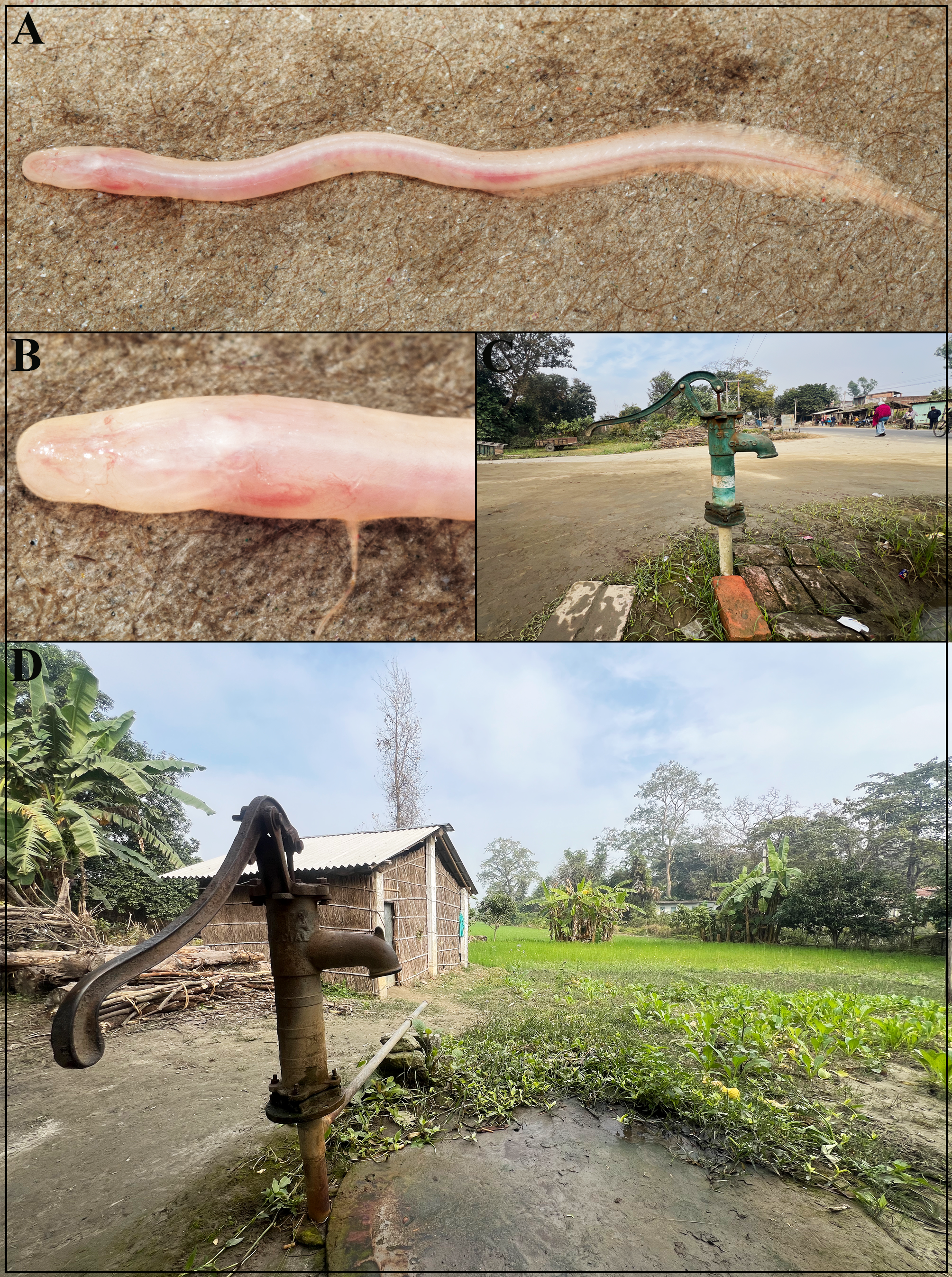
Live and habitat photos Gangaichthys indonepalicus
Live and habitat photos Gangaichthys indonepalicus: NRC AA 9519, holotype, 40.6 mm SL: Dorso lateral view of: A. Full body; B. Head; C. Bore-well from which holotype and one (damaged) paratype was collected; D. Bore-well from where another damaged specimen was collected. Image credit: Akshay Khandekar et al., 2026.

The first specimen emerged after pumping approximately 2000 litres of water but sustained damage during the process and died immediately. The second and only intact specimen (later designated as the holotype of this species) was found from the same borewell after pumping an additional 500 litres of water.

Gangaichthys indonepalicus in a syringe. Image credit: Ishan Agarwal.

The newly described fish measures roughly four centimetres in length and features physical adaptations suited to life in total darkness, including reduced eyes covered by skin, an unpigmented translucent body, and an apparent absence of ribs.

Advanced micro-CT scanning and genetic analysis confirmed that it represents a completely distinct genus within the earthworm eel family Chaudhuriidae.

“Gangaichthys means fish of the Ganga. The Ganga or Ganges is one of the most important rivers in India, both as a source of fresh water, food and livelihood for millions of people; besides having an important role in the Hindu religion.

This is the first stygobitic fish from the Indo-Gangetic plains and from the Gangetic basin.”

Ishan Agarwal, Thackeray Wildlife Foundation

As for the naming of the species itself, Tejas Thackeray commented:

“As the species occurs on the border between India and Nepal we picked indonepalicus as the specific epithet, which reflects the distribution of the species.”

Gangaichthys indonepalicus. Image credit: Ishan Agarwal.

Agarwal also reflected on the broader context of the find and the challenges of studying subterranean habitats:

“India is an incredibly diverse country, spanning huge gradients in climate and topography and multiple biogeographic regions. However, there is a huge gap in knowledge, both Linnaean and Wallacean shortfalls, with many more species yet to be discovered.

This exciting discovery is in some ways symptomatic of general biodiversity research in India, though sampling subterranean habitats is especially challenging.”

Original source:

Khandekar A, Thackeray T, He Y, Mohapatra A, Agarwal I (2026) Gangaichthys indonepalicus, a new genus and species of miniature stygobitic earthworm eel (Synbranchiformes, Chaudhuriidae) from alluvial aquifers in the Indo-Gangetic Plain, Bihar, northern India. ZooKeys 1289: 185-202. https://doi.org/10.3897/zookeys.1289.188089


For more articles on zoology, visit the ZooKeys website and follow the journal on BlueSky and Facebook.